LEG 11 · Airliners & Airlines
Boeing vs Airbus: How to Tell a 737 From an A320
Two companies build nearly every jet you will ever board. Their airplanes give themselves away at the nose, the engines and the wingtips, once you know where to look.
Updated · 7 min read
The short answer
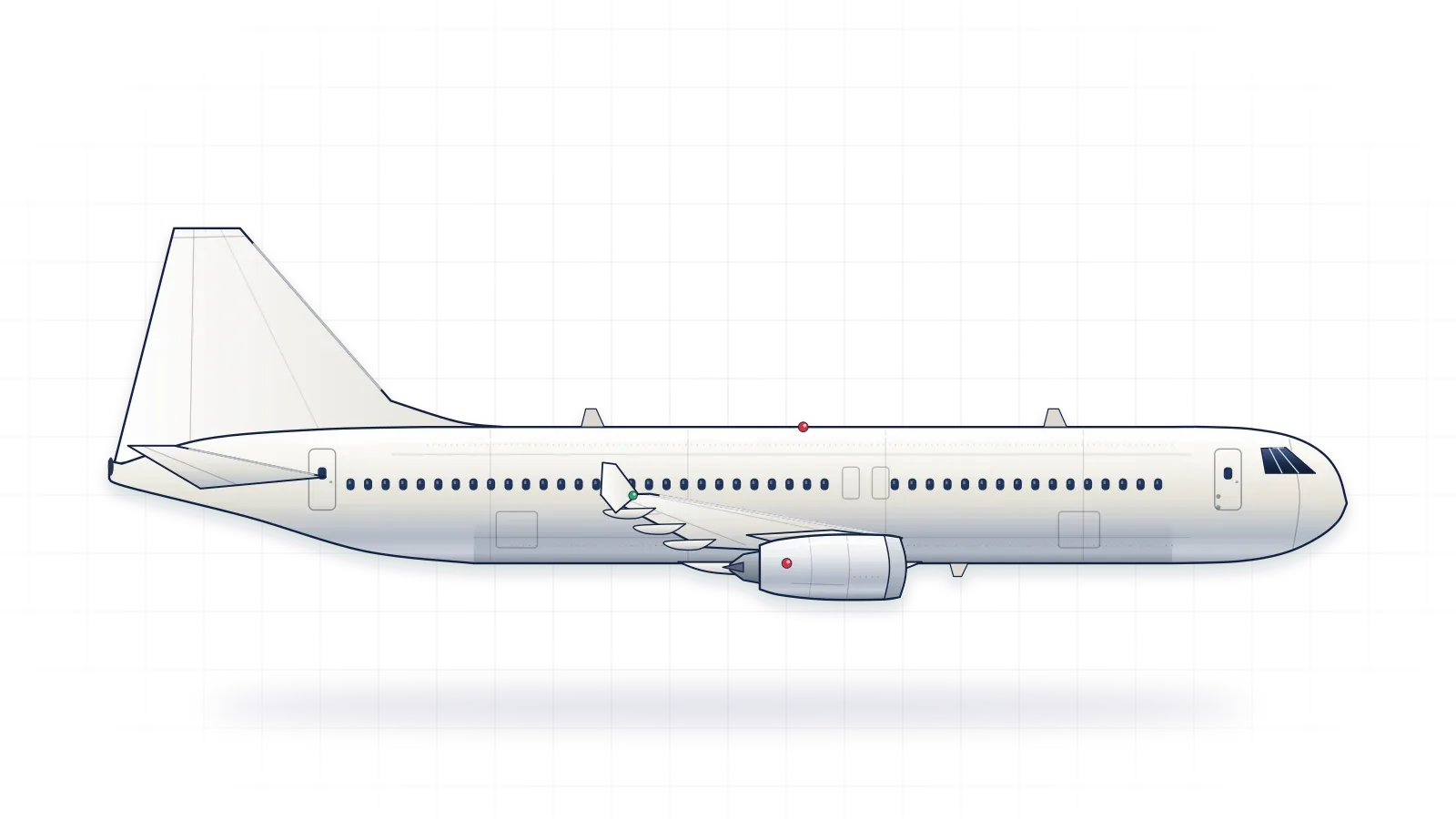
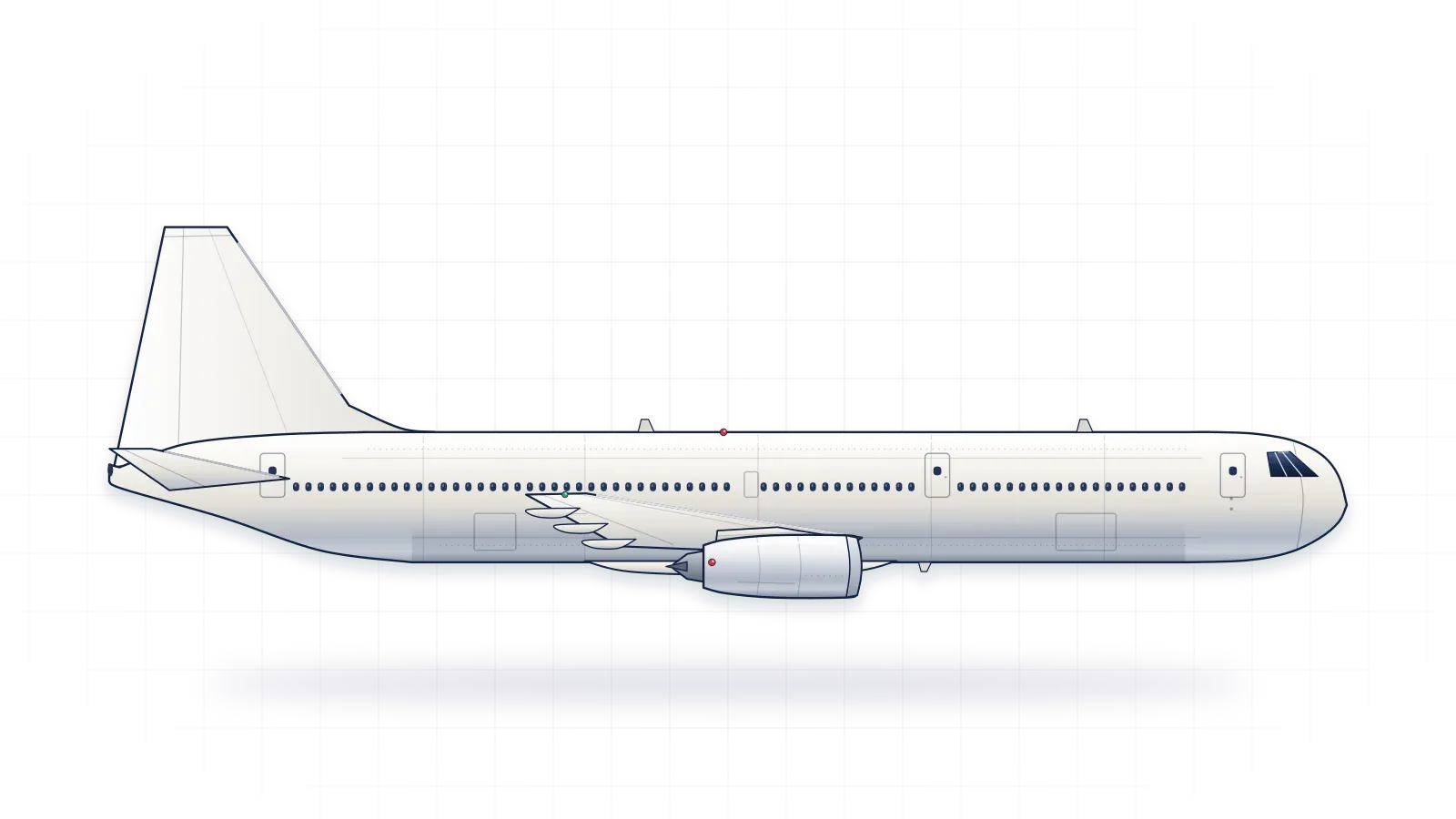
Look at the nose: Boeing noses come to a sharper point, while Airbus noses are rounder. Boeing cockpit side windows dip to a V along the bottom; the rearmost Airbus window has a clipped upper corner. On the ground, a 737's engines are flattened underneath and its main wheels sit in open wells, while an A320's engines are round.
Stand at a terminal window for ten minutes and almost every jet you see will have come from one of two companies. Boeing had a whole family of jets flying before Airbus existed, and Airbus was created in 1970 to take it on. Their airliners do the same job, yet they give themselves away in dozens of small ways, from the shape of the nose to a sound under the cabin floor. Here is how to read them.
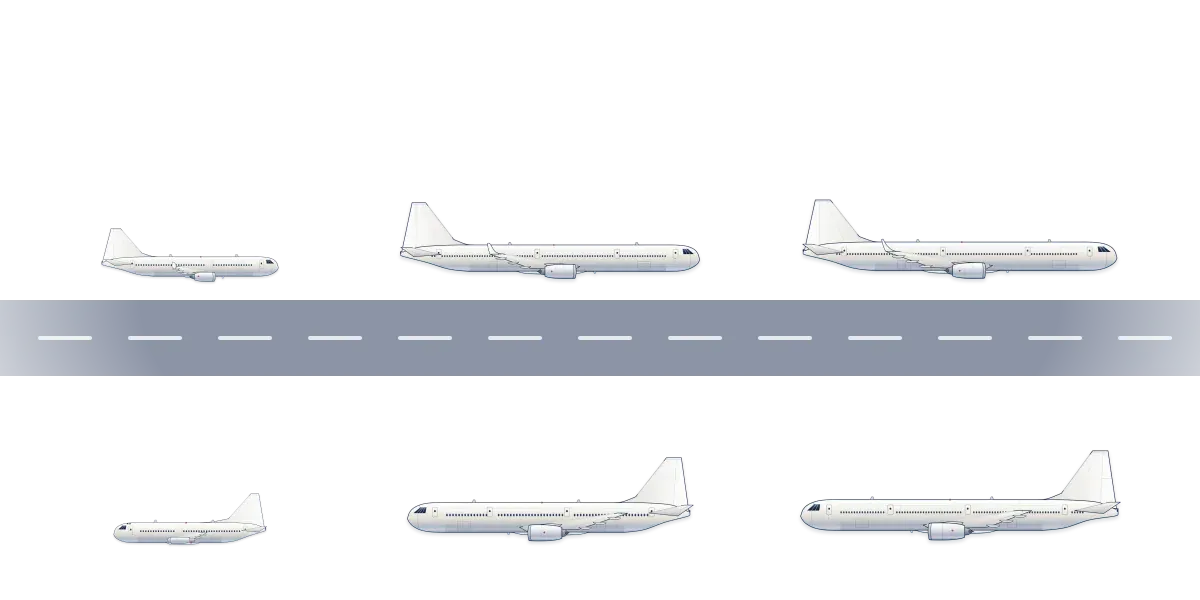
How can you tell if a plane is Boeing or Airbus?
The surest clues cluster at the front of the airplane, which is convenient, because the nose is usually what faces the gate. Start with the shape of the nose, then the cockpit windows. If you can see the engines and the main wheels, you have two more tells. The wingtips give you a final check from your seat.
This guide concentrates on the two families you will meet most often: Boeing’s 737 and Airbus’s A320. They are the workhorses of short-haul flying, and most of their tells carry over to the bigger jets, with a few extras noted along the way.
What is the difference between a Boeing and an Airbus nose?
Boeing noses taper to a point. Seen from the side, the fuselage narrows steadily into a sharp tip. Airbus noses are blunter. The fuselage keeps its depth a little longer and then rounds off, which gives an A320 a softer, more rounded face.
The cockpit windows settle most arguments. On a Boeing, the windows along the side of the flight deck dip into a V where their lower edges meet. On an Airbus, the lower edges run straight, and the rearmost side window has a clipped corner at its top, as if someone had snipped it off. Airbus’s newer A350 adds a bonus tell: a black band painted around the whole windshield, which spotters call its mask.
Why do Boeing and Airbus engines look different?
Walk down the jet bridge and glance at the engine. On a 737, the bottom of the nacelle is flattened, so the intake looks like a circle with a squashed base. The 737 was designed in the 1960s to sit low and work on its own at small airports. When bigger, more efficient fan engines came along, there was no room under that low wing for a round pod. Boeing hung the engines further forward and moved their accessories to the sides, which flattened the bottom.
An A320 stands taller on its legs, so its engines are fully round. On the newest versions, the back of the engine tells them apart too. The 737 MAX’s engines end in a ring of saw-tooth chevrons that quiet the exhaust, the same idea used on the 787 Dreamliner. The A320neo’s engines end in a plain round lip.
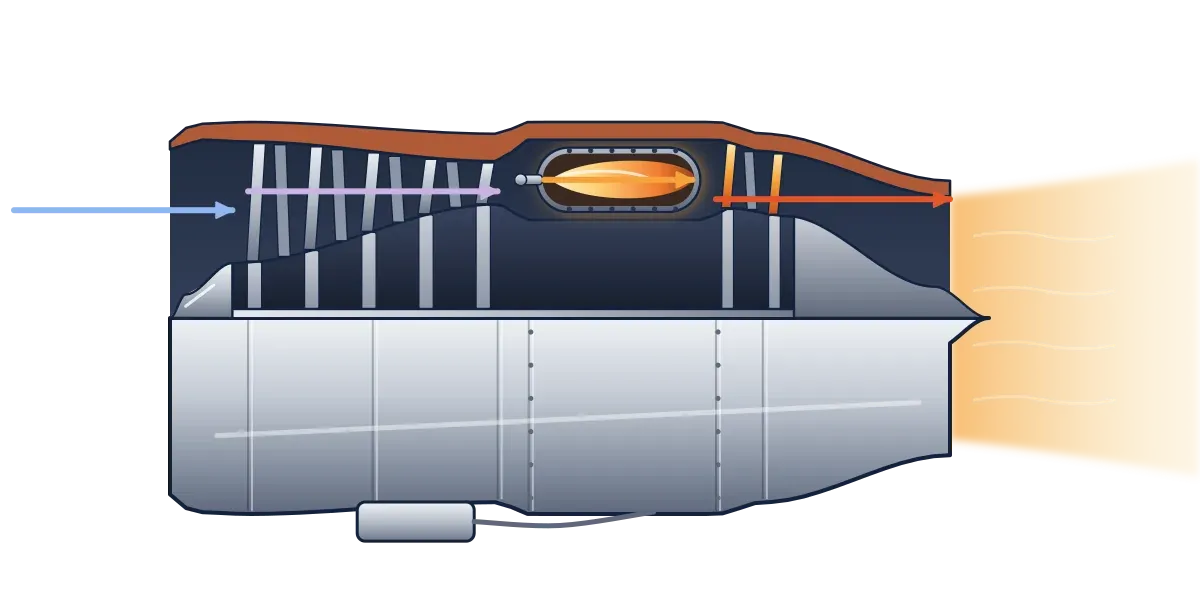
Look at the main wheels as well. A 737’s main landing gear has no doors. When the wheels retract, their outer faces sit flush with the belly, so you can see the hubcaps of a 737 in flight. An A320 tucks its wheels behind doors. How the engines themselves work is a story of its own, told in how jet engines work.
What is the difference between Boeing and Airbus wings?
From a window seat, look to the tip. A 737 MAX carries what Boeing calls an Advanced Technology winglet, which splits into an upper blade and a lower blade, like the feathered tip of a bird’s wing. Most earlier 737s still flying wear a tall, single winglet that curves upward. An A320neo wears a tall curved tip too, which Airbus calls a sharklet, so a tall tip alone will not settle the question. Older A320s often carry small arrowhead-shaped fences at the wingtip instead, pointing both up and down.
Why bother with any of them? Lift leaves a spinning vortex behind each wingtip, and that vortex costs fuel. The winglet weakens it. The full story, including the NASA tests that proved the idea, is in how planes fly.
What is the difference between Boeing and Airbus cockpits?
If the flight deck door is open as you board, look for what the pilots hold. Boeing pilots fly with a control column and yoke in front of them, like a car’s wheel with the top cut off. Airbus pilots fly with a sidestick, a small grip beside each seat. The A320, first flown on February 22, 1987, was the first civil airliner with full digital fly-by-wire, with computers between the pilots’ hands and the control surfaces. The sidestick came with it.
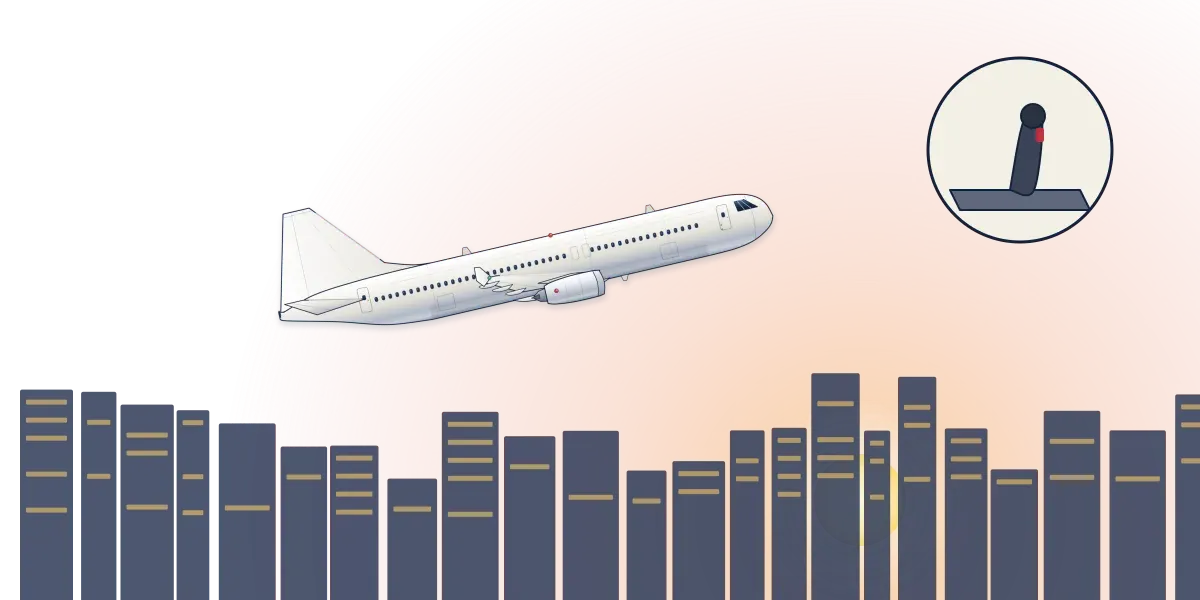
The 737 made its own mark on the flight deck a generation earlier. Its new technology made a flight engineer unnecessary, and its two-person crew became the standard across the industry. What those two people and their autopilot actually do during a flight is explained in how autopilot works.
One more Airbus tell is for your ears. At the gate and during taxi, A320-family jets often make a rhythmic barking or sawing sound under the floor. It comes from a hydraulic unit that shifts pressure between two of the airplane’s hydraulic systems, and it is perfectly normal.
Is a Boeing 737 bigger than an Airbus A320?
They are close cousins in size, which is exactly why they compete so hard. The original 737 was nicknamed the Baby Boeing, and its early versions were called square because they were as long as they were wide. Its six-abreast cabin, one more seat per row than the rival Douglas DC-9, set the pattern for every narrowbody since.
Today each family comes in several lengths, and each company publishes its own figures. The table uses the makers’ pages as of October 2026.
| Model | Maximum seats | Range |
|---|---|---|
| Boeing 737-8 | 210 | up to 3,500 nautical miles |
| Airbus A320neo | 194 | 3,400 nautical miles |
| Boeing 737-10 | 230 | up to 3,100 nautical miles |
| Airbus A321neo | 244 | 4,000 nautical miles |
| Airbus A321XLR | 244 | 4,700 nautical miles |
So the biggest Airbus narrowbody seats a few more people and flies further, while the biggest 737 sits between the two Airbus models. The A321XLR stretches the family’s reach to 4,700 nautical miles, far enough to cross the Atlantic.
How did Airbus catch up with Boeing?
In the 1960s, Boeing had the field almost to itself. It sold the 707 for long routes, the 727 for shorter runways, the compact 737 and the giant 747. The 727 became the first commercial airplane to pass 1,000 sales. European makers built good airliners in ones and twos, but none could match that range.
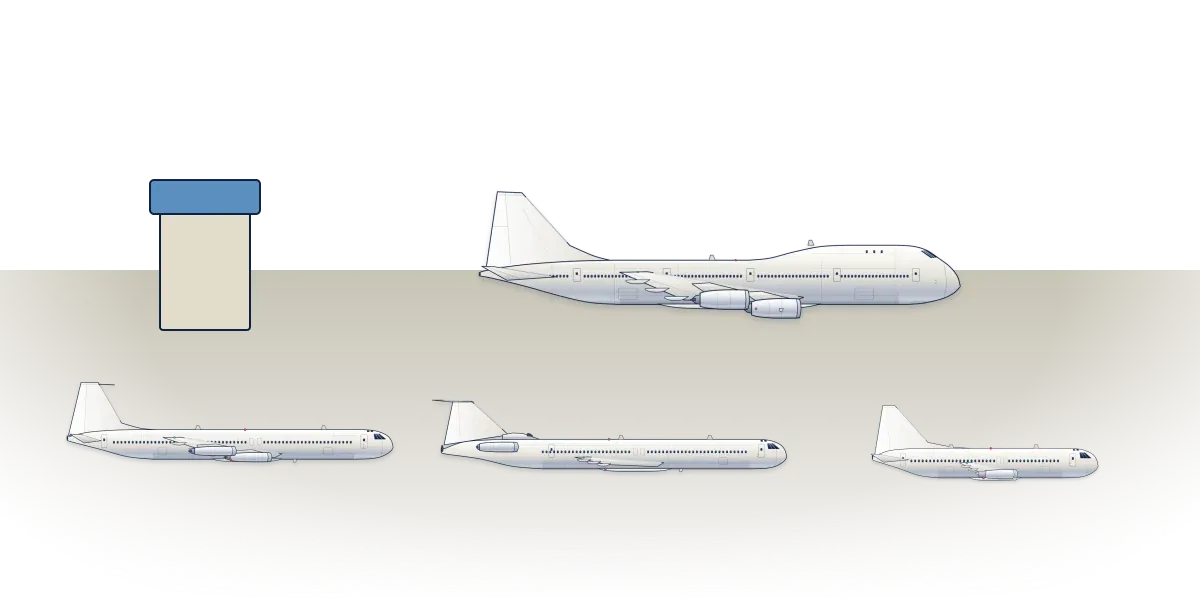
The answer was to pool Europe’s effort. France and Germany launched the A300 project in 1969, and on December 18, 1970, Airbus Industrie was formally set up to build it, with France’s Aérospatiale and West Germany’s Deutsche Airbus among the partners. The A300 first flew from Toulouse on October 28, 1972, as the world’s first twin-engine widebody airliner. Airbus went on to build 821 aircraft of the A300 family.
The A320 was the breakthrough. It entered service in 1988 with its digital controls, and its family has since drawn more than 20,100 orders. Airbus calls it the most successful aircraft family in commercial aviation history. Boeing’s 737 had a head start, though: by 1987 it was already the most ordered airplane in commercial history. Both families are still evolving, as the 737 MAX and the A320neo.
Which is bigger, Boeing or Airbus?
By deliveries, Airbus has been ahead in recent years. In 2025 it handed over 793 commercial aircraft to 91 customers, a total it reached despite continuing supply-chain problems, while Boeing delivered 600 commercial airplanes in the same year.
Their lineups mirror each other, as of October 2026. Airbus builds the A220, the A320 family, the A330neo and the A350. Boeing builds the 737 MAX, in -7, -8, -9 and -10 versions, the 767 freighter, the 777 and 777X, and the 787 Dreamliner. The giants are gone from both catalogs: the last A380 was delivered in December 2021 and the last 747 in January 2023. Boeing’s new 777-9 is still in flight testing, with first delivery planned for 2027.
What to watch for on your next flight
- At the gate, check the nose and the cockpit windows: a pointed nose and a V-shaped window line mean Boeing, a rounded nose and a clipped rear window mean Airbus.
- On the jet bridge, look at the engine intake. Flat on the bottom means 737; a full circle means A320.
- From your seat, look at the wingtip. A split blade means a 737 MAX; a single tall curve could be either family.
- During taxi, listen. A barking sound under the floor is a sure sign of an A320-family jet.
- Near the runway, watch other jets on approach. Bare hubcaps on the belly mean a 737.
Once you can name the maker, the next question is usually about size. The biggest airliners either company ever built, and the giants that beat them both, are lined up in the biggest planes in the world.
Quiz
Check yourself
-
Question 1 of 3
What made the Airbus A300 a first when it flew in 1972?
- First jet airliner in service
- First supersonic airliner
- First full double-deck jet
- First twin-engine widebody
Show the answer
Answer: D. The A300 first flew on October 28, 1972, as the world’s first twin-engine widebody commercial aircraft.
-
Question 2 of 3
What nickname did the Boeing 737 earn when it was announced?
- Flying Fortress
- Jumbo Junior
- Baby Boeing
- Queen of the Skies
Show the answer
Answer: C. Boeing was known for big multiengine jets, so its small 737 twinjet was nicknamed the Baby Boeing.
-
Question 3 of 3
Which passenger aircraft families does Airbus build today?
- A220, A320, A330 and A350
- DC-9, DC-10, MD-11 and 717
- A300, A310, A340 and A380
- 737, 767, 777 and 787
Show the answer
Answer: A. Airbus’s current passenger families are the A220, A320, A330 and A350; the A380 is no longer produced.
Guides
Keep reading
Aircraft
From the Hangar
Sources
- Airbus, 50th anniversary of the A300's first flight
- Boeing, Select Products in Boeing History
- Airbus, A320 Family
- Boeing, 737 MAX
- Airbus, Passenger aircraft
- Boeing, Commercial airplanes
- Airbus, Airbus reports 793 commercial aircraft deliveries in 2025
- Boeing, Boeing Announces Fourth Quarter Deliveries
- Boeing, Seventh 777-9 completes first flight