BAY 39
Boeing 707: The Jet That Made the Jet Set
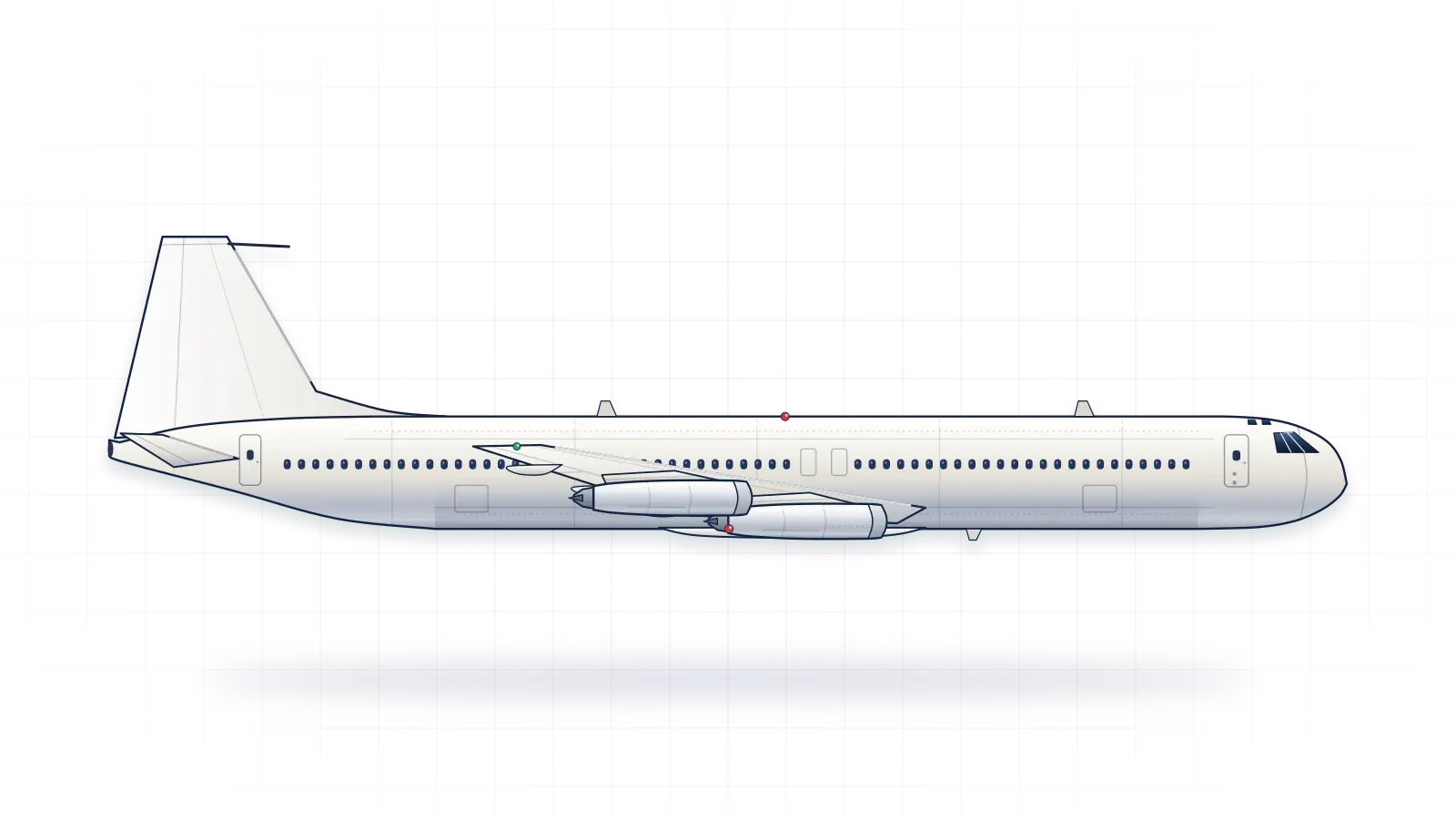
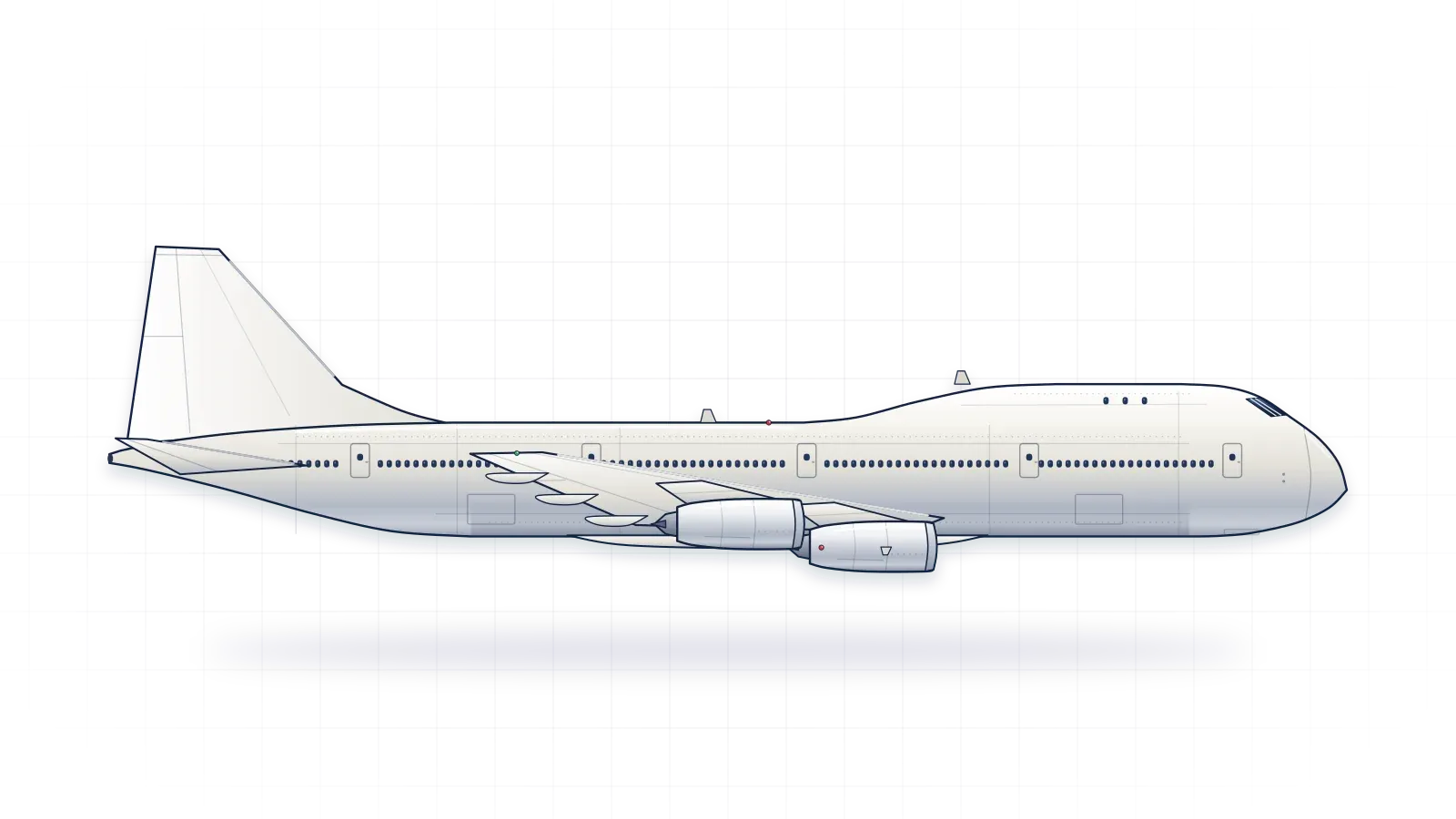
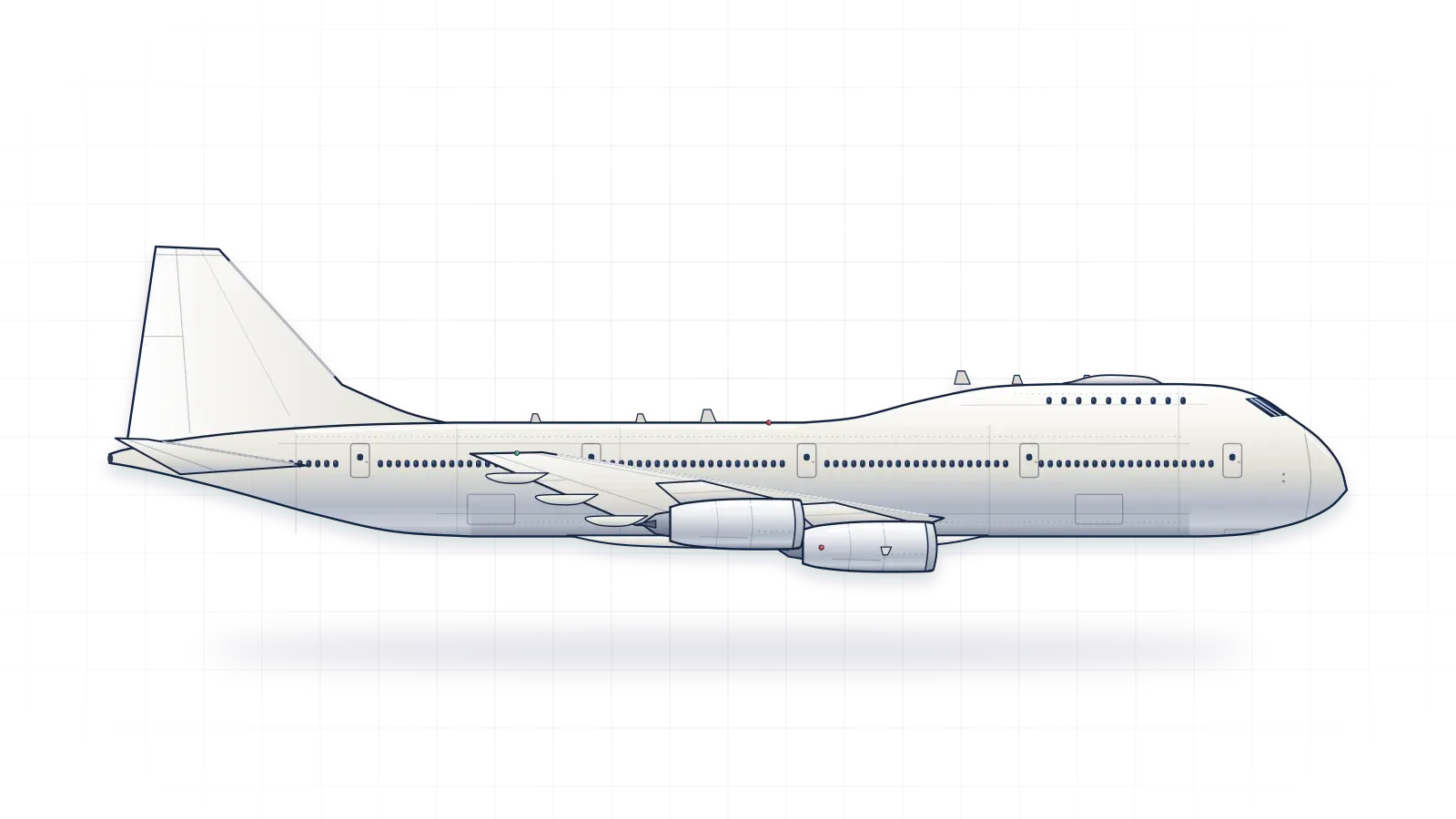
The Boeing 707's 100-foot cabin was the largest passenger cabin in the air, and its extra wing sweep let it fly about 20 mph faster than the rival Douglas DC-8. Its left-side front and rear doors became standard on later Boeing jets.
Updated
Role
Jet airliner
Power
Four turbojets
First flight
December 20, 1957 (707-120); Dash 80 prototype July 15, 1954
Tier
Iconic
The Boeing 707 is the airliner that made jet travel ordinary. The 707-120 first flew on December 20, 1957, with four Pratt & Whitney JT3C turbojets under a swept wing, room for up to 181 passengers and a 100-foot cabin that Boeing called the largest in the air. Within about two years, air travel had overtaken rail and sea.
It grew out of a gamble. In 1952, Boeing's board committed $16 million of the company's own money to a jet prototype, the Model 367-80, a sum its histories describe as two-thirds, or nearly all, of its profit since World War II. The Dash 80 first flew on July 15, 1954, and a week later the Air Force ordered 29 KC-135 tankers based on it.
Boeing delivered 856 707s in all versions between 1957 and 1994, 725 of them for airlines between 1957 and 1978; the Smithsonian's count is 855. The shorter-range 720 variant added 154 more between 1959 and 1967.
Quick facts
| Fact | Value | Source |
|---|---|---|
| First flight | December 20, 1957 (707-120); Dash 80 prototype July 15, 1954 | 1 |
| Role | Long-range jet airliner | 1 |
| Engines | Four Pratt & Whitney JT3C-6 turbojets, 13,500 lb of thrust each | 1 |
| Cruising speed | 600 mph | 1 |
| Range | 3,000 miles (707-120) | 1 |
| Passengers | Up to 181 (707-120) | 1 |
| Number built | 856 (Boeing's count; the Smithsonian says 855), 725 of them for airlines | 1 |
| Status | Deliveries ended in 1994 | 1 |
Why the Boeing 707 matters
The Comet had flown first, but its accidents had grounded it and dented public confidence in jets. Boeing set out to win nervous flyers back: it flew reporters and airline customers in the Dash 80 and showed a film in which blades pierced a pressurized 707 fuselage, producing wisps of escaping air but no cracks and no failure. Jet travel became fashionable; companies asked to use 707 in product names, and one swimwear maker named its 1957 collection after the airplane.
Design decisions made for the 707 stuck. Airlines wanted its fuselage four inches wider than the KC-135's, and that cross-section became the standard for every narrowbody Boeing since, including the 737. Its left-side passenger doors at the front and rear became standard too. The 707's wing had more sweepback than its rival, the Douglas DC-8, so it flew about 20 mph faster.
It also launched the family idea. The 707-320 Intercontinental, the most-ordered version, was 8 feet longer with 12 feet more wingspan, and a 707-320B became the presidential VC-137C in 1962, a role 707s held until the VC-25A 747s took over in 1990. The 747 itself was Boeing's answer to the crowds the 707 had created.
Notable facts
- The Dash 80 was built in secret and named Model 367-80 to pass as an improved version of the propeller-driven C-97 Stratofreighter.
- In August 1955, Boeing test pilot Tex Johnston barrel-rolled the Dash 80 over Lake Washington in front of thousands of spectators at Seattle's Gold Cup festivities.
- The 707-120 cruised at 600 mph with a range of 3,000 miles and a ceiling of 41,000 feet, at a gross weight of 248,000 pounds.
- Boeing tailored 707s to customers, with special long-range models for Qantas and bigger engines for Braniff's high-altitude South American routes. The customizing was costly, but the 707 outsold the DC-8.
Where to see one
The Dash 80 prototype that led to the 707 has been on permanent display at the Smithsonian's Steven F. Udvar-Hazy Center, near Washington Dulles International Airport, since it flew there in August 2003. 1
In Planeology
In the app, each lesson you pass parks an aircraft in your Hangar. The Boeing 707 is Bay 39 of 56. Earn it by passing The 707 & the Jet Set, in the The Jet Age lesson group.
Guides
Guides to read next

Aircraft
Nearby in the Hangar
Sources
- Boeing, Select Products in Boeing History
- Smithsonian National Air and Space Museum, Boeing 367-80 Jet Transport