LEG 10 · The Jet Age
Why Are Airplane Windows Round? The Comet Story
Square corners concentrate stress. The first jet airliner learned that the hard way, and every window since has carried the lesson.
Updated · 8 min read
The short answer
Airplane windows are rounded because a pressurized cabin stretches with every flight and stress piles up at sharp corners. Two de Havilland Comets, the first jet airliners, were lost in 1954; investigators traced the first loss to a fatigue crack at the corner of a squarish fuselage cutout. Rounded openings spread the load, so no corner invites a crack.
Look at any airliner window and you will see the same shape: an oval, or a rectangle with soft, generous corners. It is not a style choice. The shape is one of the oldest lessons in jet design, learned in 1954 from the world’s first jet airliner, and it comes down to what a pressurized cabin does to a sharp corner, thousands of times over.

What is cabin pressurization?
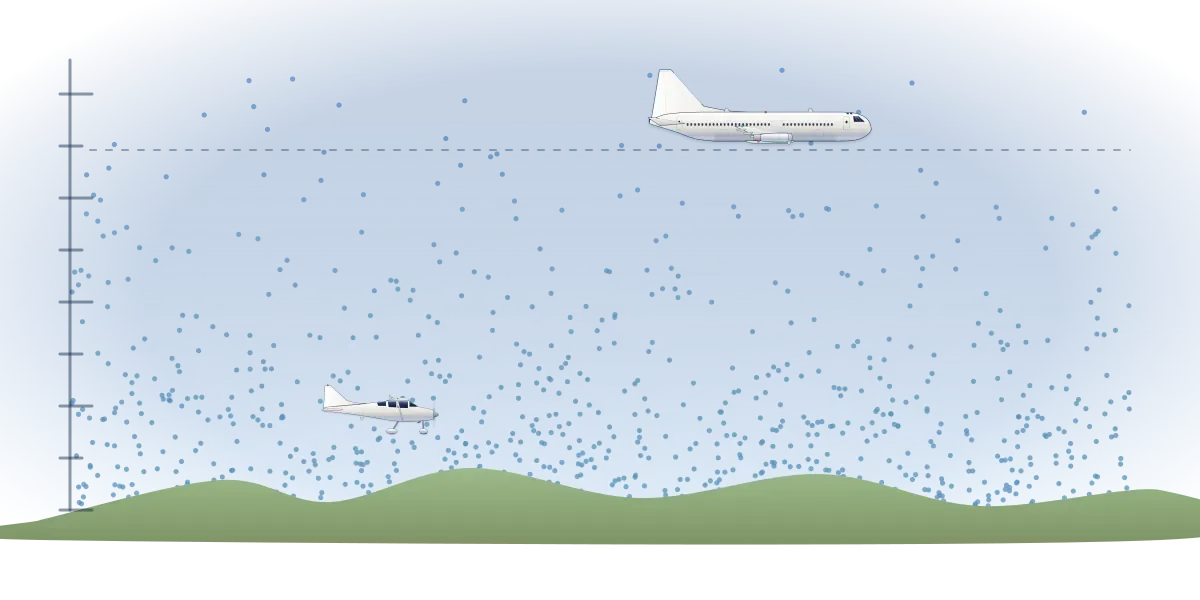
Airliners cruise where the air is too thin to breathe comfortably, so the cabin is pumped up. Typically it is held at a pressure equivalent to about 8,000 feet while the airplane flies far higher; the reasons jets climb so high are in Why do planes fly at 35,000 feet? The fuselage, the long hollow tube that carries everyone, therefore has to be a pressure vessel as well as a structure.
That turns every flight into a loading cycle. On the climb, the pressure difference between the cabin and the thin air outside pushes outward on the skin and the tube swells slightly. On the descent it relaxes. Climb, cruise, descend: one cycle. A short-haul airliner can rack up several cycles a day, and the structure feels every one.
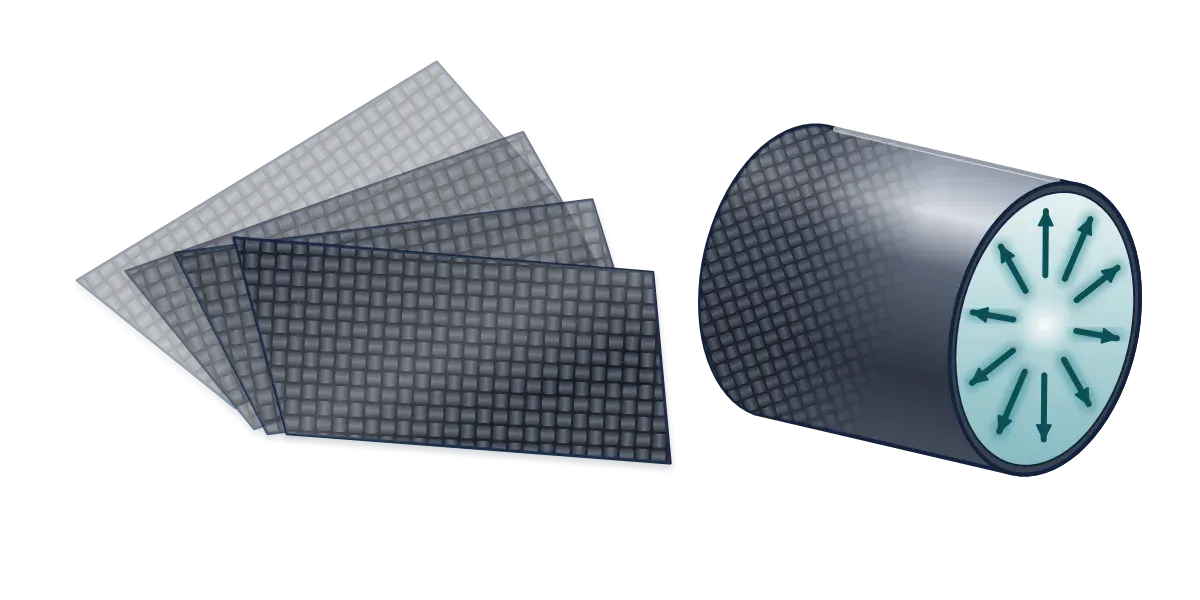
Modern fuselages are semimonocoque: a shell with a skeleton inside. Frames and bulkheads set across the tube like ribs give it its shape, long stringers run between them, and the skin is fastened over the lot so that skin and skeleton share the loads. Every window, door and hatch is a hole cut in that shell, and the load has to find its way around each one.
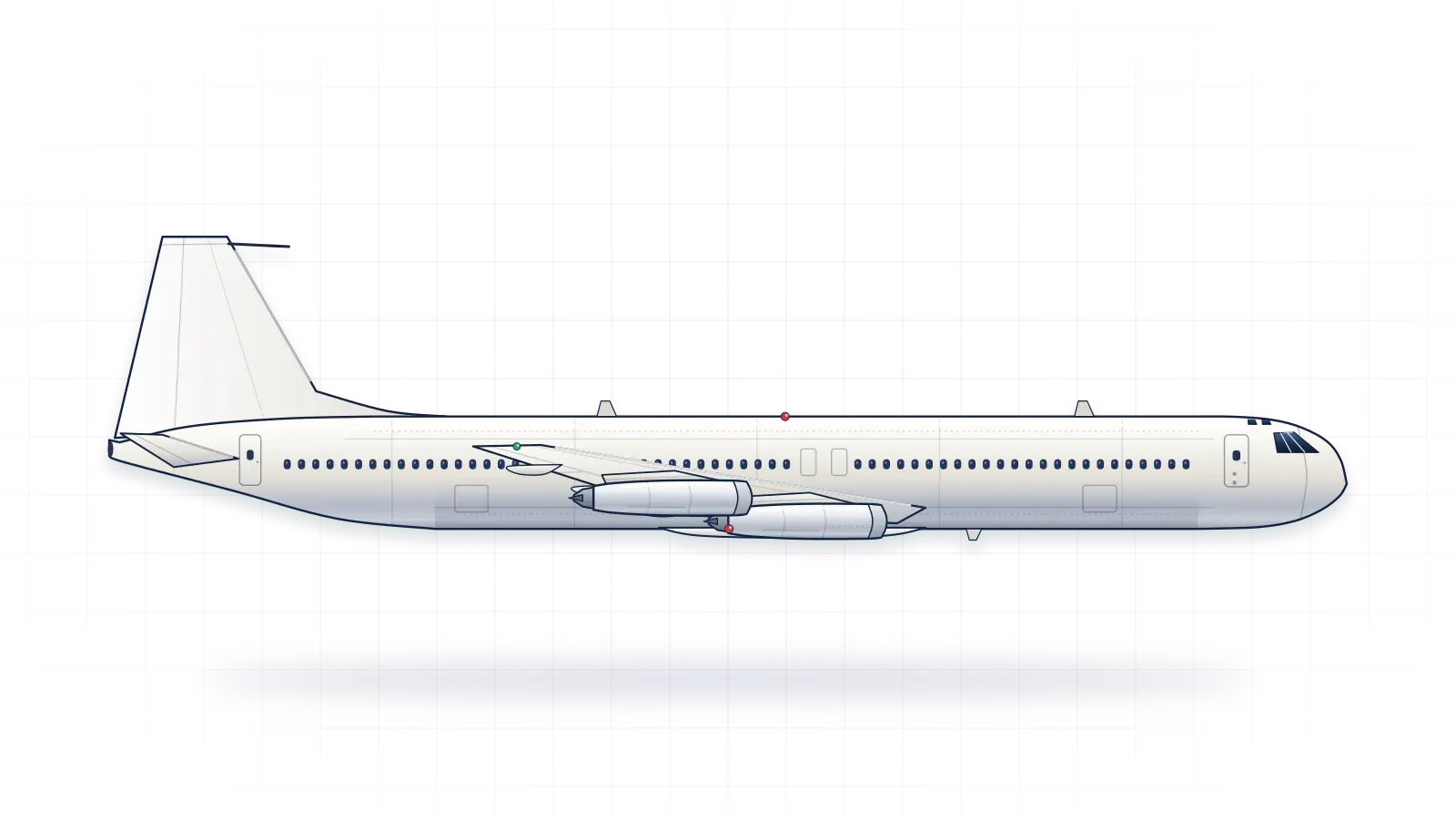
The Comet pushed this further than anyone had. Entering service with BOAC on May 2, 1952, it was the first airliner with turbojets, fully hydraulic controls and a highly pressurized cabin, with a pressure difference of 8.25 pounds per square inch. It carried 36 passengers at about 450 mph and left rival planemakers years behind.
What is metal fatigue?
Metal fatigue is the slow growth of a crack under repeated loads that are each far too small to break the metal outright. Bend a paper clip once and it survives; bend it back and forth and it eventually snaps, at a load it carried easily the first time. In an airframe the bending is the pressurization cycle, and the crack starts wherever the stress is highest.
The FAA’s account of a later accident makes the key point: in a pressurized fuselage, cracks start and grow in step with the number of flights, not the hours flown. That is why an airliner’s age is measured in cycles. In 1988, a section of roof tore away from an Aloha Airlines Boeing 737 that had made 89,680 flights, after many tiny fatigue cracks along a skin joint linked up. The crew landed on Maui, and the inspections of older jets were tightened as a result. The Comet had taught the first version of that lesson 34 years earlier, and at the time fatigue in pressurized cabins was barely understood.
Why did the de Havilland Comet crash?
After about eighteen months of service, two Comets were lost within three months of each other. On January 10, 1954, a Comet that had left Rome for London broke up over the sea near the island of Elba. The fleet was grounded while de Havilland modified the airplanes against every cause anyone could imagine, from control flutter to engine fire, and returned them to service in late March. On April 8, 1954, a second Comet, flying from Rome toward Cairo, was lost near Naples. This time the certificates were withdrawn and the fleet stayed on the ground.
Britain’s Royal Aircraft Establishment at Farnborough led the investigation, and it did two remarkable things. The Royal Navy brought up about 70 percent of the Elba wreckage from the seabed, using underwater television cameras for the first time, and investigators pieced the fuselage back together. Meanwhile a sister Comet, G-ALYU, was sealed into a giant water tank with its wings poking through the tank walls. Water pumped into the cabin reproduced the pressure of flight, hydraulic rams flexed the wings, and the loads of a three-hour flight were applied in ten minutes.
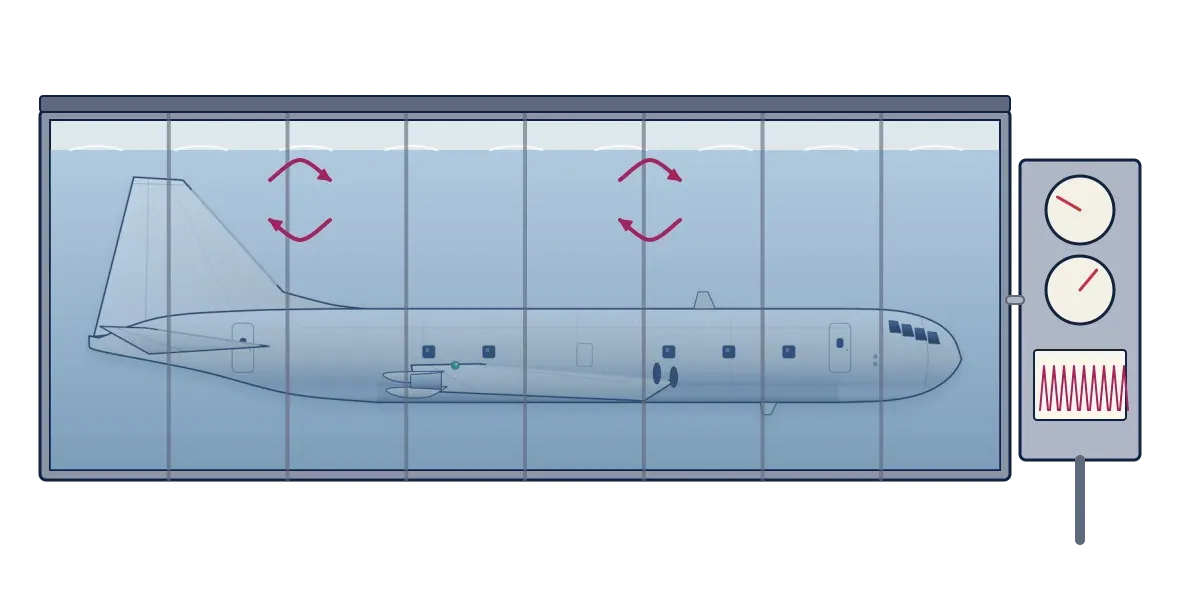
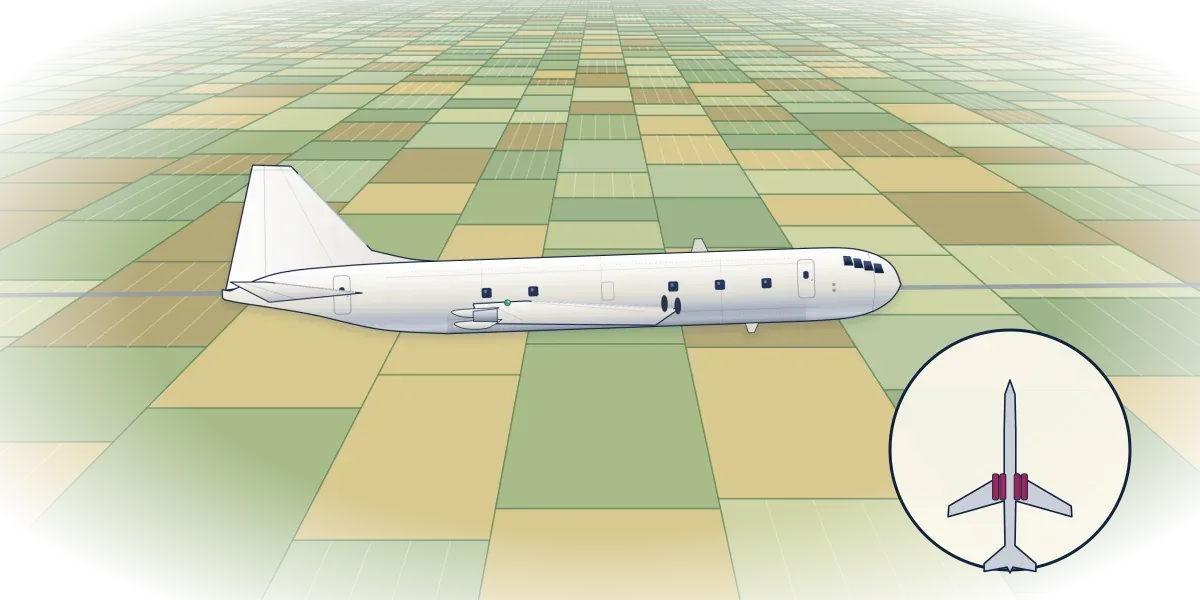
The cabin failed after about 3,060 cycles in all, real flights plus tank flights. (The RAF Museum counts 1,221 real and 1,836 simulated, a total of 3,057; the FAA’s account gives 1,230 and 1,830.) The crack began at a rivet hole at the corner of the squarish cutout for the forward escape hatch. That pointed the investigation at fatigue, and a new search area near Elba turned up the piece of roof that held two squarish windows for the radio direction-finding aerials. It bore what the inquiry called the unmistakable fingerprint of fatigue. The court concluded that the Elba Comet had been lost to structural failure of the pressure cabin, brought about by fatigue starting near one of those windows, and that the same explanation appeared to apply at Naples.
Why had de Havilland’s own tests missed it? The company had tested a prototype fuselage to twice its working pressure to prove it as a pressure vessel, and then used the same fuselage for its fatigue test. The FAA’s analysis explains the trap: the overload had worked the metal around the window corners and changed its properties, so the fatigue test ran to 16,000 cycles. Production Comets, never overloaded, had no such benefit. The Elba airplane had flown 1,290 pressurized flights and the Naples airplane 900.
Why are airplane windows round instead of square?
Because of a stress concentration: a small region where the stress in a material is far higher than in the metal around it. Load flowing through a fuselage skin behaves a little like water flowing around an obstacle. Around a rounded opening it bends smoothly and the stress rises only modestly. At a square corner it cannot turn sharply enough, and it piles up. The FAA’s engineers put the contrast plainly: with modern windows the stress flows around the curved edges with little build-up, and with the Comet’s squarish windows it could not.
That is also why a tear in a plastic bag starts at a nick. A corner is a ready-made starting point, and under thousands of pressurization cycles a crack will find it. Rounding the opening removes the starting point, and making the frame around it carry load helps the skin share the burden. The Comet’s passenger windows were squarish too, as were its escape hatch and its aerial windows, and the lesson applies to every cutout in a pressure cabin, not just the ones passengers look through.
What changed after the Comet?
A great deal, and quickly. In July 1956 Britain’s airworthiness rules were revised to require that fatigue testing be done on a complete pressure cabin that had not already been used for strength tests, closing the gap that had misled de Havilland. Other manufacturers of the era, Boeing among them, built pressurized jets such as the 707 on a “fail-safe” philosophy: critical structure got redundancy, alternate load paths and features to stop and turn a crack if one started. Over the decades that approach and the “safe-life” approach merged into today’s damage-tolerance standards, which assume cracks can exist and require that they be found before they matter.
The rules on windows themselves now say it explicitly. US design standards require window panels in pressurized airplanes to be designed for continuous and cyclic pressurization loading, and to carry the full cabin pressure difference even after any single failure in the installation.
The Comet did not disappear. The redesigned Comet 4 flew in 1958 and offered the first scheduled transatlantic jet service, and de Havilland passed its hard-won fatigue knowledge to other planemakers. By then the 707 had flown, and the jet age that the Comet started belonged to airplanes built on its lessons. What the industry learned from later accidents, and how each one changed the rules, is the subject of How safe is flying, really?
Why are airplane windows so small?
For the same reason they are round. Every window is a gap in the load-carrying skin, and the frame around it has to carry the load the missing skin would have carried. Bigger holes mean heavier frames, and more holes mean more of them, so designers keep windows modest and space them to suit the fuselage frames behind the cabin wall.
Composites have loosened that constraint. The Boeing 787 Dreamliner uses carbon-fiber composites for about half of its main structure, and its fuselage is a composite shell rather than riveted aluminum. That strength lets its cabin sit at a pressure equivalent to 6,000 feet, 2,000 feet lower than conventional jets, behind what Boeing describes as the largest windows of any widebody flying today. The windows are still rounded. The physics of the corner has not changed; only the material around it has.
What to watch for on your next flight
- The window’s corners. Run a finger around the inner frame and notice there is no sharp angle anywhere. That curve is the Comet’s legacy.
- The spacing. Windows sit in a steady rhythm along the cabin because each one is placed between the frames that hold the tube’s shape.
- The lavatory and emergency exits. Their openings are rounded too; the Comet’s fatal crack began at an escape hatch, not a passenger window.
- A 787 or an A350. If you fly one, compare the window size with an older jet. Composites are why the difference exists.
- The cabin on descent. As the airplane comes down, the pressure vessel around you is relaxing from another cycle, exactly the load the Comet’s investigators reproduced in a tank of water.
Every lesson in this story was recovered from wreckage and reconstructed by hand. The instruments that make modern investigations faster and surer are the subject of Why are black boxes orange?
Quiz
Check yourself
-
Question 1 of 3
What is metal fatigue?
- Cracks growing from repeated loads
- Metal weakening as it gets very cold
- Metal melting from engine heat
- Rust forming in damp weather
Show the answer
Answer: A. Fatigue is the gradual growth of a crack under repeated loading below the level that would normally break the material.
-
Question 2 of 3
How did investigators test the Comet's cabin?
- Dropping it from a tall crane
- Freezing it in a cold chamber
- Pressurizing it in a water tank
- Flying it straight into thunderstorms
Show the answer
Answer: C. A Comet sat in a water tank while its cabin was pressurized again and again, packing a three-hour flight into ten minutes.
-
Question 3 of 3
At cruise, an airliner's cabin is usually pressurized to feel like about what altitude?
- Sea level
- About 20,000 feet
- About 8,000 feet
- About 35,000 feet
Show the answer
Answer: C. Pressurization typically keeps the cabin at an altitude of about 8,000 feet, even when the jet cruises far higher.
Guides
Keep reading

Aircraft
From the Hangar
Sources
- Royal Air Force Museum, Comet: The World's First Jet Airliner
- Royal Air Force Museum, Comet Disaster
- Royal Air Force Museum, Comet Failure
- Royal Air Force Museum, Comet Firsts
- Royal Air Force Museum, Comet Retires
- Federal Aviation Administration, Lessons Learned: De Havilland DH-106 Comet 1
- Federal Aviation Administration, Pilot's Handbook of Aeronautical Knowledge (FAA-H-8083-25C)
- NASA Glenn Research Center, Fuselage
- Boeing, 787 By Design
- Federal Aviation Administration, Lessons Learned: Aloha Airlines 737-200, Hawaii
- US Government Publishing Office, 14 CFR 25.775 Windshields and windows
- Boeing, Select Products in Boeing History