BAY 12 Standard
Boeing 777: The First Jetliner Designed Entirely on Computer
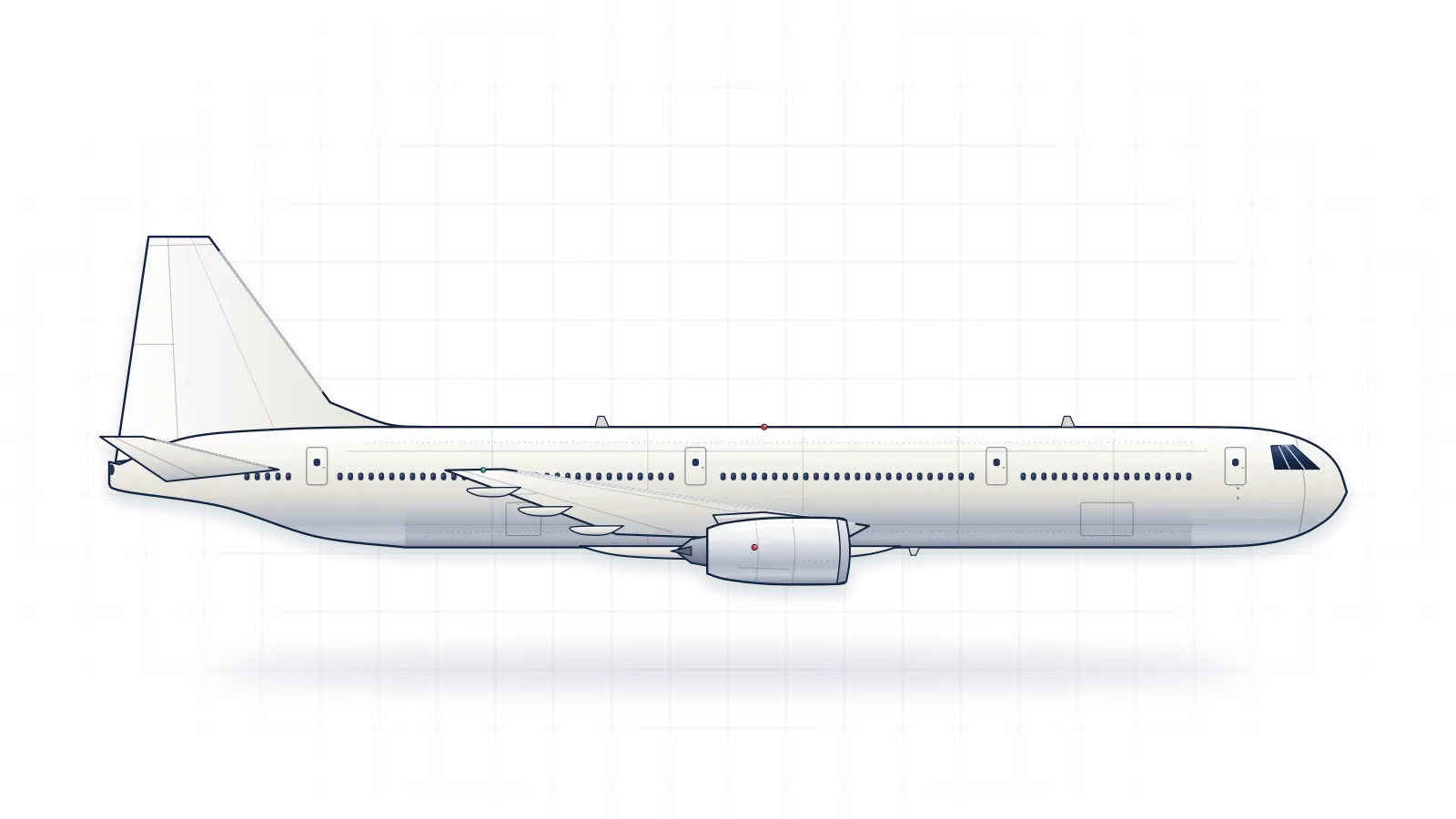
The Boeing 777 was the first jetliner designed 100 percent digitally, preassembled as a 3D computer model instead of a full-scale mock-up. It first flew on June 12, 1994, with a choice of turbofans from three engine makers.
Updated
Role
Widebody airliner
Power
Two turbofans
First flight
June 12, 1994
Tier
Standard
The Boeing 777 is a long-range widebody airliner with two engines, and the first jetliner designed 100 percent digitally. Boeing's engineers preassembled the whole airplane as a three-dimensional computer model instead of building a costly full-scale mock-up. It first flew on June 12, 1994.
It was Boeing's first entirely new airplane in more than a decade. United Airlines launched the program with an order in October 1990 and began 777 passenger service in June 1995, on a route between London and Washington, DC. The new jet was bigger than any twinjet or trijet before it, but smaller than the 747.
The family grew in steps. The larger 777-300 was first delivered to Cathay Pacific in June 1998, and the long-range 777-300ER rolled out on November 14, 2002. The 777-200LR, which Boeing billed as the world's longest-range commercial airplane, and the 777 Freighter completed the lineup. Boeing builds every model at its factory in Everett, Washington.
Quick facts
| Fact | Value | Source |
|---|---|---|
| First flight | June 12, 1994 | 1 |
| Role | Long-range twinjet, larger than any earlier twinjet or trijet | 1 |
| Engines | Two turbofans: Pratt & Whitney PW4000, Rolls-Royce Trent 800 or GE90 | 2 |
| Range | Up to 7,500 nmi (777-200ER, 777-300ER); up to 8,500 nmi (777-200LR) | 2 |
| Passengers | 300 to 375 (777-200ER) or 350 to 425 (777-300ER), two-class | 2 |
| Length | 209 ft 1 in (777-200ER) to 242 ft 4 in (777-300ER) | 2 |
| Orders and deliveries | More than 2,300 ordered and 1,750 delivered, as of December 2025 | 3 |
| Status | In production; 777-9 in flight testing, first delivery planned for 2027 (October 2026) | 5 |
Why the Boeing 777 matters
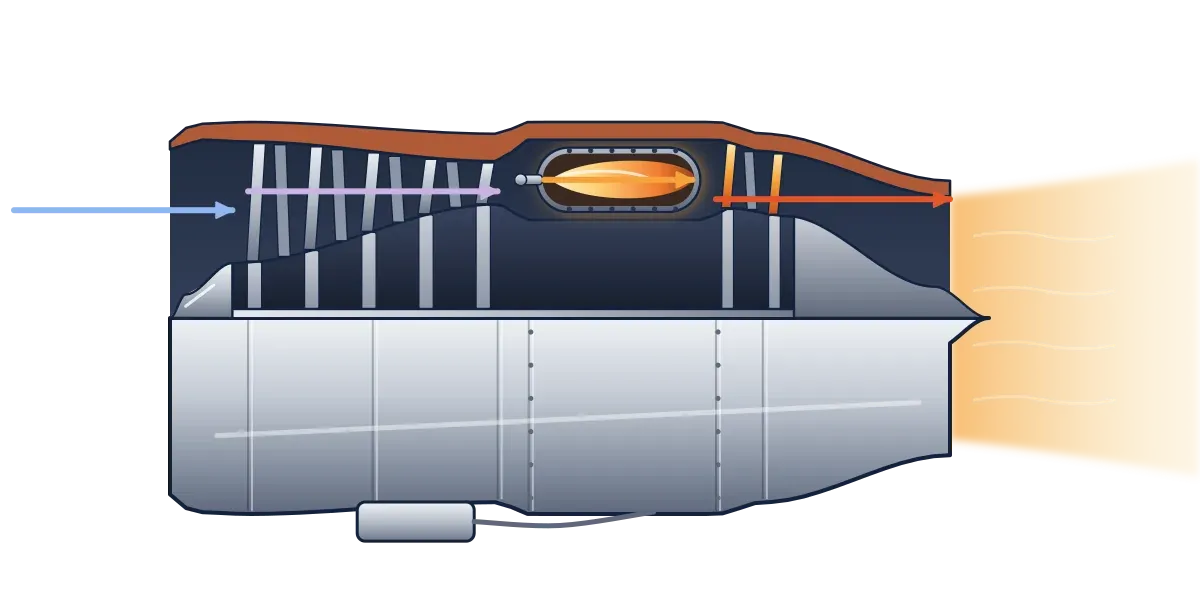
The 777 is a showcase for the turbofan. Airlines could pick engines from three makers: Pratt & Whitney, Rolls-Royce or GE. GE's GE90 was the first airliner engine with composite fan blades. The new 777X uses the GE9X, whose 134-inch fan sends about 10 times as much air around the engine's core as through it. The jet engines guide explains why fans that big save fuel.
It also became a fixture of long-haul flying. By December 2025, nearly 100 customers had ordered more than 2,300 777s, and Boeing had delivered more than 1,750. By Boeing's count, the fleet had carried nearly 4 billion passengers and flown 49 billion miles, and it was making nearly 1,800 flights a day.
Before any passenger boarded, Boeing tested the structure hard. A 1995 static test showed it could bear 150 percent of the highest loads any airplane should meet in service. A fatigue test that ended in 1997 then ran an airframe through 120,000 simulated flight cycles, or three design lifetimes. The turbulence guide explains why such margins matter, and Boeing vs Airbus compares the two makers' families.
Notable facts
- The 777 was the first airplane to have a rose named after it: a deep purple-red variety with a citrus-like scent, bred by Western Independent Nurseries of Olympia, Washington.
- The 777-9's wingtips fold. Its span is 235 feet 5 inches (71.8 m) with the tips extended for flight. Folded on the ground, it shrinks to 212 feet 9 inches (64.8 m), about the same as a 777-300ER's span.
- At 251 feet 9 inches (76.7 m) long, the 777-9 seats 375 to 450 passengers in two classes, by Boeing's figures.
- Boeing launched the 777X at the Dubai Airshow in November 2013 with 259 commitments from four customers. As of October 2026, the 777-9 was in flight testing, with first delivery planned for 2027.
- The GE9X holds a world record of 134,300 pounds of thrust, yet it has only 16 composite fan blades, six fewer than the GE90.
In Planeology
In the app, each lesson you pass parks an aircraft in your Hangar. The Boeing 777 is Bay 12 of 56. Earn it by passing Turbofans, in the Engines & Propulsion lesson group.
Guides
Guides to read next
Aircraft
Nearby in the Hangar
Sources
- Boeing, Select Products in Boeing History
- Boeing, 777
- Boeing, Video: 20 ways to say 'thank you' for 30 years of 777 flights
- Boeing, 777X
- Boeing, Boeing Reports Third Quarter Results
- Boeing, 777 Quality Information
- GE Aerospace, GE90 Engine
- GE Aerospace, GE9X Engine