LEG 01 · How Flight Works
What Is a Stall in an Aircraft? (It's Not the Engine)
The engine keeps running. What stops working is the smooth flow of air over the wing.
Updated · 7 min read
The short answer
In aviation, a stall is not an engine failure. It happens when a wing meets the air at too steep an angle, beyond its critical angle of attack. The smooth flow over the top surface breaks away and lift drops sharply. Because the angle is what matters, a wing can stall at any speed, so airplanes carry stall warnings.
Say “stall” to most people and they picture a car engine coughing to a halt at a red light. In an airplane the word means something else entirely, and the engine is usually running perfectly when it happens. A stall is about the wing and the air. Once you see what the air is doing, a lot of other things about flight start to make sense.
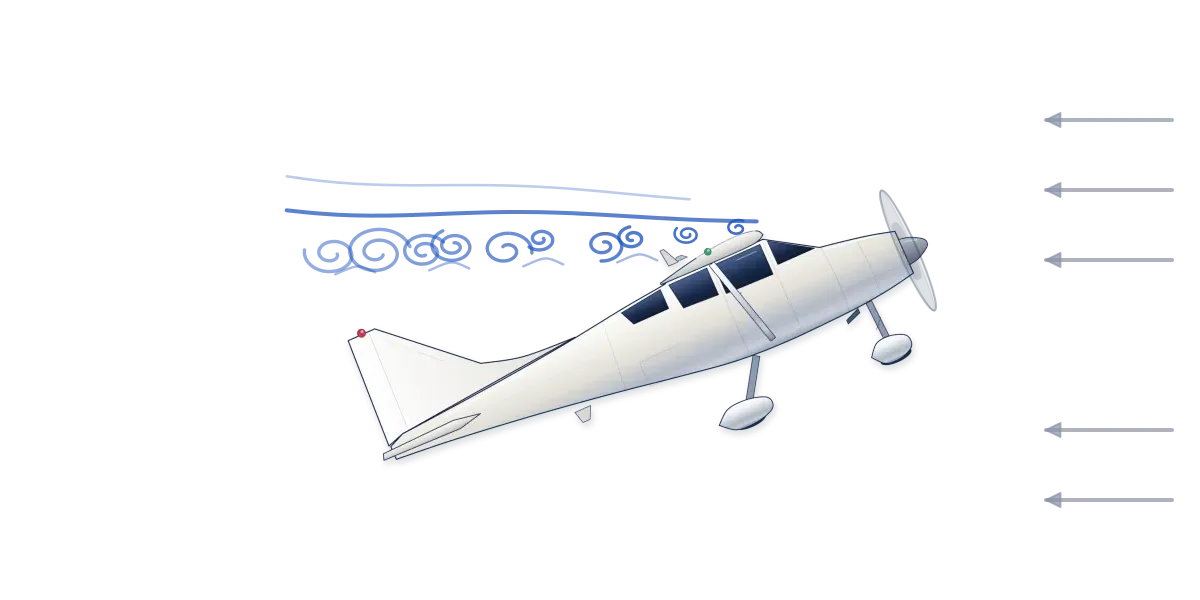
What is a stall in aviation?
In aviation, a stall is what happens when a wing meets the air at too steep an angle. The smooth flow over the top surface breaks away, and the wing suddenly loses much of its lift. The engine has nothing to do with it. It can be at full power or idling, and the wing stalls just the same.
To see why, go back to how a wing works. A wing makes lift by bending the oncoming air downward, and the air pushes back up in return; How do planes fly? tells that story in full. The part that matters here is the angle at which the wing meets the air, because that angle has a limit.
What is the critical angle of attack?
Slice a wing from front to back and you get its airfoil. The chord line is a straight line from the leading edge to the trailing edge, and the angle of attack is the angle between that line and the oncoming air. It is measured against the air, not the horizon. An airplane can have a high angle of attack with its nose barely raised, and a modest one while climbing steeply at speed.
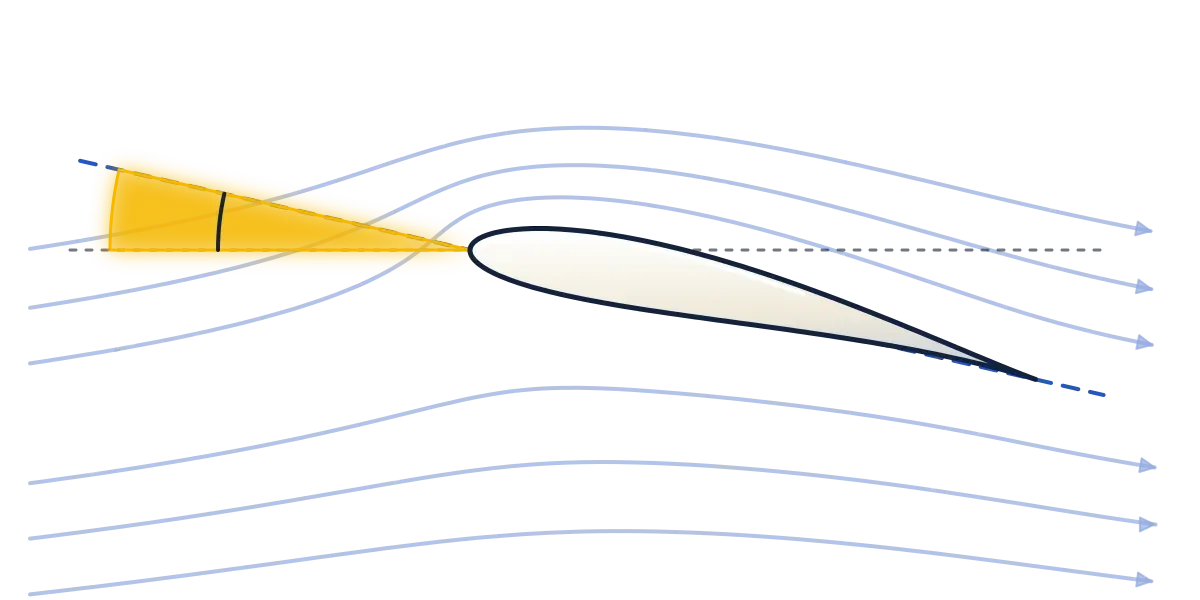
For modest angles, lift rises steadily as the angle grows. NASA’s Beginner’s Guide to Aeronautics puts the near-straight-line part of that relationship at roughly plus or minus 10 degrees. Keep tilting and the curve bends over, then breaks. At the critical angle of attack, roughly 16 to 20 degrees depending on the design, the air can no longer follow the curve of the upper surface; it separates, and lift falls away sharply.
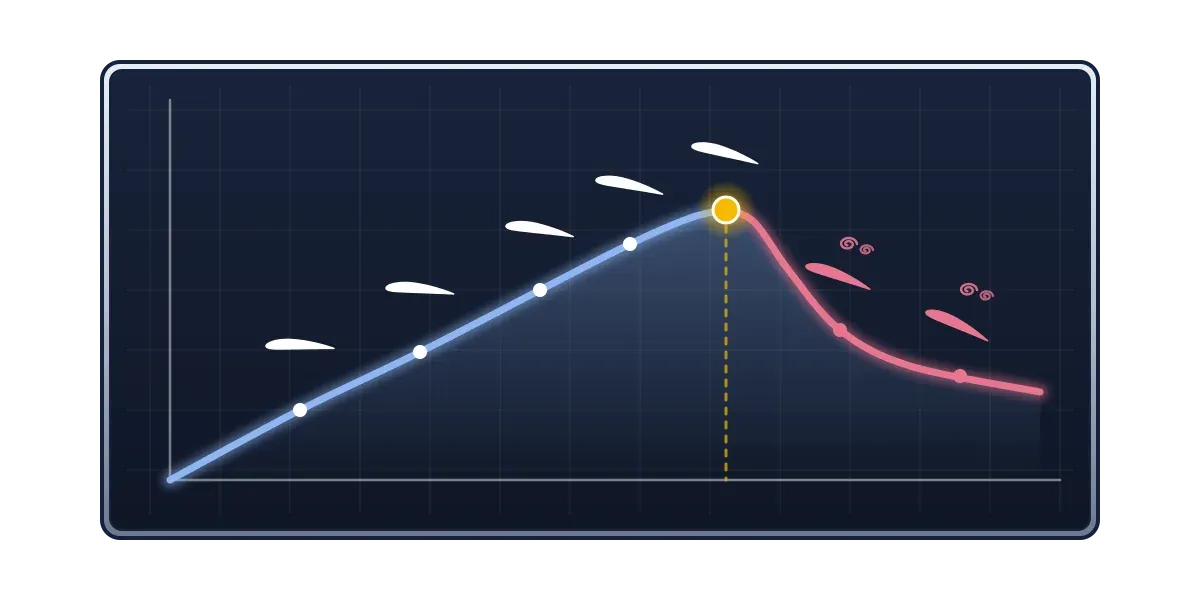
The reason lies in a thin layer of air that clings to the wing’s surface, the boundary layer. At low angles it stays attached, and the air outside it flows smoothly along the curve. At high angles the boundary layer lifts off, or separates, and the wing’s effective shape, as the air sees it, is no longer a wing. The FAA’s handbook makes the key point: a given airplane always stalls at the same angle of attack, whatever its speed, weight or altitude.
Why do planes stall at low speeds?
Because lift depends on speed as well as angle. Slow down and the wing makes less lift at any given angle, so it must meet the air at a higher angle to keep holding the airplane up. Keep slowing and the angle keeps rising, until it reaches the critical angle. That is where the idea of a stall speed comes from: for a given weight and wing setting, it is the speed at which the wing would need its critical angle just to carry the airplane.
The handbook is careful to add that the stall speed is not a fixed number. It rises with weight, and it rises in a turn, because the wing then has to carry the airplane’s weight plus the extra load of turning. The relationship is neat: the stall speed grows in proportion to the square root of the load factor. Flaps and slats push the number the other way, which is why they come out before landing, as What do flaps and slats do? explains.
Can a plane stall at any speed?
Yes, and it is the point that surprises most people. Because the angle is what counts, a wing can be pushed past its critical angle at any airspeed and in any attitude, nose high or nose low. The FAA handbook gives an example: an airplane diving at 100 knots whose nose is pulled up sharply. Its flight path cannot change instantly, so for a moment the wing meets the air at a very steep angle, and it stalls at a speed far above its usual stall speed.
The handbook lists three situations in which the critical angle is most often exceeded: flying too slowly, pulling up hard at high speed, and turning. All three come back to the same geometry. Nothing about the engine appears on the list.
What happens when a plane stalls?
A stalled wing does not stop lifting entirely. It still makes some lift, just not enough to hold the airplane up, so the airplane begins to sink. Drag rises sharply at the same time, because the wake behind a stalled wing is wide and turbulent. That turbulent wake is also what crews feel as a shudder through the airframe when a stall is close.
Designers decide where a stall begins. The FAA handbook notes that a plain rectangular wing tends to stall first at the root, next to the fuselage, which gives good warning and keeps the ailerons out at the tips working. An elliptical wing, for all its efficiency, gives little advance warning. Other wing shapes are often given a slight twist along their length to spread the lift the way the designers want.
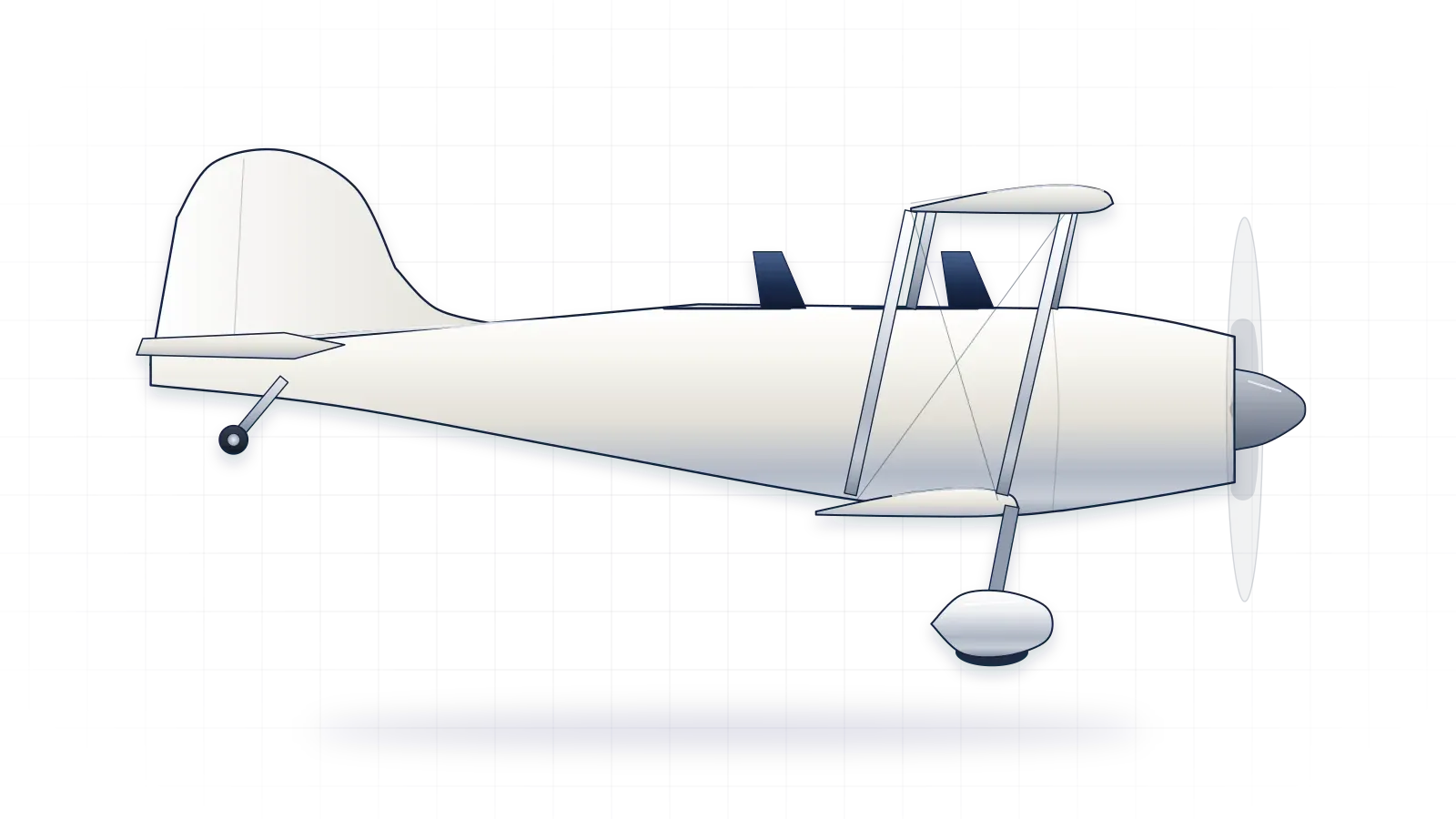
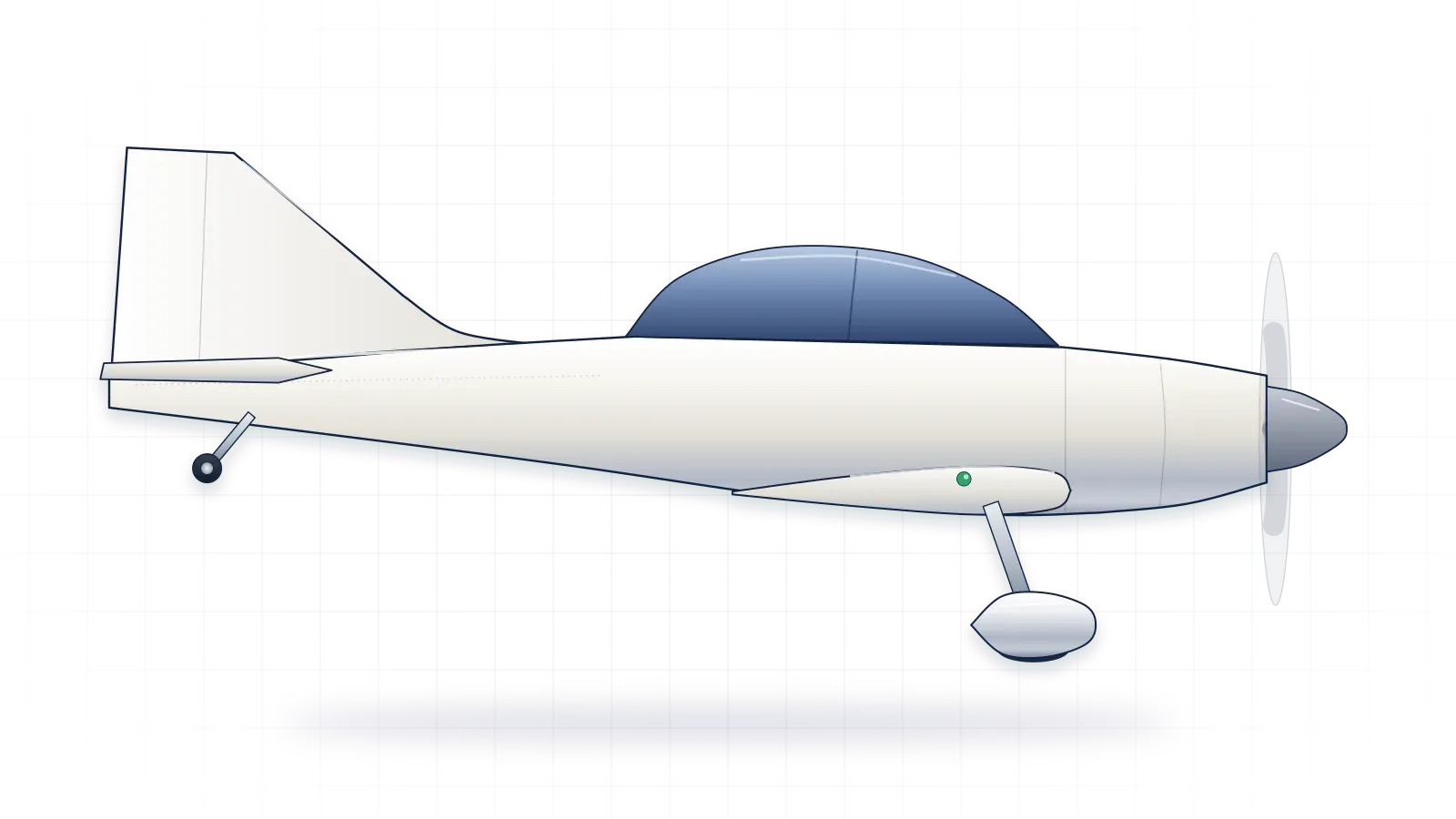
If one wing stalls more than the other, the airplane can roll and enter a spin, which the handbook defines as an aggravated stall that sends the airplane down a corkscrew path. Aerobatic pilots do this on purpose. A Pitts Special spinning at an air show is a stall under full control. An Extra 300 flying upside down is a wing held at just the right angle of attack, so it keeps turning the air downward whichever way up it is.
What is a stall warning?
Airplanes tell their crews when a stall is near, well before it arrives. Light airplanes carry a stall warning device, often a horn that sounds as the wing nears its critical angle. Many jets add a stick shaker, which vibrates the control column, and it starts while the airplane is still 5 to 7 percent faster than its stall speed. Some aircraft go a step further with a stick pusher, which moves the controls forward on its own at about one knot above the stall speed, so the stall never develops.
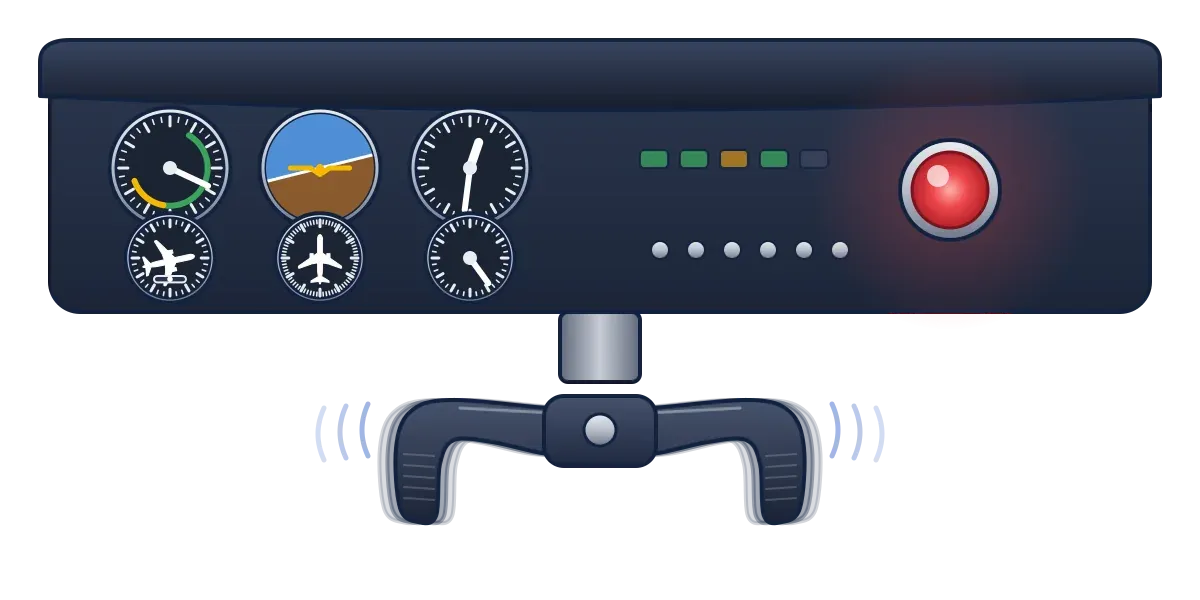
Angle of attack indicators show the margin directly, as a gauge of how close the wing is to its limit. The FAA has been promoting them for light airplanes. It reports that loss of control is the leading root cause of fatal accidents in both general aviation and commercial flying, and that stalls figure in many of those. Airliners watch the angle too, and the computers of a fly-by-wire jet keep a close eye on it, as described in How does autopilot work?
What is a deep stall?
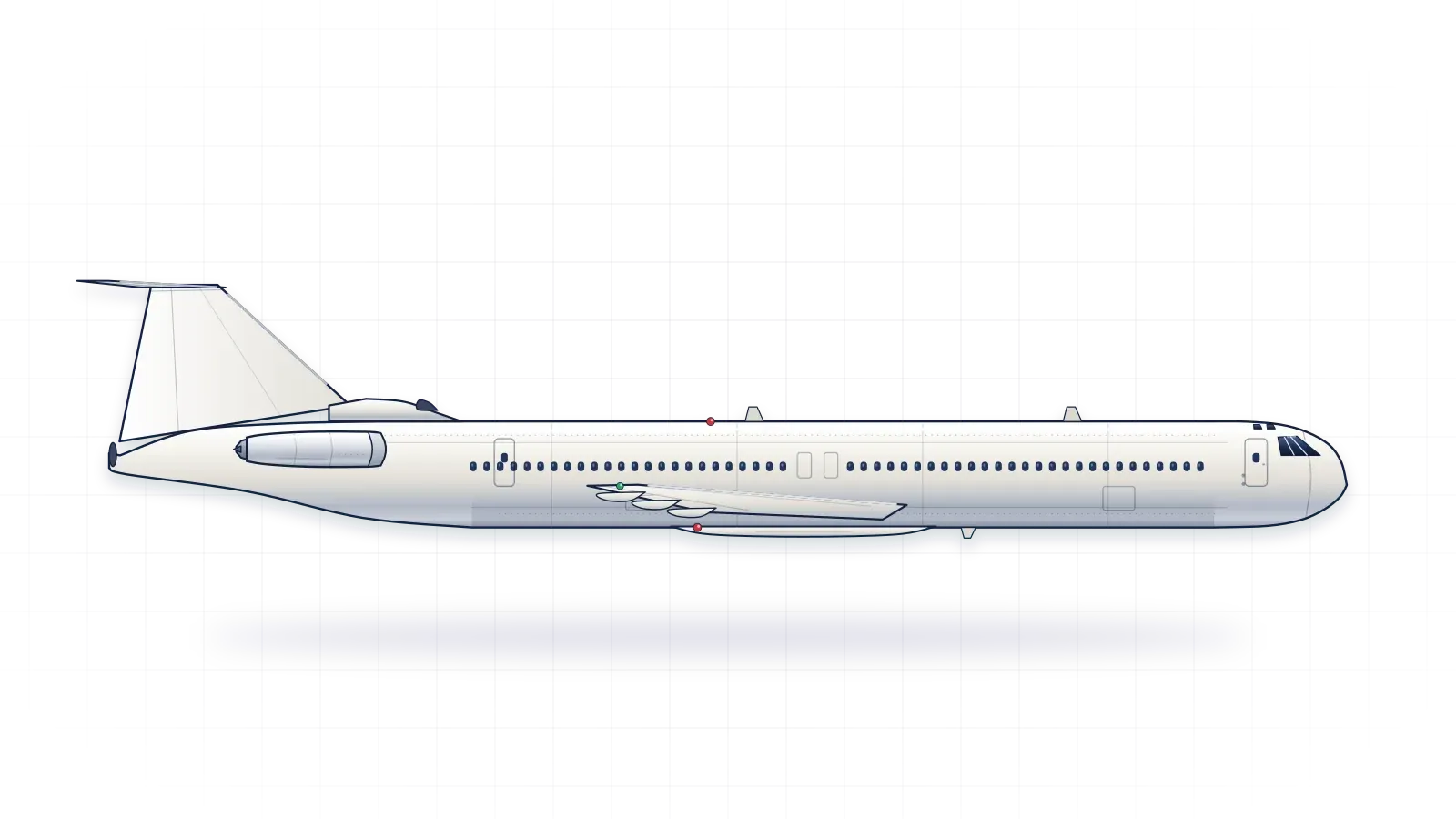
A deep stall is a stall the tail cannot help with. Some designs carry the horizontal tail high on top of the fin, a T-tail, and the Boeing 727, with its three engines clustered at the back, is the classic example of the layout. At a very steep angle, with the airplane slow and its weight toward the rear, the wide turbulent wake from a fully stalled wing can wash over that high tail. The elevator is then left with little or no effect.
The FAA handbook notes that a deep stall can happen to any airplane, but it is more likely with a T-tail, and more likely again when the engines sit at the rear. That puts it more on the minds of airliner designers than of light-airplane builders. That is one reason those designs carry stick pushers. The handbook adds that T-tail aircraft tend to pitch up when stalled nose-high, and the pusher stops that kind of stall from developing.
What is a compressor stall?
There is one stall that really is about the engine, and it borrows the same physics. The blades inside a jet engine’s compressor are small airfoils, each meeting the air at an angle set by the speed of the incoming air and the spin of the compressor. If that angle passes the critical angle, the flow over the blades breaks down. The air in the compressor slows, stagnates and can even reverse direction.
That is a compressor stall, and it is as far from a wing stall as an engine problem can be. How do jet engines work? explains the machine it happens in. The two share only a name and an airfoil.
What to watch for on your next flight
- Just after takeoff, the nose points high while the airplane is slow. The wing is working at a large angle of attack, but still well short of the critical angle, and the warning systems would speak long before it.
- Before landing, the flaps and slats slide out. They let the wing make the same lift at a lower speed, which pushes the stall speed down for the approach.
- In the last seconds before touchdown, the nose rises as the airplane settles. The speed is bleeding off and the angle of attack is rising to make up for it, exactly the trade described above.
- At an air show, a spin is a stall on purpose, and a biplane hanging upside down is a wing held at the right angle.
A stall, then, is not a failure of power but of airflow: the one angle a wing cannot exceed. The moving surfaces that let a wing fly slowly without reaching it are the subject of What do flaps and slats do?
Quiz
Check yourself
-
Question 1 of 3
In aviation, what makes a wing stall?
- Flying faster than a set speed
- Climbing above a set altitude
- The engine losing power in flight
- Too high an angle of attack
Show the answer
Answer: D. A wing stalls when its angle of attack passes the critical angle and the airflow over the top breaks away.
-
Question 2 of 3
What does a stick shaker do?
- Alerts the crew that a door is unlatched
- Shakes the controls to warn of a stall
- Tests the control cables before flight
- Smooths out bumps caused by turbulence
Show the answer
Answer: B. A stick shaker vibrates the control column to warn the crew that the wing is nearing its critical angle of attack.
-
Question 3 of 3
What is a wing's angle of attack?
- The wing's angle to the oncoming air
- How far the wings tilt in a turn
- The angle between the nose and the horizon
- The wing's angle to the fuselage
Show the answer
Answer: A. Angle of attack is measured between the wing's chord line and the oncoming air, not the horizon.
Guides
Keep reading
How Flight Works
How Do Planes Fly? Lift, Thrust, Drag and Weight, Explained
Anatomy of an Airplane
What Are Those Moving Parts on the Wing? Flaps, Slats and Spoilers
Engines & Propulsion
How Do Jet Engines Work? Turbojets, Turbofans and Turboprops
In the Cockpit
How Does Autopilot Work? Do Pilots Still Fly the Plane?
Aircraft
From the Hangar
Sources
- Federal Aviation Administration, Pilot's Handbook of Aeronautical Knowledge (FAA-H-8083-25C)
- NASA Glenn Research Center, Effects of Inclination on Lift
- Smithsonian National Air and Space Museum, Pitts S-1C Special
- Boeing, Select Products in Boeing History