LEG 02 · Anatomy of an Airplane
What Are Those Moving Parts on the Wing? Flaps, Slats and Spoilers
A wing built for fast cruising has to land slowly. The moving parts are how it changes shape to do both.
Updated · 7 min read
The short answer
Flaps slide out and down from the back of the wing, adding area and curve so it can make enough lift at takeoff and landing speeds. Slats do the same job at the front and delay the stall. Spoilers rise on top of the wing to cut lift and add drag, and ailerons near the tips roll the airplane.
Take a window seat over the wing and the last ten minutes of a flight become a show. Panels slide out of the back of the wing in stages, the front edge droops, and the whole thing grows until it hardly looks like the wing you took off with. Then, the moment the wheels touch, slabs on top flip up. None of it is random: each moving part solves a different problem, and this guide names them all.
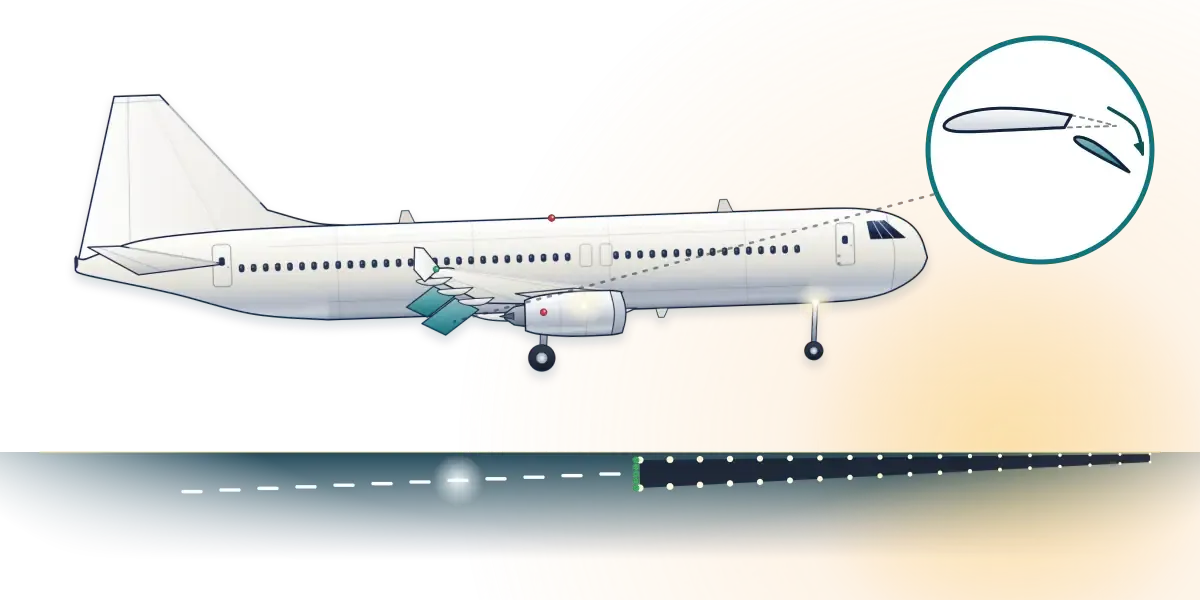
What are flaps on a plane?
Flaps are the hinged or sliding panels along the trailing edge of the wing, the back edge. A wing shaped for fast cruising is not ideal for landing slowly, so it changes shape. When the flaps come out they add curve, and on most airliners area too, and the wing makes more lift at any given speed. That lets the airplane fly more slowly, and the extra drag helps it slow down.
The FAA’s handbook calls flaps the most common high-lift device and describes four types. Plain flaps simply hinge down, and split flaps hinge down from the lower surface only. Slotted flaps open a gap as they move, and the handbook calls them the most popular flap on aircraft today. Fowler flaps slide backward on tracks before they tilt down, which is why an airliner’s wing looks so much bigger on approach: the flaps have grown the wing, not just bent it.
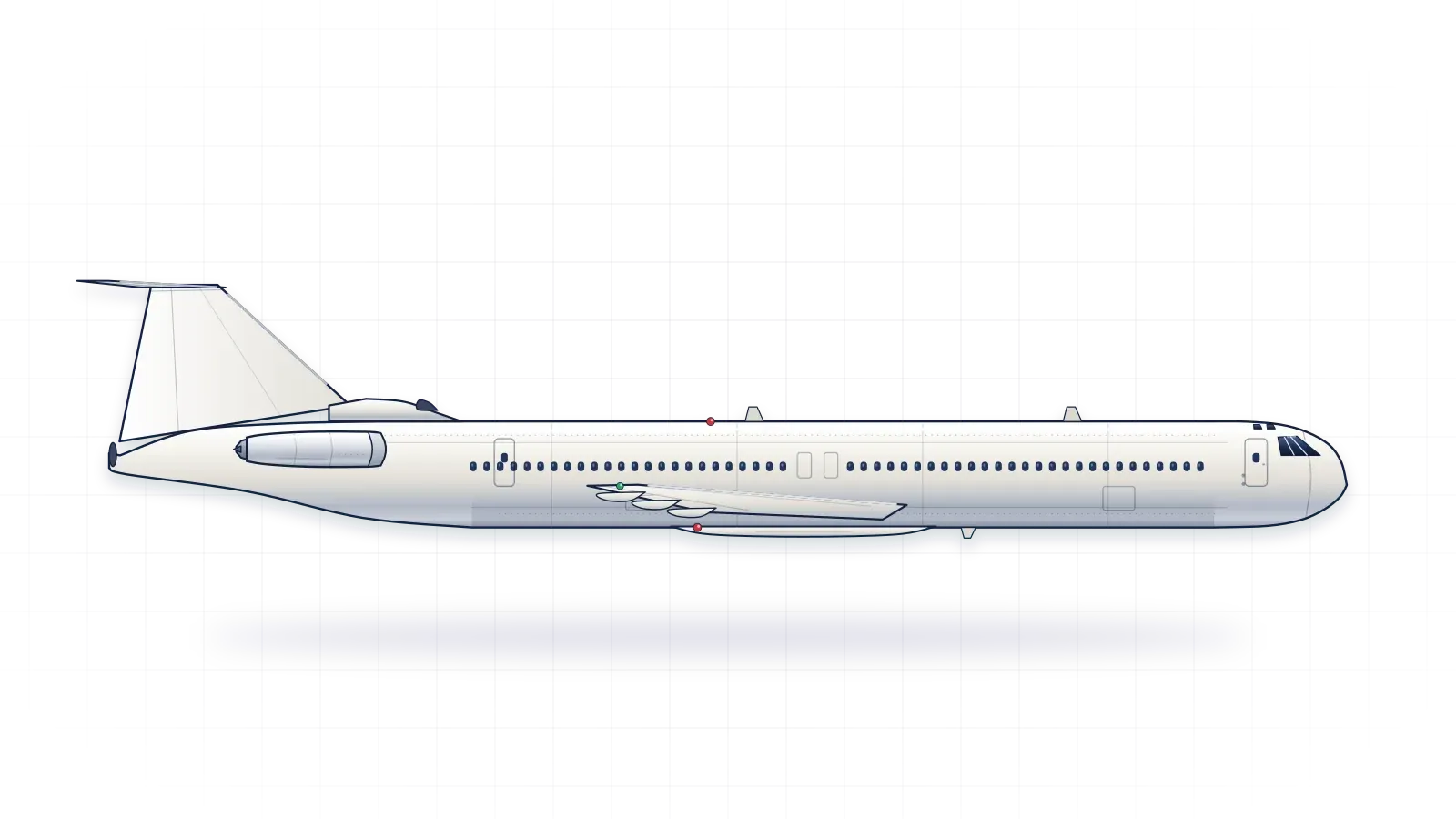
The slot is the clever part. When a slotted flap lowers, high-energy air from under the wing is ducted through the gap onto the flap’s upper surface, which keeps the flow attached and lets the flap work at a steeper angle. Large airliners often use double-slotted flaps, and the Boeing 727, designed for smaller airports with short runways, was the first Boeing jetliner with triple-slotted flaps. In photographs of a 727 on approach, the back of the wing unfolds in three steps.
What do flaps do when landing?
Two things at once. Lift grows with the square of speed, so a wing slowing down for landing needs more lift from every bit of speed it has left. Flaps supply it, and NASA’s Beginner’s Guide to Aeronautics notes that for landing, crews want high lift and high drag, so the flaps and slats are fully deployed. The drag is welcome, because an airplane that is trying to slow down and descend at the same time has to shed energy somehow.
Takeoff is the opposite trade. NASA’s guide says takeoff calls for high lift and low drag, so the flaps are set to a moderate position: enough extra lift to leave the runway sooner, without the drag of the full landing setting. The FAA handbook adds that the first part of a Fowler flap’s travel adds a lot of lift for very little drag, and the last part adds drag with little extra lift. That is the logic of flap settings in one line: a little for takeoff, a lot for landing.
Flaps also nudge the airplane’s balance. Lowering them shifts where the wing’s lift acts and produces a pitching moment, nose-up or nose-down depending on the airplane, which the crew trims out. It is one reason you feel small changes in attitude as each stage comes out on approach.
What are slats on a plane?
Slats are the front-edge equivalent. On many jets, the leading edge itself slides forward on tracks and droops, opening a narrow slot behind it. Air flowing through the slot streams over the top of the wing and keeps the airflow attached, so the wing can reach a higher angle of attack before it stalls. That is the difference between flaps and slats in a sentence: flaps mostly add lift at a given angle, and slats mostly let the wing use a bigger angle.
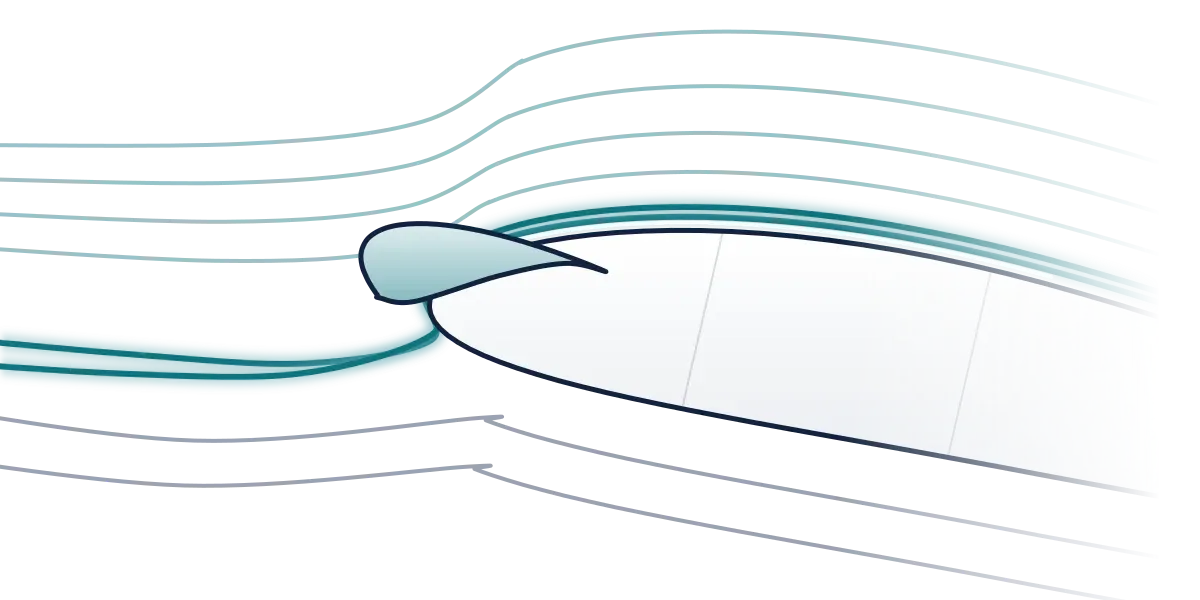
The FAA handbook lists the whole leading-edge family: fixed slots, movable slats, leading-edge flaps and fixed cuffs. Some slats on light aircraft are not even powered. They are held flush by the high pressure at the leading edge and slide out on their own as the angle of attack rises and that pressure moves aft. Airliners move theirs with hydraulics, usually in step with the flaps. Why that higher angle matters so much is the subject of What is a stall?
What are spoilers on a plane?
Spoilers are the panels that pop up on top of the wing. Their job is in the name: they spoil the smooth airflow over the upper surface, which reduces lift and adds drag. The FAA handbook notes that they are extended immediately after touchdown to dump the wing’s lift and transfer the airplane’s weight onto the wheels, so the brakes have something to work with. On an airliner they snap up the instant the main gear touches.
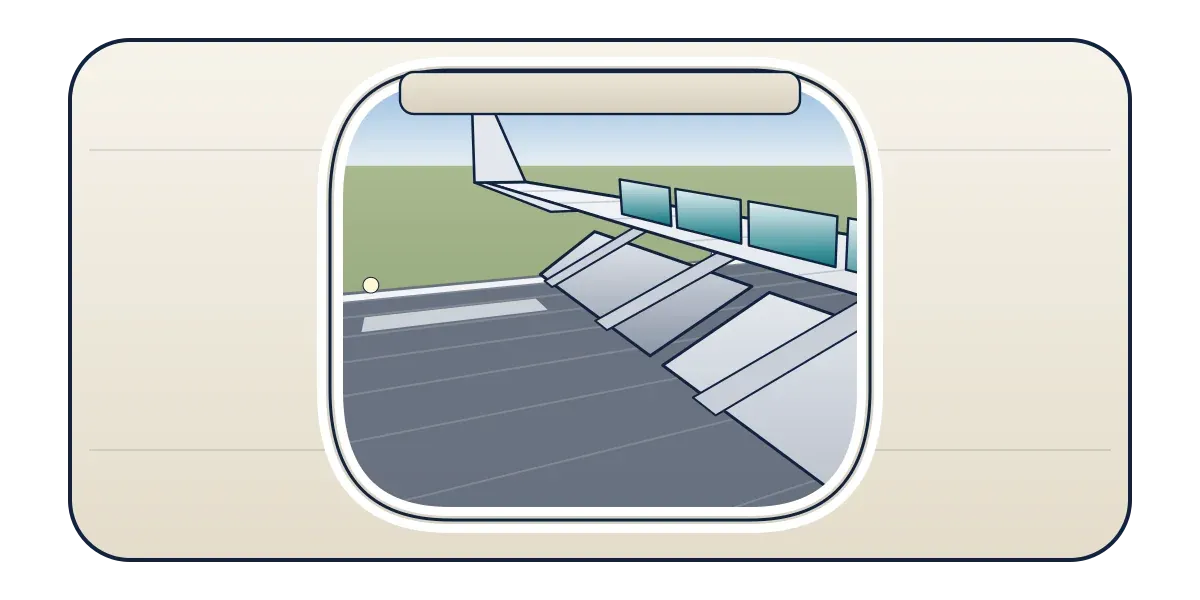
They have a second job in the air. Jets are so clean, with so little drag, that they can struggle to slow down or come down quickly, and the handbook says high-speed aircraft use spoilers as speed brakes. When air traffic control asks for a steeper descent, a few panels rise partway and the airplane sheds energy with a low rumble you can feel through the floor.
And on many airliners they help with roll. The handbook describes spoilers that rise on one wing to supplement the ailerons in a turn, spoiling lift on the side that needs to drop. So the panel you see twitching up alone on one wing in cruise is not a fault. It is the wing banking.
What do ailerons do on a plane?
Ailerons are the hinged panels near each wingtip, and they move in opposite directions. As the left one rises, the right one drops. One wing gains lift while the other loses some, and the airplane rolls. Rolling into a bank is how an airplane begins a turn, so every heading change you feel starts with the ailerons.
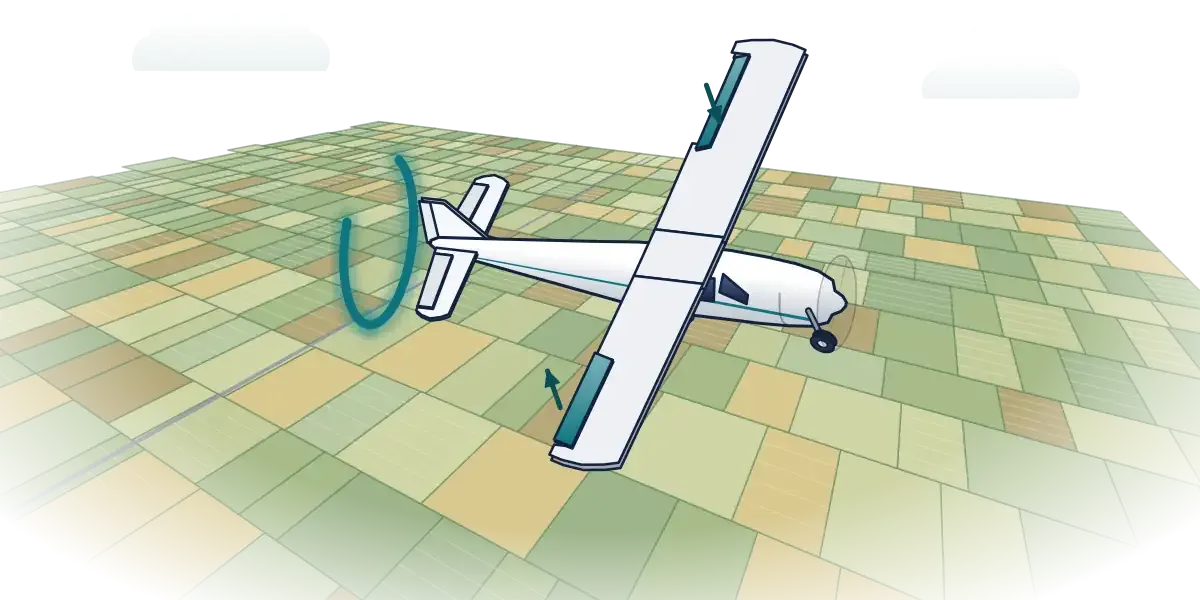
An airplane rotates about three axes that meet at its center of gravity, and roll is the ailerons’ job. Pitch, nose up or down, belongs to the elevator on the horizontal tail, and yaw, nose left or right, belongs to the rudder on the fin. Some airplanes combine flaps and ailerons into one set of surfaces called flaperons. The handbook describes them banking the airplane like ailerons and lowering together like flaps, with a mixer blending the two commands.
The idea is older than the hinge. The Wright brothers rolled their Flyer by twisting the whole wing, an approach called wing warping, and NASA revisited the idea a century later with the X-53, which flexed its wings to control the airplane. Hinged ailerons took over almost everything in between, as The Wright brothers’ first flight explains.
What are the tail flaps on a plane called?
The moving panels on the tail are not flaps at all, though they look similar from a window seat. The horizontal tail carries the elevator, which tips the nose up or down. The vertical fin carries the rudder, which swings the nose left or right. Some airplanes use a stabilator, a horizontal tail that moves as one piece, and many large airplanes can tilt the whole horizontal stabilizer slowly to trim the airplane, so the elevator does not have to hold a constant push.
Small aircraft trim with a tab: a little hinged strip on the trailing edge of the elevator that pushes the main surface the other way, relieving the pilot of holding steady pressure on the controls. On the ground you can spot tabs on many light airplanes, bent a few degrees away from the surface they ride on.
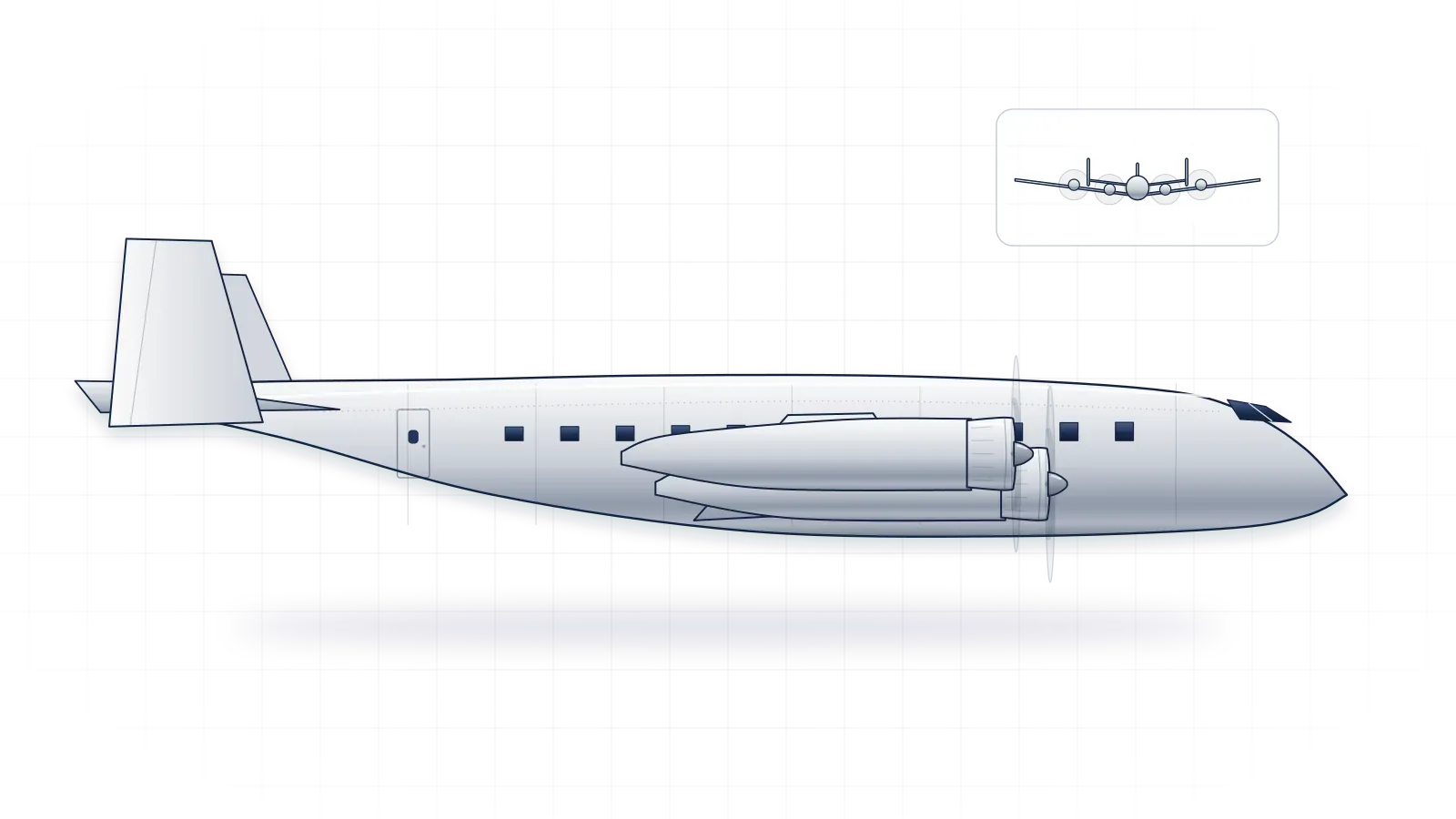
Moving all of this takes force. On small airplanes the surfaces are linked to the controls by cables and rods, and on large ones hydraulics do the work. The Lockheed Constellation was the first airliner with hydraulically boosted controls, which Lockheed Martin compares to power steering, and Boeing’s 727 was that company’s first jetliner with completely powered flight controls.
What to watch for on your next flight
- On the taxi out, the flaps run out to their takeoff setting, and you may hear the hydraulics working under the floor.
- After takeoff, the flaps and slats retract in stages as the speed builds, and the wing turns slim again within a few minutes.
- In cruise, the ailerons flicker constantly, making tiny corrections, and a single spoiler panel may lift briefly on one side as the airplane turns.
- In the descent, the spoilers rise partway as speed brakes and the cabin fills with a soft rumble.
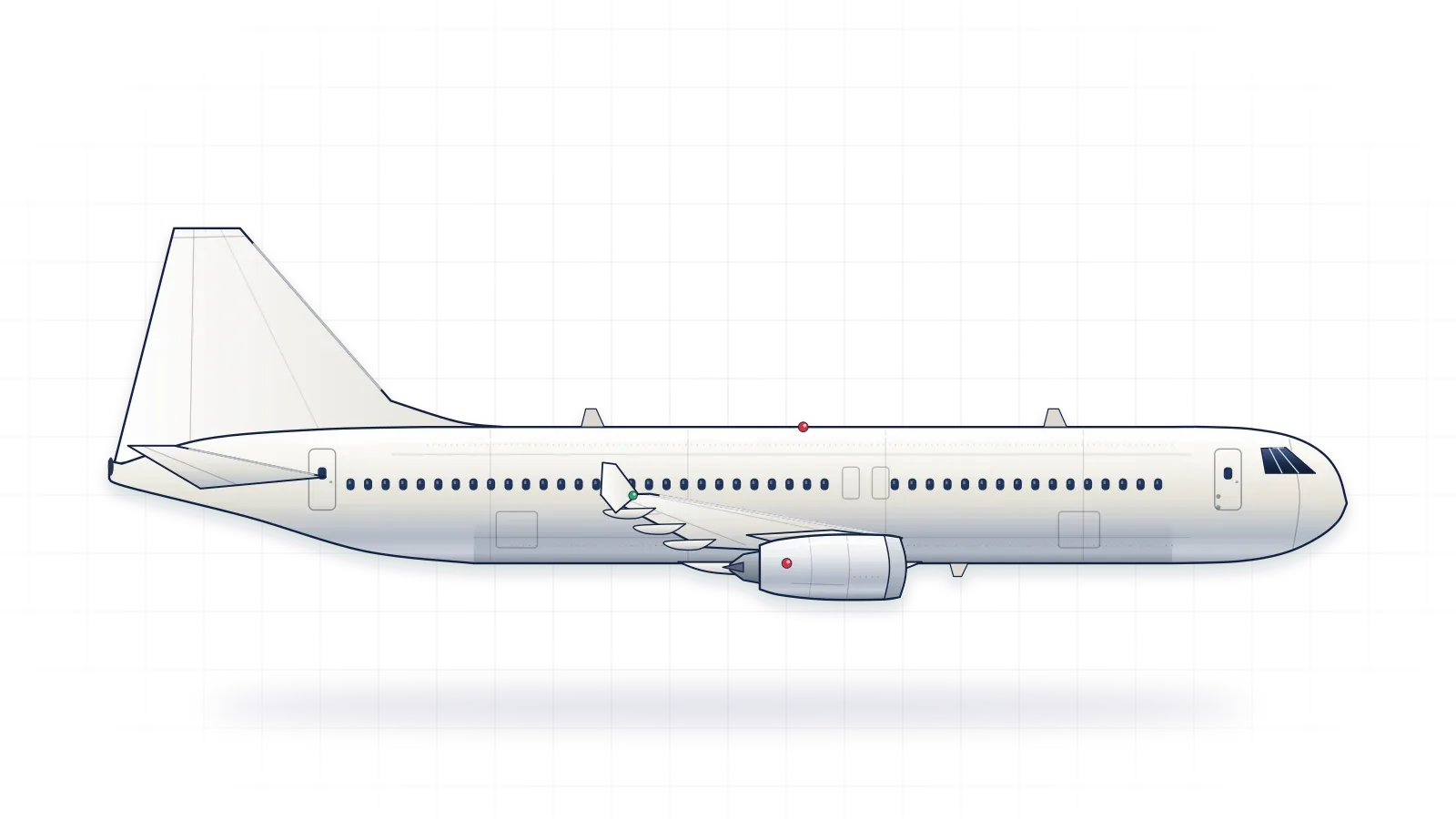
- On approach, the slats come out first, then the flaps in stages. The canoe-shaped fairings under the wing house the tracks they slide on.
- At touchdown, every spoiler panel snaps up at once, and on the taxi in the flaps fold quietly back into the wing.
Flaps, slats, spoilers and ailerons: four kinds of moving part, four different problems solved. Once you can name them, the wing outside the window becomes a machine you can read, and telling one airliner from another gets easier too, as Boeing vs Airbus shows.
Quiz
Check yourself
-
Question 1 of 3
What do extended flaps do to a wing?
- Add both lift and drag
- Reduce both lift and drag
- Cut lift but add drag
- Add lift but cut drag
Show the answer
Answer: A. Flaps add curve and often area, raising lift for slow flight, and they add drag at the same time.
-
Question 2 of 3
What do spoilers do right after an airliner touches down?
- Reverse the engines' thrust
- Add lift to soften touchdown
- Cool the brakes with air
- Cut the wing's lift
Show the answer
Answer: D. Raised spoilers disrupt the airflow and cut the wing's lift, putting the airplane's weight on its wheels for better braking.
-
Question 3 of 3
Which movement do an airplane's ailerons control?
- Thrust
- Yaw
- Roll
- Pitch
Show the answer
Answer: C. Ailerons move in opposite directions near the wingtips, rolling the airplane around its nose-to-tail axis.
Guides
Keep reading
How Flight Works
How Do Planes Fly? Lift, Thrust, Drag and Weight, Explained
How Flight Works
What Is a Stall in an Aircraft? (It's Not the Engine)
Airliners & Airlines
Boeing vs Airbus: How to Tell a 737 From an A320
Pioneers of Flight
The Wright Brothers' First Flight: 12 Seconds That Changed the World
Aircraft
From the Hangar
Sources
- Federal Aviation Administration, Pilot's Handbook of Aeronautical Knowledge (FAA-H-8083-25C)
- NASA Glenn Research Center, Flaps and Slats
- Boeing, Select Products in Boeing History
- Lockheed Martin, How the Constellation Became the Star of the Skies
- NASA, X-Planes at Armstrong
- NASA Technical Reports Server, NACA Aircraft Circular No. 6: All-Metal Junkers Airplane, Type F 13