BAY 10 Standard
Beechcraft Bonanza: The Postwar Single Still in Production
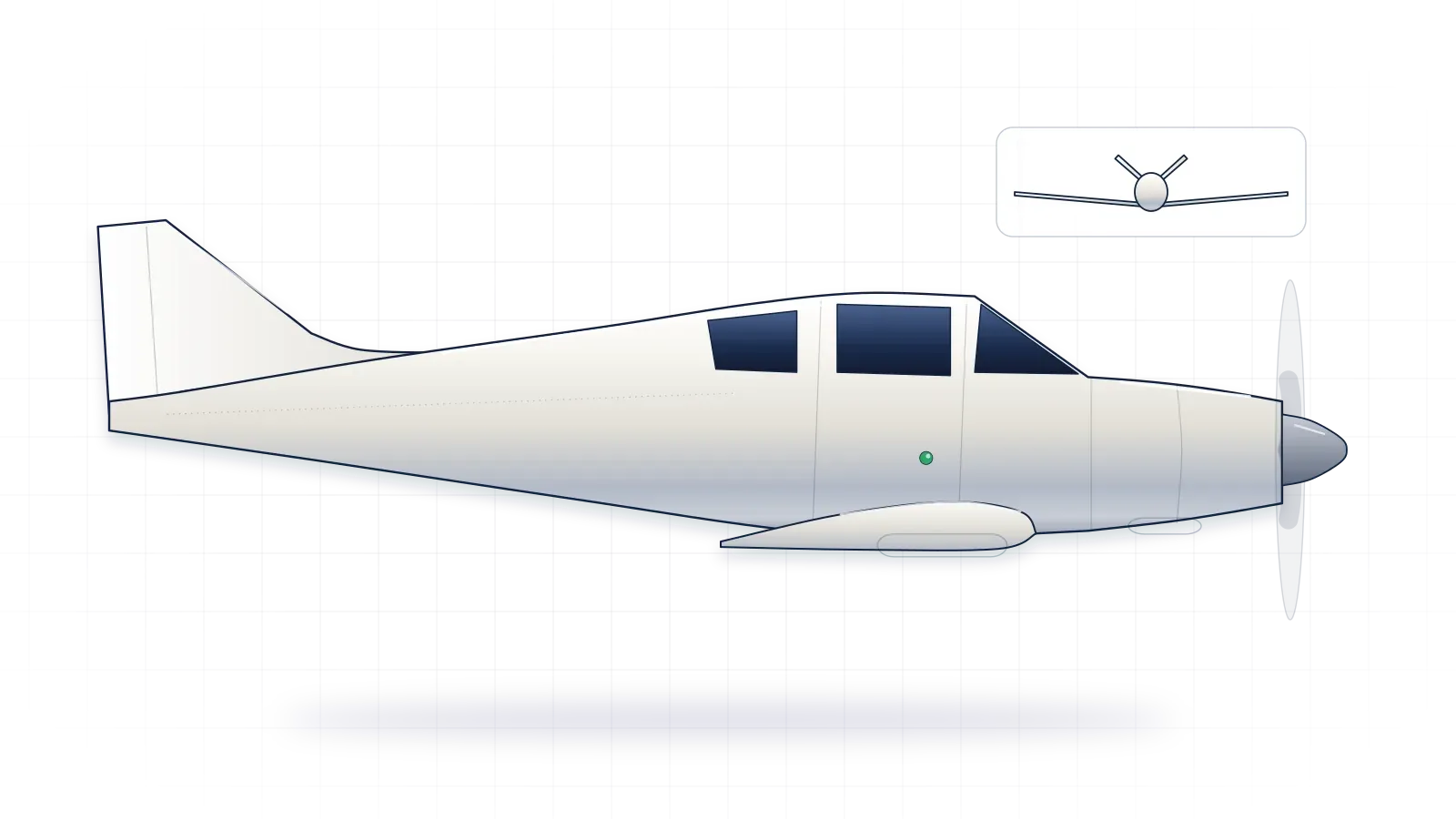
The Beechcraft Bonanza first flew in 1947 with a distinctive V-tail, and it's still built today. Its maker calls it the longest continuously produced aircraft in history. More than 18,000 have been delivered, and today's model uses a 300-horsepower piston engine.
Updated
Role
Light aircraft
Power
One piston engine
Tier
Standard
The Beechcraft Bonanza is a sleek, all-metal single-engine airplane for private and business flying. Beech Aircraft introduced it in 1947, and Textron Aviation still builds it. Textron calls it the longest continuously produced aircraft in history.
The original Model 35 seated four and folded its landing gear away in flight, features meant for owners who wanted speed and polish. Its signature, though, was the tail: two surfaces set in a V, often called a butterfly tail, in place of the usual fin and horizontal stabilizer.
A conventional-tail model was offered too, and today's Bonanza G36 has a normal tail and six seats. It flies on a 300-horsepower Continental IO-550-B engine turning a three-blade propeller, with a Garmin G1000 NXi glass cockpit.
Quick facts
| Fact | Value | Source |
|---|---|---|
| Introduced | 1947, with a V-tail | 1 |
| Role | Single-engine light airplane for private and business flying | 1 |
| Engine | One 300-hp Continental IO-550-B piston engine, three-blade propeller (G36) | 2 |
| Cruise speed | Up to 176 knots (G36) | 2 |
| Range | More than 920 nmi (G36) | 2 |
| Seats | Six (G36) | 2 |
| Delivered | More than 18,000 (as of 2021) | 2 |
| Status | Still built by Textron Aviation | 1 |
Why the Beechcraft Bonanza matters
The Smithsonian calls the Bonanza a classic design of the years after World War II, and it became the basis for later Beech aircraft. The aviation world came to see it as the "Cadillac" of single-engine light planes. In April 1959, Fortune magazine published a survey of 100 prominent designers, design teachers and architects. It placed the Bonanza among the 100 finest designs of any mass-produced product.
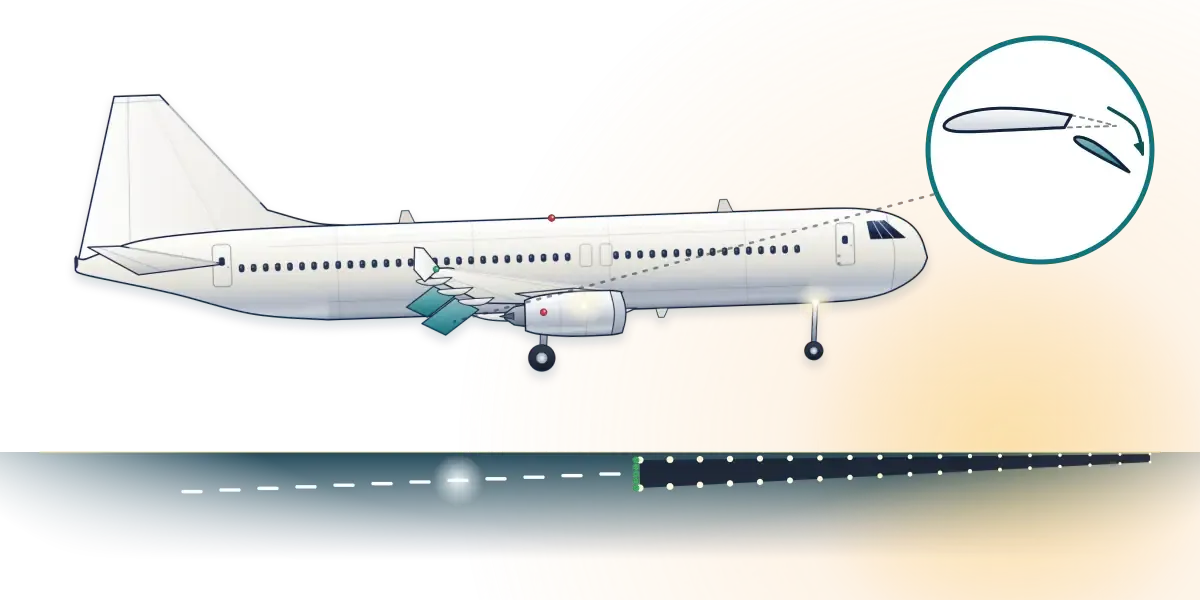
Its V-tail was a deliberate choice. The layout was tried out in the last years of World War II, and it used fewer parts and weighed less. By the Smithsonian's account, it also gave the same control response as conventional tail surfaces 40 percent larger. The flaps guide explains the jobs a tail's moving surfaces do.
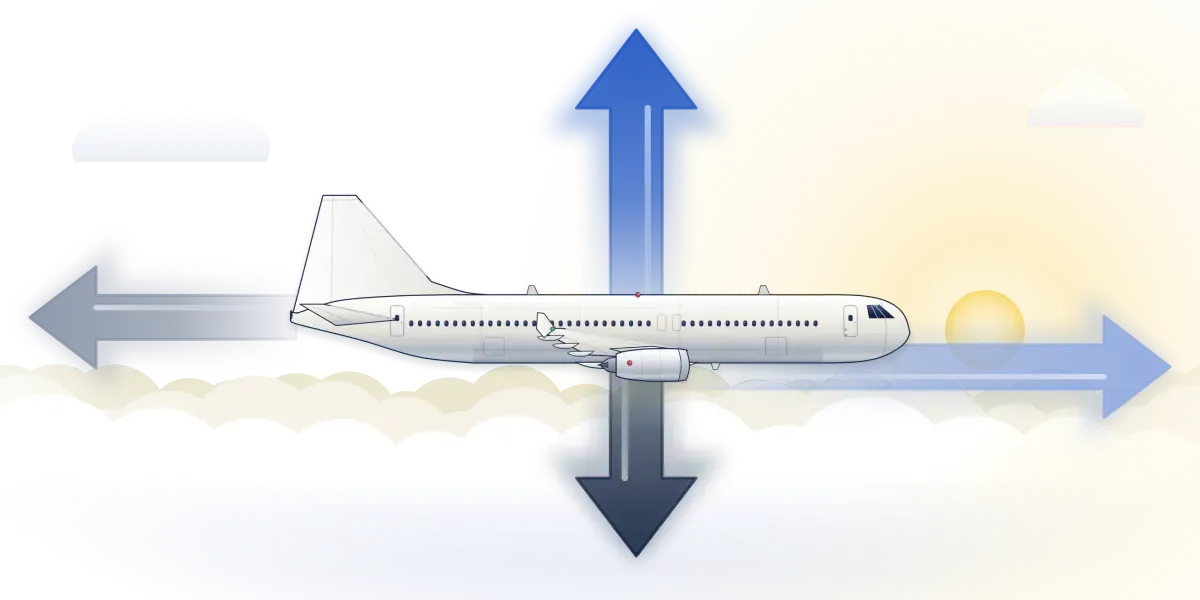
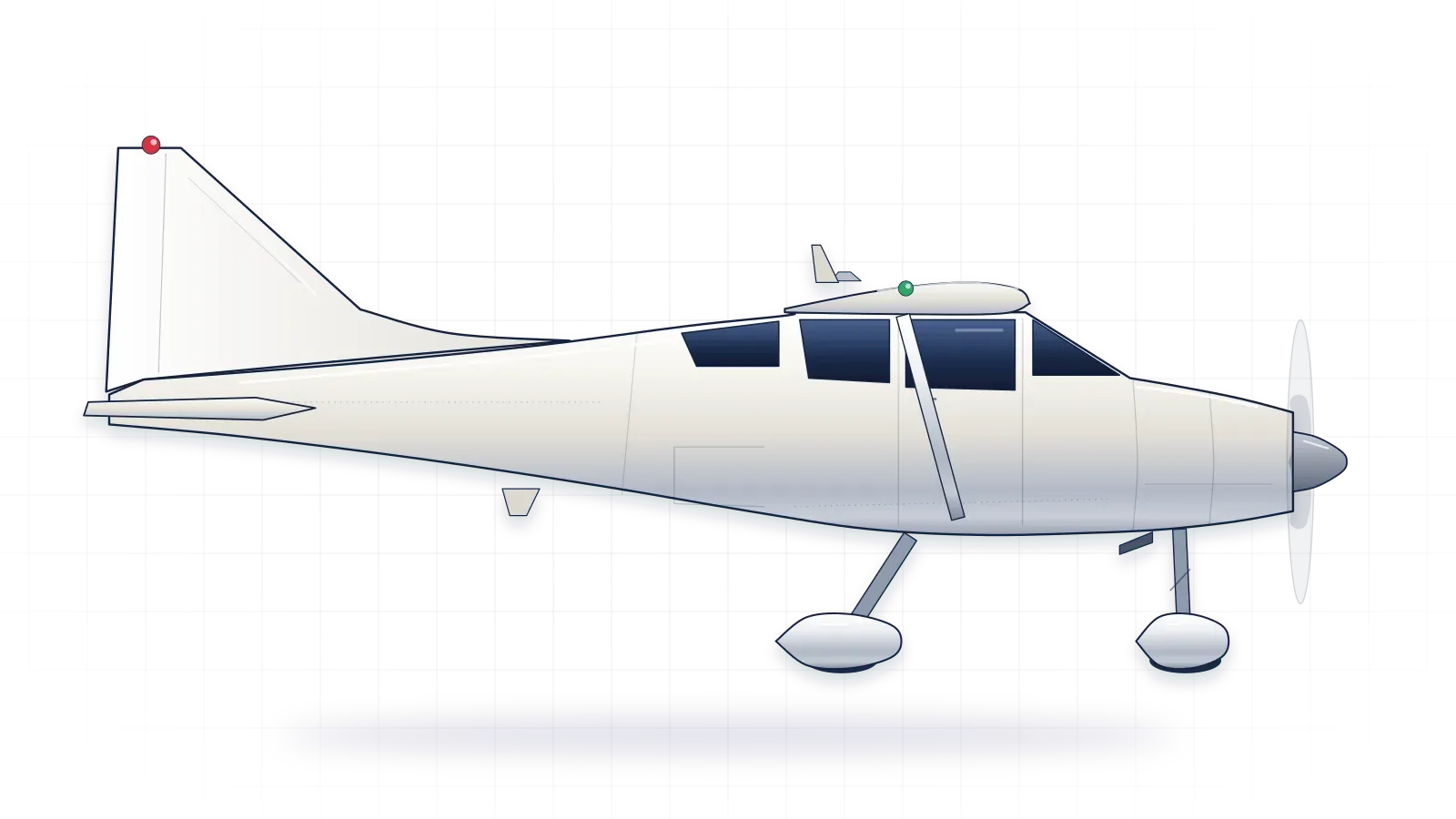
Like most small airplanes, it flies behind a piston engine. Its propeller blades are small spinning wings that pull it forward, and how planes fly explains the forces at work. It belongs in the same story as the Piper J-3 Cub and the Cessna 172: three different answers to what a private airplane should be.
Notable facts
- In March 1949, Bill Odom flew the fourth Bonanza built, the Waikiki Beech, nonstop from Honolulu to Teterboro, New Jersey. He covered 4,957 officially credited great-circle miles in 36 hours and 1 minute, averaging more than 19 miles per gallon.
- Two months earlier, on January 12, 1949, Odom made the first light-plane flight from Hawaii to the continental United States. Storms over Nevada ended his hope of crossing the whole country and turned him back to Oakland after 22 hours and 6 minutes.
- For those flights the Waikiki Beech carried extra fuel: 126 gallons in the cabin and a 62-gallon tank on each wingtip. Otherwise it was a standard Model 35.
- Renamed Friendship Flame, the same airplane carried Congressman Peter F. Mack Jr. alone around the world from October 7, 1951, to January 27, 1952. He visited 45 cities in 31 countries and flew about 33,000 miles.
- Olive Ann Beech founded Beech Aircraft with her husband Walter. In 1950 she became its president, the first woman to lead a major aircraft company, by Textron's account.
In Planeology
In the app, each lesson you pass parks an aircraft in your Hangar. The Beechcraft Bonanza is Bay 10 of 56. Earn it by passing Pistons & Propellers, in the Engines & Propulsion lesson group.
Guides
Guides to read next
Aircraft
Nearby in the Hangar
Sources
- Smithsonian National Air and Space Museum, Beechcraft 35 Bonanza
- Textron Aviation, Special-edition 75th anniversary Beechcraft Bonanza
- Federal Aviation Administration, Pilot's Handbook of Aeronautical Knowledge (FAA-H-8083-25C)