BAY 02 Standard
Piper J-3 Cub: The Four Forces at Their Gentlest
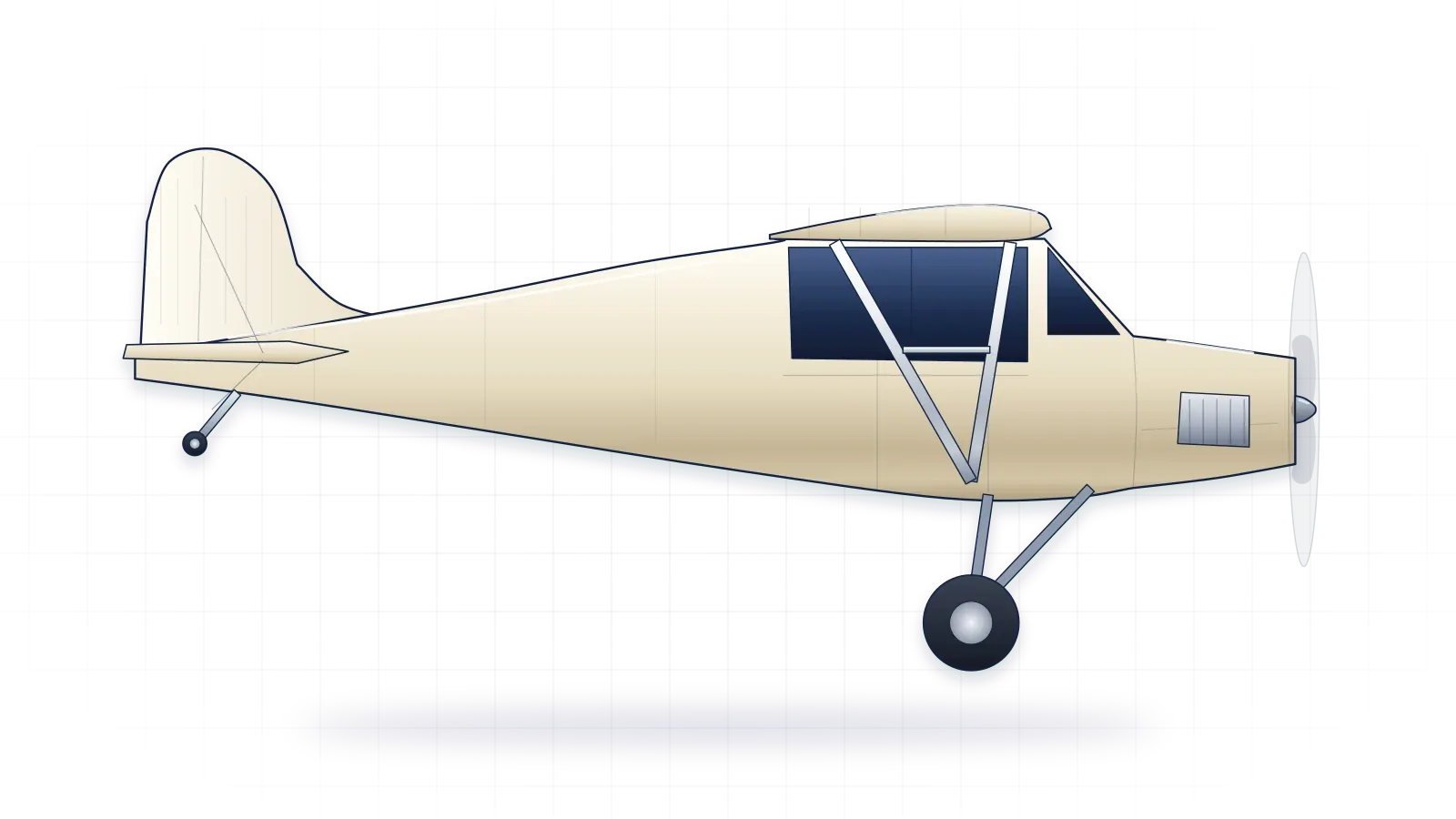
Light, slow and covered in fabric, the Piper J-3 Cub shows the four forces at their gentlest. First built in 1937, it sold for $1,300, and 19,888 Cubs had been built when production ended in 1947, many in Piper's bright yellow.
Updated
Role
Light aircraft
Power
One piston engine
Tier
Standard
The Piper J-3 Cub is a small, slow, fabric-covered light airplane with a tailwheel and, in most examples, a 65-horsepower engine. First built in 1937, it sold for $1,300 and became one of the most recognized shapes in aviation. By the time production ended in 1947, 19,888 Cubs had been built, most of them in Piper's bright yellow.
Its family tree starts with the Taylor E-2 Cub, completed in late 1930 around a 20-horsepower engine. William Piper bought the Taylor company's assets that year for $761, a redesign produced the J-2 in 1935, and the J-3 arrived in late 1937, the same year the firm became the Piper Aircraft Company. Production engines grew from 40 horsepower to 65 by 1940.
Everything about a Cub is light. The Smithsonian's example weighs 680 pounds empty and 1,220 pounds fully loaded, spans 35 feet 3 inches (10.7 meters) and tops out at about 80 mph (129 km/h). That gentleness is why it belongs with the four forces of flight: in a Cub you can almost watch lift, weight, thrust and drag trade places.
Quick facts
| Fact | Value | Source |
|---|---|---|
| Introduced | Late 1937 | 1 |
| Role | Light trainer and sport plane | 1 |
| Engine | One 65-hp Continental A-65 (production engines ranged from 40 to 65 hp) | 1 |
| Top speed | 80 mph (129 km/h) | 1 |
| Wingspan | 35 ft 3 in (10.7 m) | 1 |
| Weight | 680 lb empty, 1,220 lb gross | 1 |
| Number built | 19,888 Cubs | 1 |
| Status | Production ended 1947 | 1 |
Why the Piper J-3 Cub matters
The Cub taught a generation. Three quarters of the pilots in the US Civilian Pilot Training Program learned in Cubs, and during the Second World War the Lock Haven factory turned out a new J-3 every 20 minutes. In 1940 alone, 3,016 Cubs were built.
Military Cubs flew as observation, liaison and ambulance aircraft under the designations L-4, O-59 and NE-1, and troops nicknamed them Grasshoppers. The name Cub itself became shorthand for any light airplane.
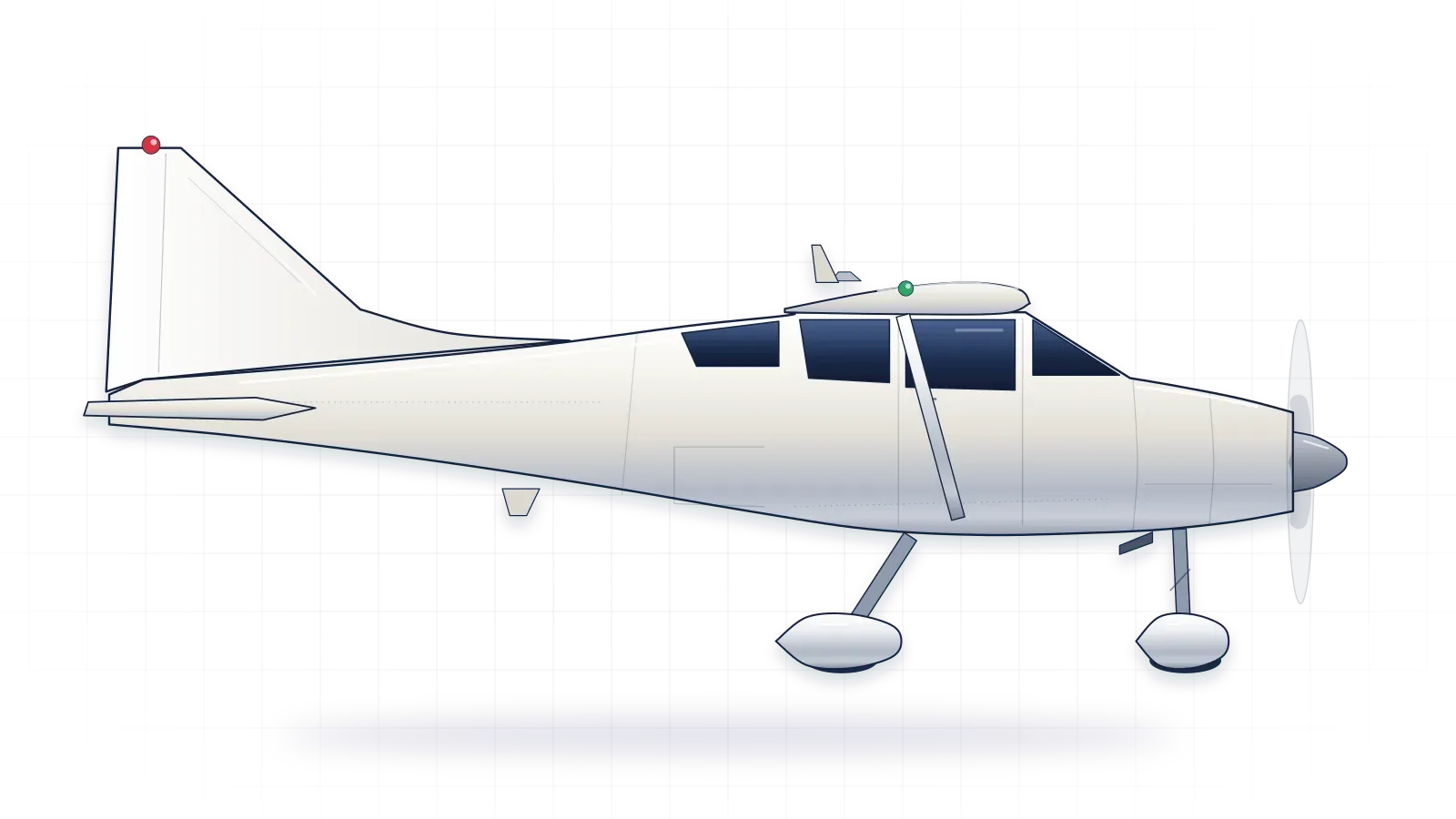
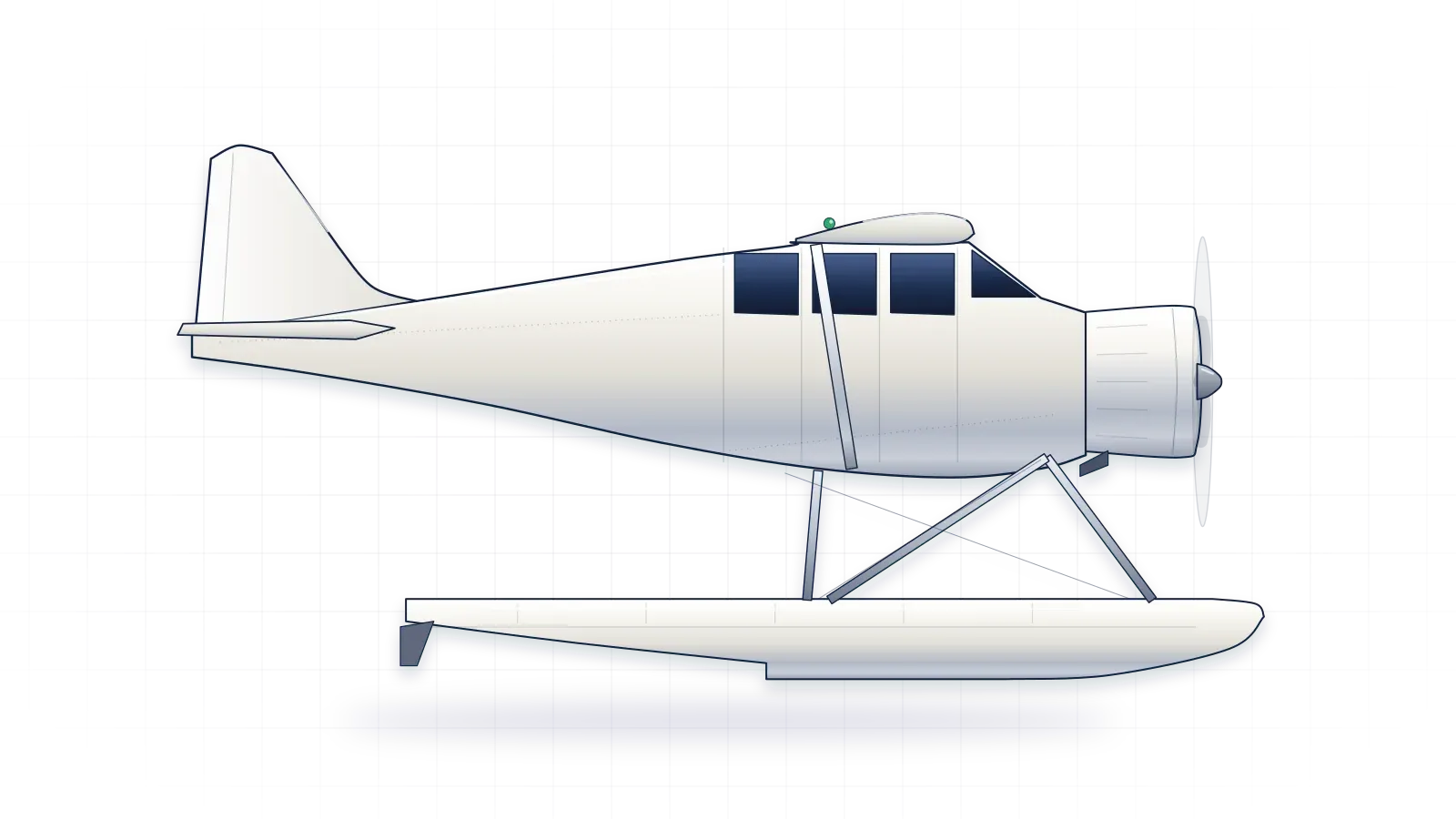
It is also the classic taildragger. A small wheel at the back and two main wheels under the wing leave the Cub resting nose-high on the ground. The FAA still calls that arrangement conventional landing gear, even though most airplanes built since, including the Cessna 172 Skyhawk, use a nose wheel instead. Set it beside the DHC-2 Beaver, a bush plane designed a decade later for far heavier loads, and you can see how quickly the working light airplane grew up.
Notable facts
- The J-3 sold for $1,300 when it was introduced in late 1937.
- Piper's standard color was Lock Haven Yellow, an orange-tinged shade later replaced by a lighter Cub yellow with black trim.
- In all, 19,888 Cubs were built before production ended in 1947; 1,547 of the earlier E-2 and J-2 models had been built between February 1931 and May 1938.
- During the war the Lock Haven line completed a new J-3 every 20 minutes.
- The Smithsonian's Cub, serial number 6578, was built in March 1941 and flew about 6,000 hours before a full restoration in 1975.
Where to see one
The Smithsonian's J-3 Cub, N35773, hung in the General Aviation gallery in Washington for several years and is now at the National Air and Space Museum's Steven F. Udvar-Hazy Center in Chantilly, Virginia. 1
In Planeology
In the app, each lesson you pass parks an aircraft in your Hangar. The Piper J-3 Cub is Bay 02 of 56. Earn it by passing The Four Forces, in the How Flight Works lesson group.
Guides
Guides to read next
Aircraft
Nearby in the Hangar
Sources
- Smithsonian National Air and Space Museum, Piper J-3 Cub
- NASA Glenn Research Center, Four Forces on an Airplane
- Federal Aviation Administration, Pilot's Handbook of Aeronautical Knowledge (FAA-H-8083-25C)