LEG 01 · How Flight Works
How to Learn About Aviation: A Beginner's Guide for Avgeeks
You don't need a pilot's license to understand how flying works. You need a map of the subject, a few trustworthy sources and a little curiosity every day.
Updated · 8 min read
The short answer
Start with how a wing makes lift, then branch out a little at a time into engines, airports, weather, aircraft and history. Lean on trustworthy sources such as NASA's Beginner's Guide to Aeronautics and the Smithsonian's National Air and Space Museum, notice things from the window seat, and test yourself as you go. No pilot's license required.
Aviation can look like a closed world from the outside. The vocabulary is dense, the machines are expensive, and most of the people who talk about it seem to be pilots. Yet almost everything that makes flying fascinating can be understood by anyone who has sat in a window seat and wondered how it all works.
This guide is a map. It sets out where to begin, which topics are worth knowing, where to find trustworthy explanations, and how to keep learning without drowning in jargon. Every topic links to a longer guide, so you can follow whatever catches your interest.
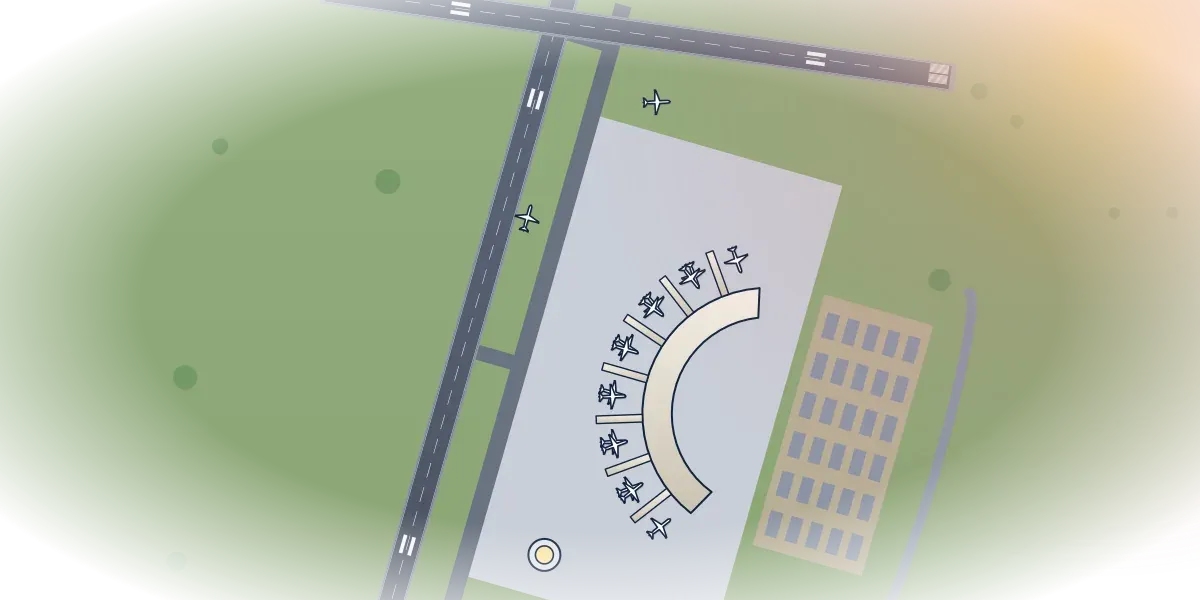
Do you need to be a pilot to learn about aviation?
No. Understanding aviation and operating an aircraft are different projects. The first is about knowing why a wing lifts, why jets cruise so high, what the painted numbers on a runway mean, and how a sky full of airplanes stays orderly. The second is a professional skill with its own instructors and rules, and it is not what this guide is about.
Plenty of people become knowledgeable avgeeks without ever touching the controls. Frequent travelers want to know what the chime means. Parents field questions at the airport window. Plane spotters want the story behind each aircraft, and history fans want the whole arc from balloons to stealth. All of it is open to a curious passenger.
Where should a beginner start learning about aviation?
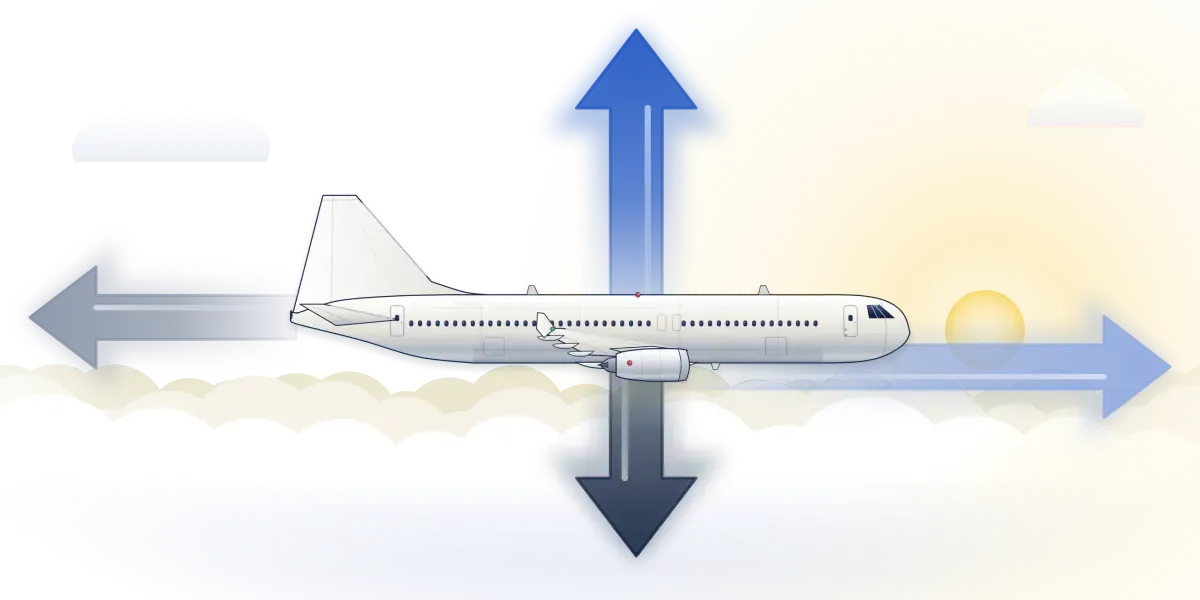
Start with the physics, because everything else builds on it. An airplane in flight feels four forces at once: lift pushes it up, weight pulls it down, thrust drives it forward and drag holds it back. Once that picture clicks, the rest of aviation starts to make sense. How do planes fly? is the place to begin.
From there, a few short steps cover the essentials:
- Why wings stop working. A stall has nothing to do with the engine. It happens when a wing meets the air at too steep an angle, as What is a stall? explains.
- How a wing changes shape. The panels that slide out before landing let a fast wing fly slowly, which is the story of flaps, slats and spoilers.
- What engines really do. Engines overcome drag, and the wings do the lifting. How jet engines work covers turbojets, turbofans and turboprops.
- Why airliners cruise so high. Thin air means less drag, which is the heart of why planes fly at 35,000 feet.
- Rotors and the speed of sound. How helicopters fly treats a rotor as a spinning wing, and What is Mach 1? explains why the speed of sound changes with altitude.
Take them one at a time. Each idea is small on its own, and they reinforce each other.
How do you learn the aviation alphabet and radio calls?
The language of aviation is less mysterious than it sounds. On a crackling radio, single letters are easy to mishear, so aviation spells with code words: Alfa, Bravo, Charlie and on through Zulu. Note the official spellings, Alfa and Juliett. Our phonetic alphabet page has the whole list with pronunciations, the reason for those spellings, and a converter to try your own name.
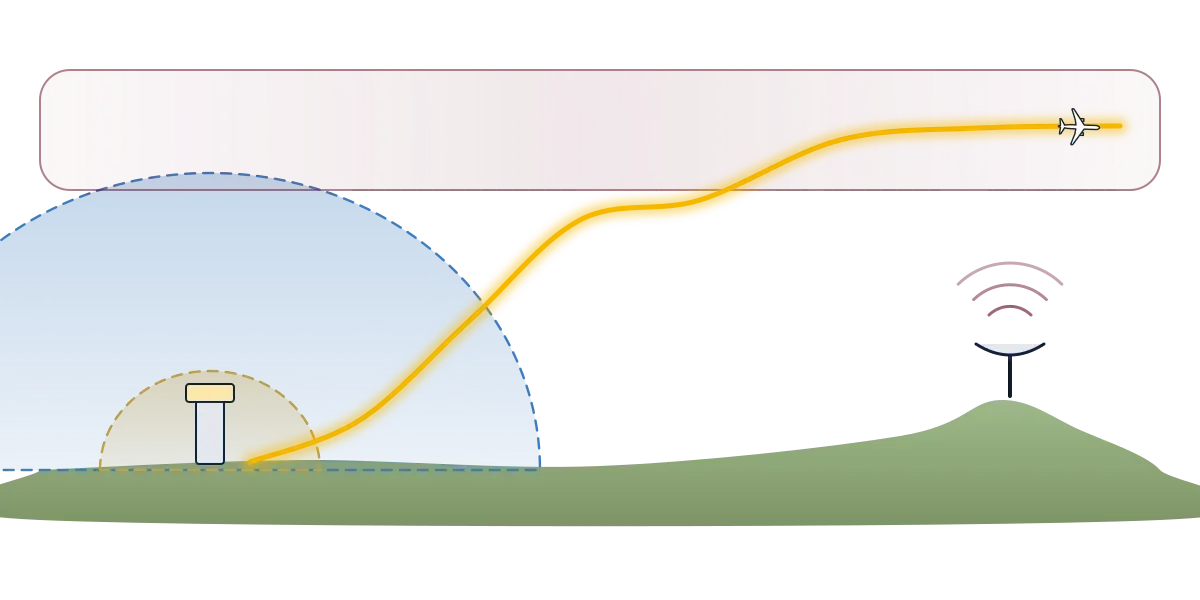
Once the alphabet is familiar, radio calls start to make sense. Ground control directs airplanes as they taxi, the tower handles traffic on and around the airport, approach controllers manage the busy airspace nearby, and en route centers look after flights in cruise. How air traffic control works follows a flight through all of them.
The airport itself is full of code too. The painted numbers at each end of a runway come from the compass, as What runway numbers mean shows, and the three letters on your bag tag follow their own logic, explained in Airport codes explained.
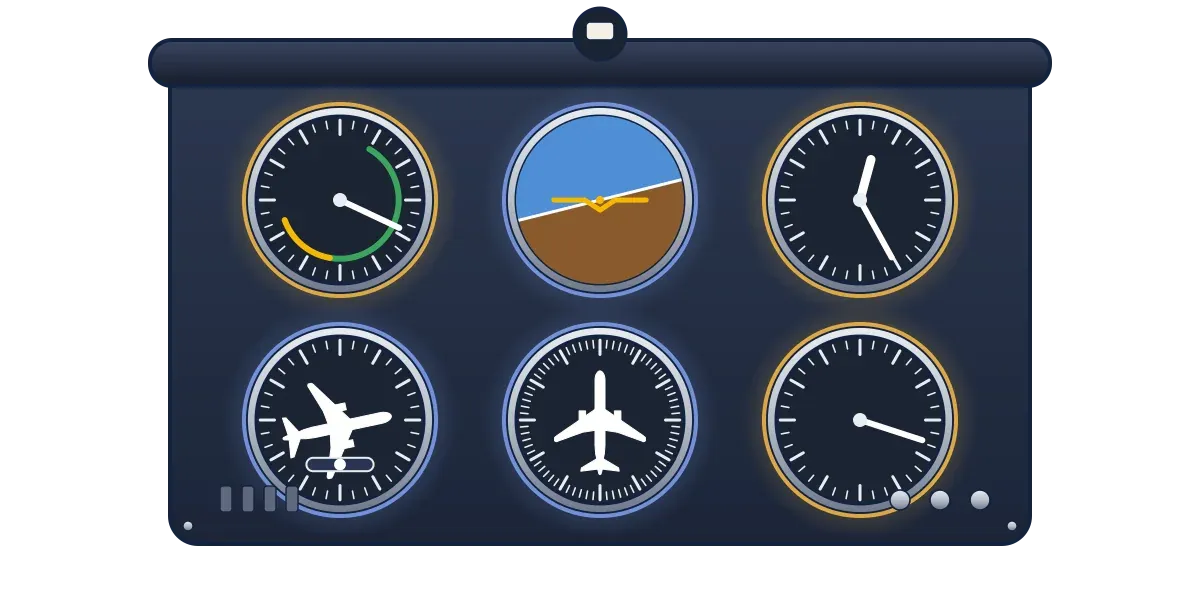
In the cockpit, traditional panels group six key instruments, nicknamed the six-pack, while modern jets draw the same information on screens. How autopilot works shows what the computers do and what the crew keeps doing.
How do you learn about aviation weather?
Weather is where the window seat becomes a classroom. Nearly all clouds and storms live in the lowest layer of the atmosphere, which is one reason airliners climb above them. Understanding a few patterns turns a bumpy flight from a worry into a curiosity.
Start with turbulence: uneven air from sun-warmed ground, wind tumbling over mountains, towering clouds and fast-moving jet streams. Is turbulence dangerous? covers what the bumps are doing to the airplane, which is far less than it feels like.
Then the jet streams themselves, narrow rivers of wind that blow from west to east and explain why flying east is faster. And look up. The white lines other jets leave are clouds of ice crystals, and What are contrails? explains why some vanish in seconds while others spread across the sky.
How do you learn to recognize aircraft?
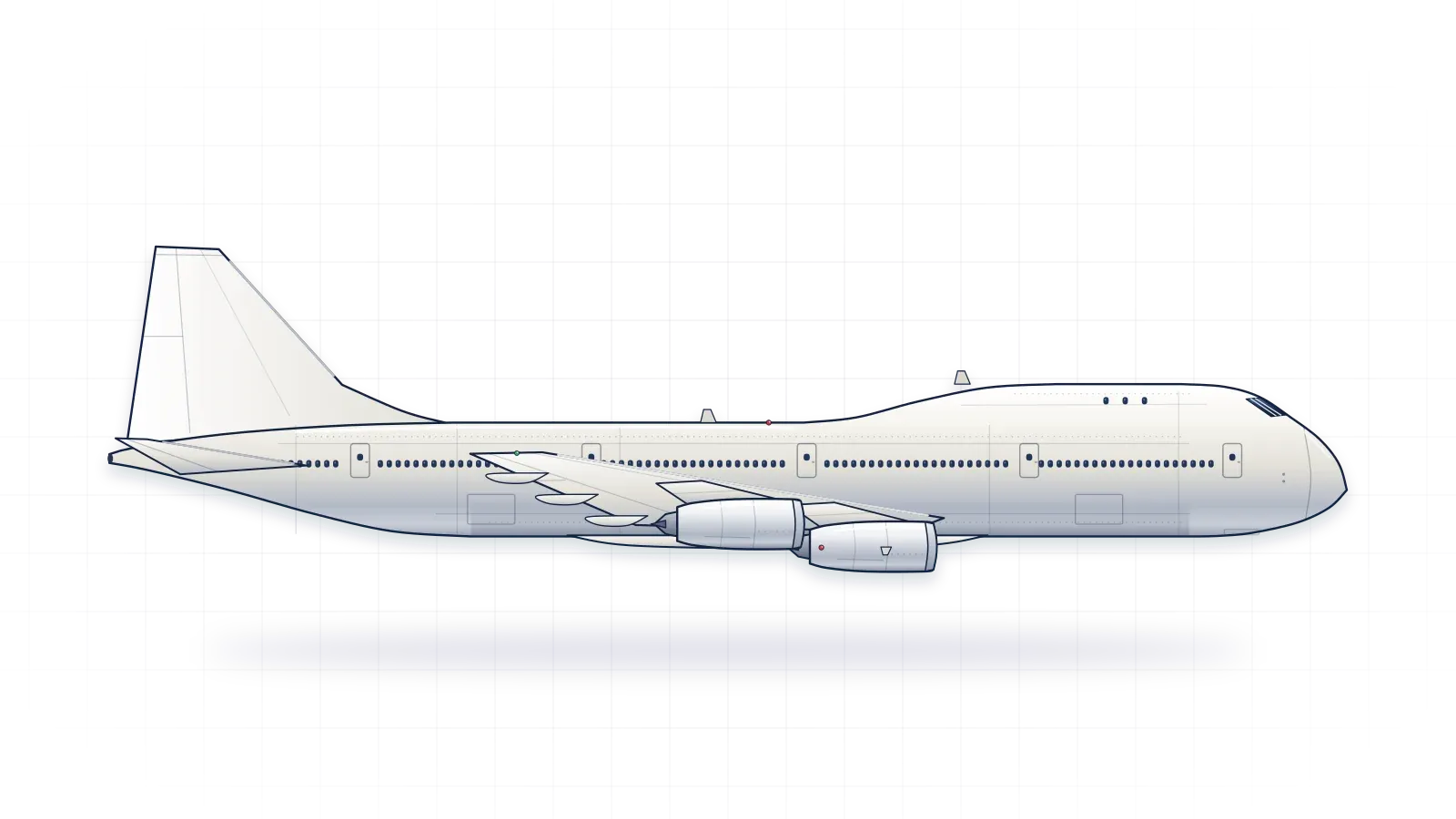
Spotting is a skill you build by looking closely, a little at a time. Start with the shapes that are hardest to confuse: the hump of the Boeing 747, the full-length double deck of the Airbus A380, the long, pointed nose of Concorde.
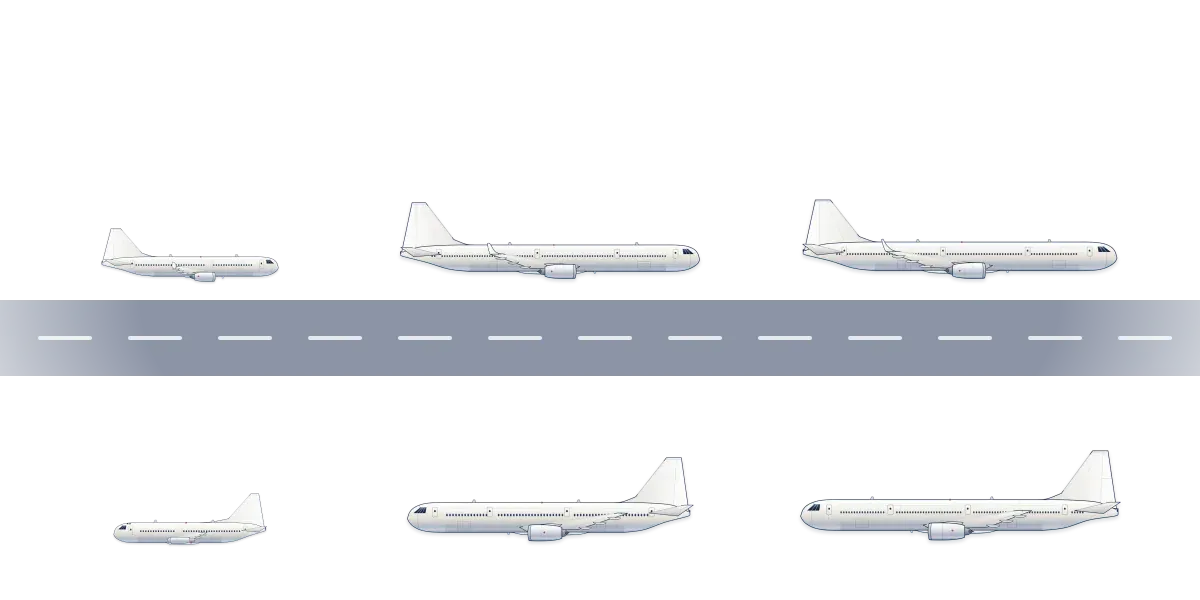
Then move on to the pairs that trip everyone up. A Boeing 737 and an Airbus A320 look alike at first glance, but the nose, the cockpit windows and the engines give them away, as Boeing vs Airbus shows.
Records make a good scaffold too. The biggest planes in the world and the fastest planes ever flown each line up a handful of famous aircraft by one clear measure, which makes them easier to remember. Our Hangar collects 56 aircraft, from the Cessna 172 to the SR-71, each with its facts, specs and sources.
Many airports have public viewing areas, and spotters often trade notes on where the traffic passes closest. A pair of binoculars and a few visits will teach you more about wings, engines and landing gear than any diagram.
Which aviation history is worth knowing?
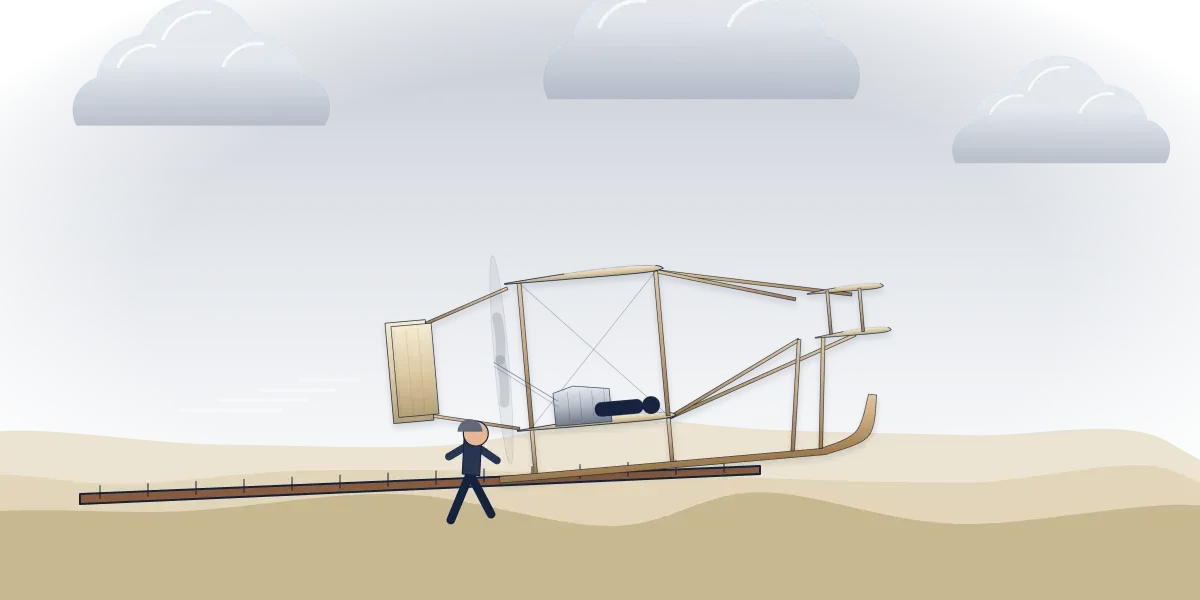
The whole story fits in a long lifetime. On December 17, 1903, at Kitty Hawk, North Carolina, Orville Wright flew the brothers’ powered Flyer for 12 seconds. At the Wright Brothers National Memorial today, a boulder marks the spot where they first flew. The Wright brothers’ first flight tells how two bicycle makers solved the problem of control.
Twenty-four years later, Charles Lindbergh flew alone and nonstop from New York to Paris in the Spirit of St. Louis, landing 33 and a half hours after takeoff. Twenty years after that, the Bell X-1 flew faster than sound. Then came the jet airliners, the jumbo jet and Concorde, whose retirement in 2003 is told in Why was Concorde retired?, and the angular designs described in How does stealth work?
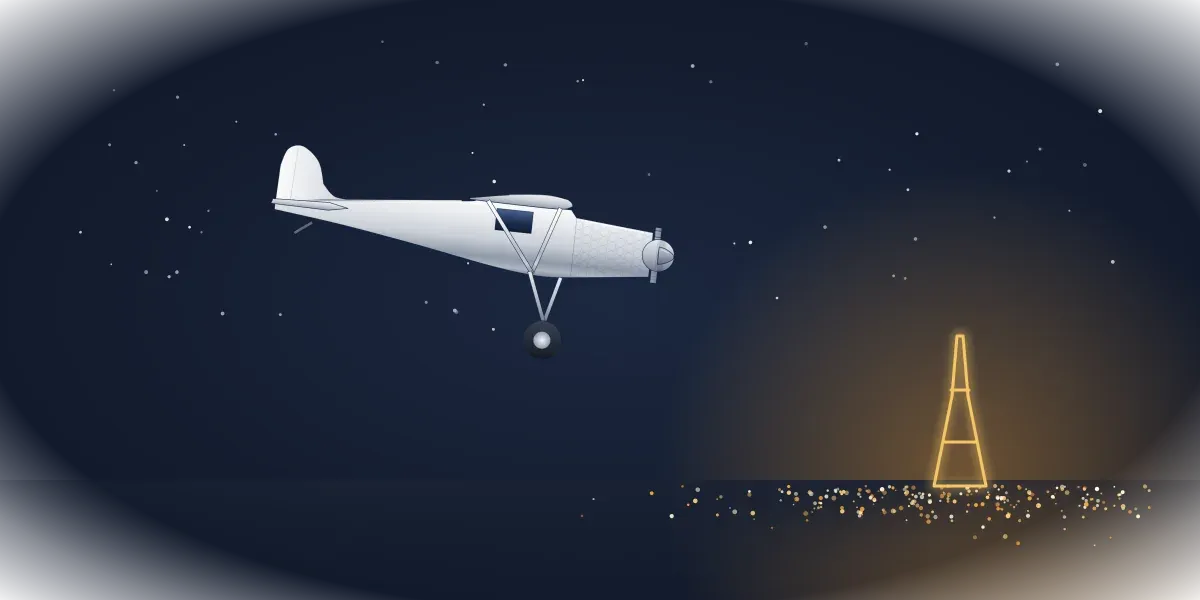
History sticks best when it is attached to a place. National museums hold many of the aircraft from these stories. The Smithsonian’s National Air and Space Museum has two locations, one in Washington, DC, and one in Chantilly, Virginia, and admission is free.
What makes flying so safe?
Layers. No single part of the system is perfect, but a failure has to slip past many defenses before it can cause harm, and each accident has taught the industry something it kept. How safe is flying, really? walks through those layers.
Two stories show how lessons get built in. The flight recorders that investigators rely on are painted bright orange, not black, so searchers can find them, as Why are black boxes orange? explains. And the rounded window beside your seat reflects a hard lesson about metal fatigue learned in the 1950s, told in Why are airplane windows round?
Where can you learn about aviation online?
Some of the most useful sources cost nothing and come straight from the people who know the subject best:
- NASA Glenn’s Beginner’s Guide to Aeronautics. Clear pages on lift, drag, engines and the atmosphere, plus interactive simulators NASA first built more than twenty years ago and still hosts.
- The FAA’s handbooks. The Pilot’s Handbook of Aeronautical Knowledge is dense in places, but its chapters on aerodynamics and weather reward a patient reader. The Aeronautical Information Manual is where the phonetic alphabet and airport lighting are officially set out.
- Museum collections online. The Smithsonian’s National Air and Space Museum and Britain’s Science Museum Group publish detailed pages about the aircraft and objects they hold.
- Live flight tracking and radio. Several websites let you follow airliners on a map in close to real time, and some airports’ radio traffic can be heard online. With the phonetic alphabet in hand, it starts to make sense quickly.
For words that keep coming up, our aviation glossary explains each term in a sentence or three, with links to the guides that go deeper.
How do short daily lessons help you learn?
Aviation is a big subject, and the easiest way to absorb it is a little at a time. Reading one short explanation a day, then testing yourself on it, beats an occasional deep dive that fades by the following week. Questions that explain their answers help most, because the explanation is the part you remember.
That is the idea behind Planeology, the iPhone app this site belongs to. It breaks aviation into 55 short lessons across 15 topics, from how flight works to what comes next, with a quiz after each lesson and a five-question challenge every day. It is one way to learn among many, and the guides here stand on their own. To test yourself right now, try the aviation quiz.
What to watch for on your next flight
- Before takeoff, find the runway number painted at the threshold and match it to the direction you are facing.
- At night, read the colors: runway edge lights are mostly white, taxiway edges glow blue and taxiway centerlines green.
- On the climb, watch the flaps and slats slide back into the wing as the airplane gathers speed.
- In cruise, look for other jets’ contrails above and below you, and check the altitude on the moving map.
- At the gate, try to name every aircraft you can see by its nose, its tail and its number of engines.
Pick one thing to notice on each trip, and look it up when you land. That is how avgeeks are made: one question at a time, starting with how a wing makes lift.
Quiz
Check yourself
-
Question 1 of 3
At night, what color are an airport's taxiway edge lights?
- Green
- Red
- White
- Blue
Show the answer
Answer: D. Taxiway edges are lit in blue, while taxiway centerlines are green and runway edges are mostly white.
-
Question 2 of 3
In the ICAO phonetic alphabet, what is the code word for the letter J?
- Juliett
- Jericho
- Jupiter
- Jaguar
Show the answer
Answer: A. J is Juliett, officially spelled with two Ts, just as A is officially spelled Alfa.
-
Question 3 of 3
How do 747 freighters load long cargo?
- Through the passenger doors
- Through a nose that swings open
- Through a big door in the tail cone
- Through the cockpit windows
Show the answer
Answer: B. Freighter and convertible 747s load cargo through a huge hinged nose.
Guides
Keep reading
How Flight Works
How Do Planes Fly? Lift, Thrust, Drag and Weight, Explained
Airports & Air Traffic Control
How Does Air Traffic Control Work? From the Tower to the Ocean
Airliners & Airlines
Boeing vs Airbus: How to Tell a 737 From an A320
Pioneers of Flight
The Wright Brothers' First Flight: 12 Seconds That Changed the World
Aircraft
From the Hangar
Sources
- NASA Glenn Research Center, Beginner's Guide to Aeronautics
- NASA Glenn Research Center, Four Forces on an Airplane
- Federal Aviation Administration, Pilot's Handbook of Aeronautical Knowledge
- Federal Aviation Administration, Aeronautical Information Manual
- Federal Aviation Administration, Aeronautical Information Manual, Chapter 2, Section 1: Airport Lighting Aids
- Smithsonian National Air and Space Museum, Visit
- Smithsonian National Air and Space Museum, Ryan NYP "Spirit of St. Louis"
- National Park Service, Wright Brothers National Memorial
- National Park Service, Wright Brothers
- Science Museum, Lucky Jim mascot reunited with the aircraft that carried him on the first non-stop transatlantic flight
- Science Museum Group, Science Museum Group Collection