LEG 13 · Military Aviation
How Does Stealth Technology Work on Aircraft?
Stealth does not make an airplane invisible. It makes the echo so faint, and so late, that the defender runs out of time.
Updated · 6 min read
The short answer
Stealth aircraft reduce the radar echo that gives them away. Their shapes bounce radar energy away from the antenna that sent it instead of straight back, and radar-absorbing materials soak up part of what remains. Designers also trim heat, noise and visual signs. The result is not invisibility but an airplane that is far harder to find and target.
In January 1991, a fleet of black, angular jets flew nearly 1,300 combat sorties over Iraq, and not one was lost. The F-117 Nighthawk made “stealth” a household word, and it also started a myth: that a stealth airplane is invisible. It is not. Stealth is a set of tricks for making an airplane’s radar echo faint enough, for long enough, that the people looking for it run out of time.
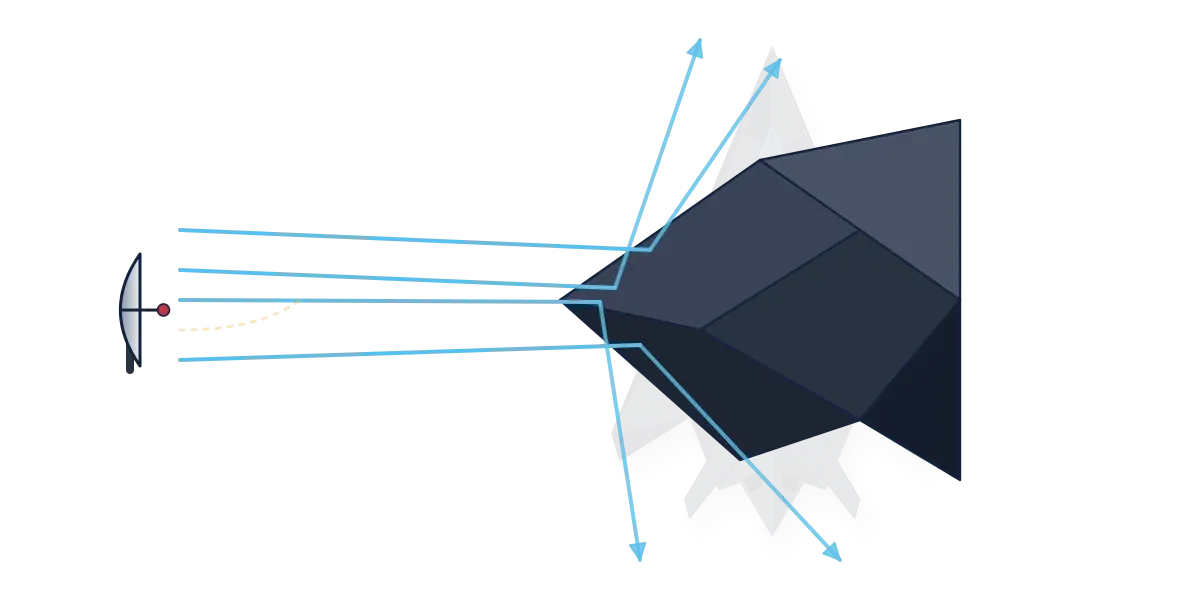
How do stealth planes work?
A stealth aircraft is one that is hard to detect with radar. Most of the effect comes from shape, which steers radar energy away from whoever sent it. Special materials in the skin absorb some of what the shape cannot deflect. Finally, designers chase down the other giveaways: engine heat, noise and the airplane’s visible outline against the sky.
None of this makes the airplane disappear. Lockheed Martin, which builds the F-22 Raptor and the F-35, says plainly that stealth does not make its fighters invisible; it makes them far harder to find and target. To see why that is enough, start with how radar works.
How does radar detect planes?
Radar sends out pulses of radio waves and listens for the echoes that bounce back. The time an echo takes to return gives the distance to the target, and the direction the antenna was pointing gives its bearing. Air traffic controllers use the same principle to follow airliners, which is covered in how air traffic control works.
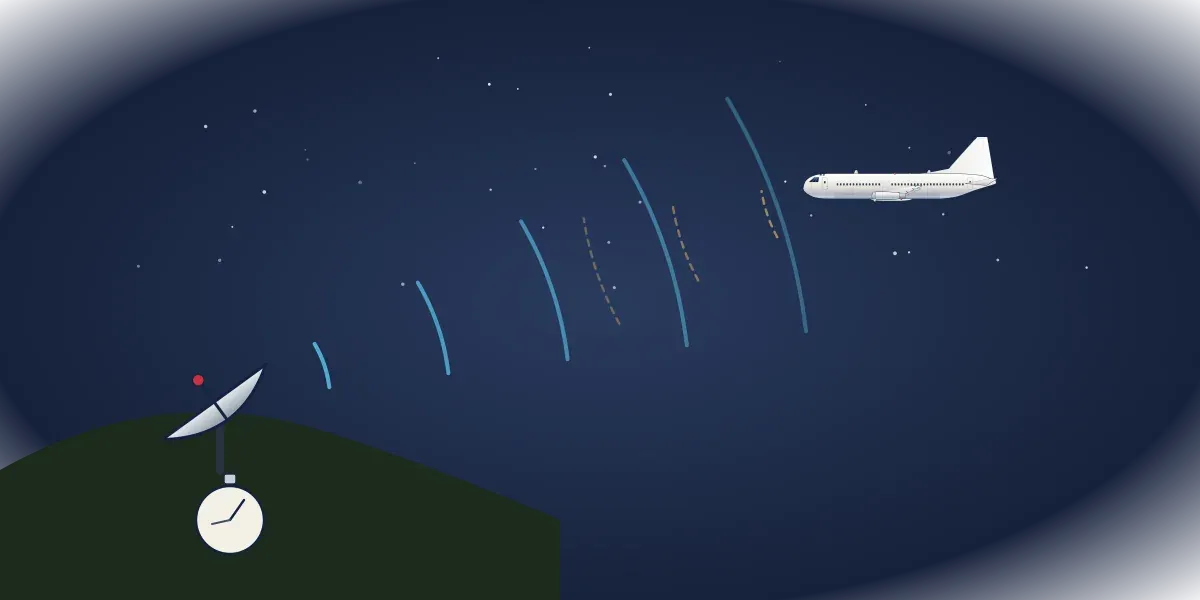
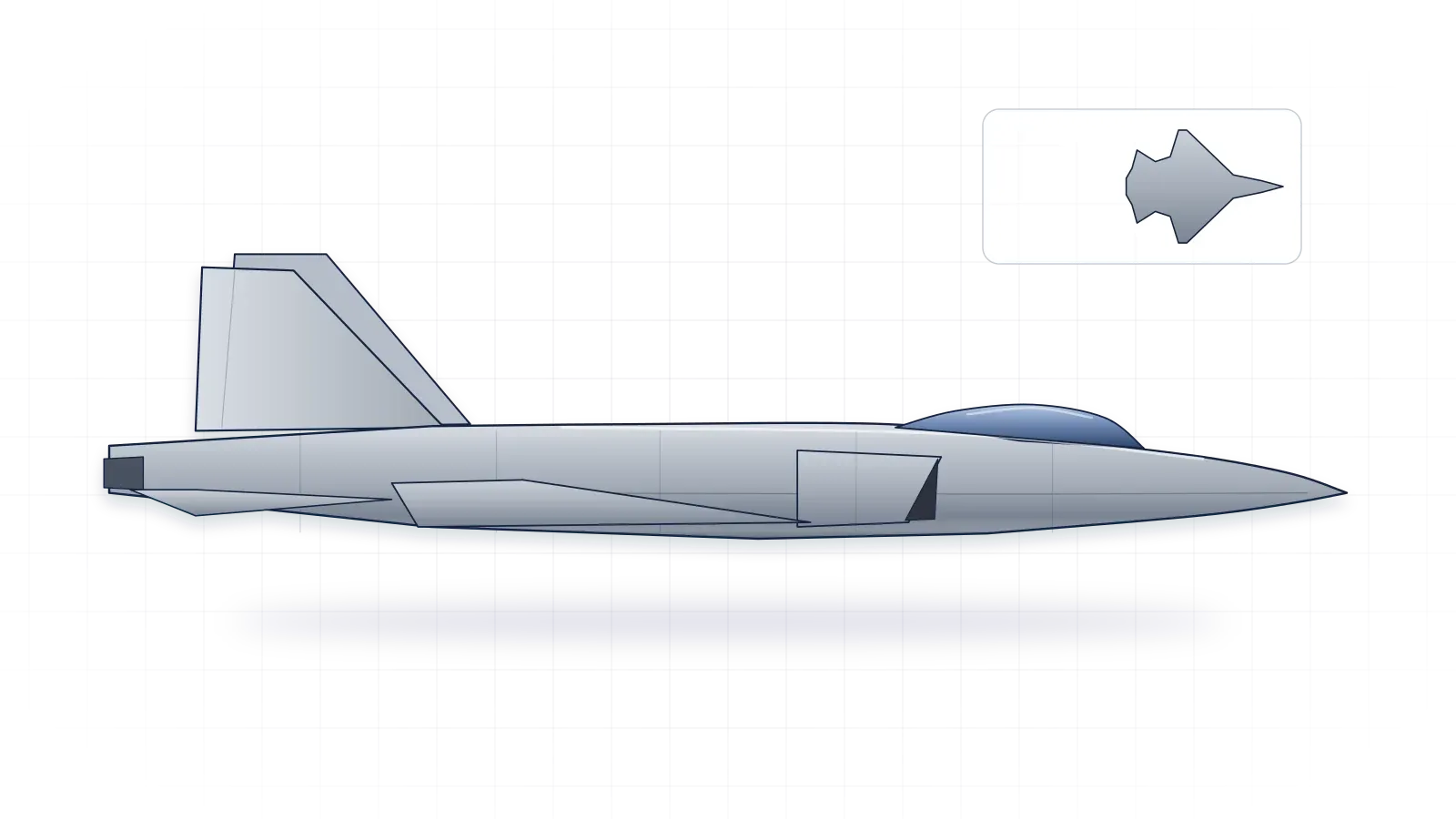
The catch is that an echo has to be strong enough to notice. An ordinary airliner is a radar’s dream: a big rounded fuselage, flat vertical tail, spinning fan blades in open engine intakes and weapons-free but reflective pods under the wings. Every one of those surfaces returns energy straight back toward the antenna, like a mirror held up to a flashlight. Stealth design works through that list and removes the mirrors one by one.
How do stealth planes avoid radar?
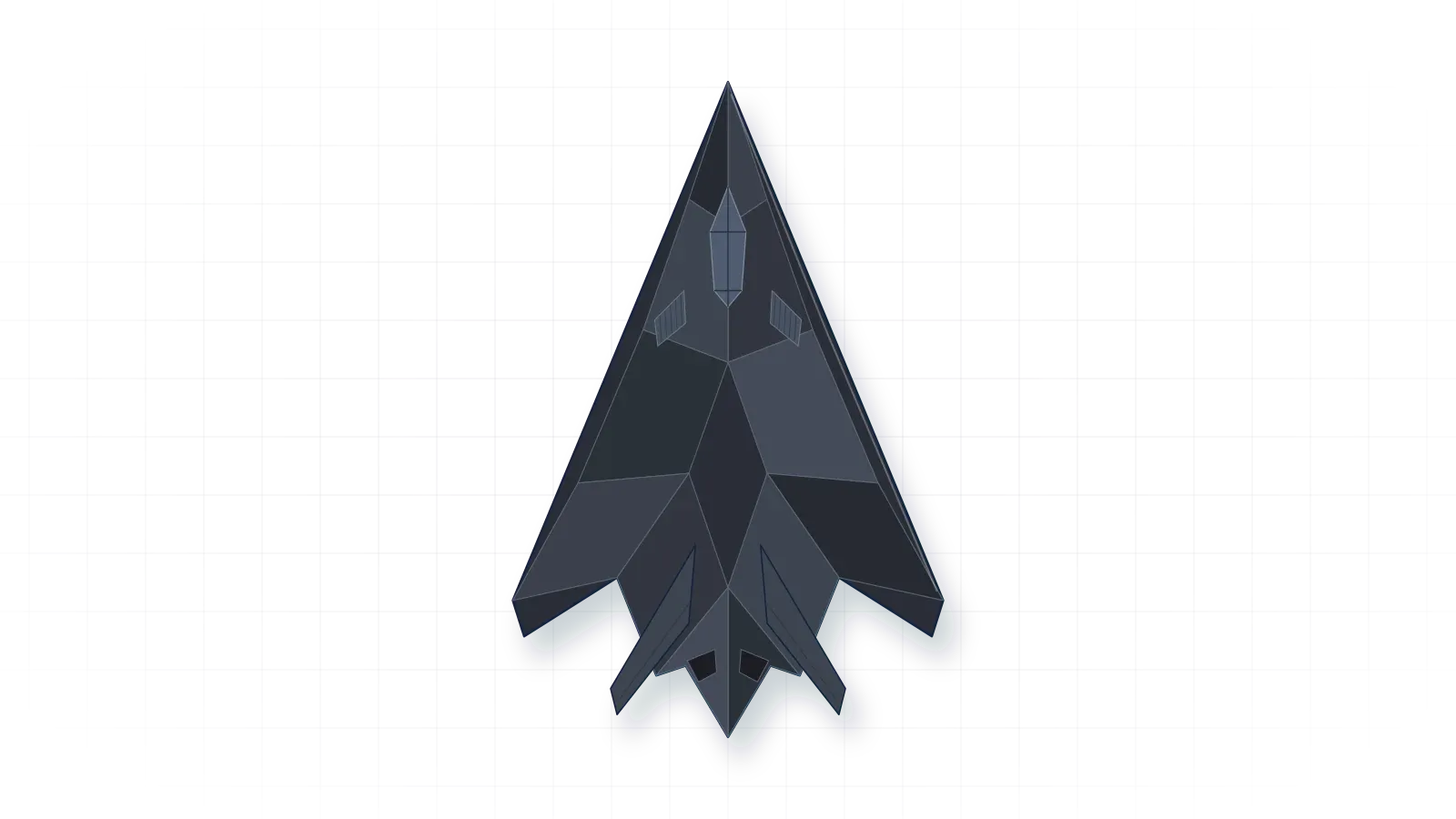
The first trick is shaping. The F-117’s strange, faceted body was built from flat panels set at angles that bounce radar waves away from the radar that sent them. The energy still reflects, but it goes somewhere else. In 1977 a test aircraft called Have Blue, built by Lockheed’s Skunk Works, flew for the first time and proved the idea could stay in the air. Two Have Blue prototypes were built, and both eventually crashed, but the point had been made.
Later designs achieve the same end with smoother shapes. The B-2 Spirit is a flying wing with no vertical tail at all, which removes one of the biggest reflectors on any airplane. The F-22 and F-35 blend their wings and bodies into continuous curves and align their edges so that reflections concentrate in a few narrow directions.
The second trick is to hide anything that hangs outside. Fourth-generation fighters such as the F-16 carry missiles and fuel tanks under their wings, where every fin and rail reflects radar. The F-35 carries its weapons inside its body to preserve its stealth, and so do the F-22 and the B-2. That is also why stealth aircraft look so clean on the ramp: the clutter is inside.
How does radar-absorbing material work?
Shape cannot deflect everything, so stealth aircraft wear skins that soak up part of the energy that hits them. The Smithsonian describes the F-117’s radar-absorbing materials as composites infused with graphite and other special substances, and Lockheed Martin notes that the airplane’s angular panels were reinforced by an external coating of radar-absorbent material. Their exact recipes are still secret.
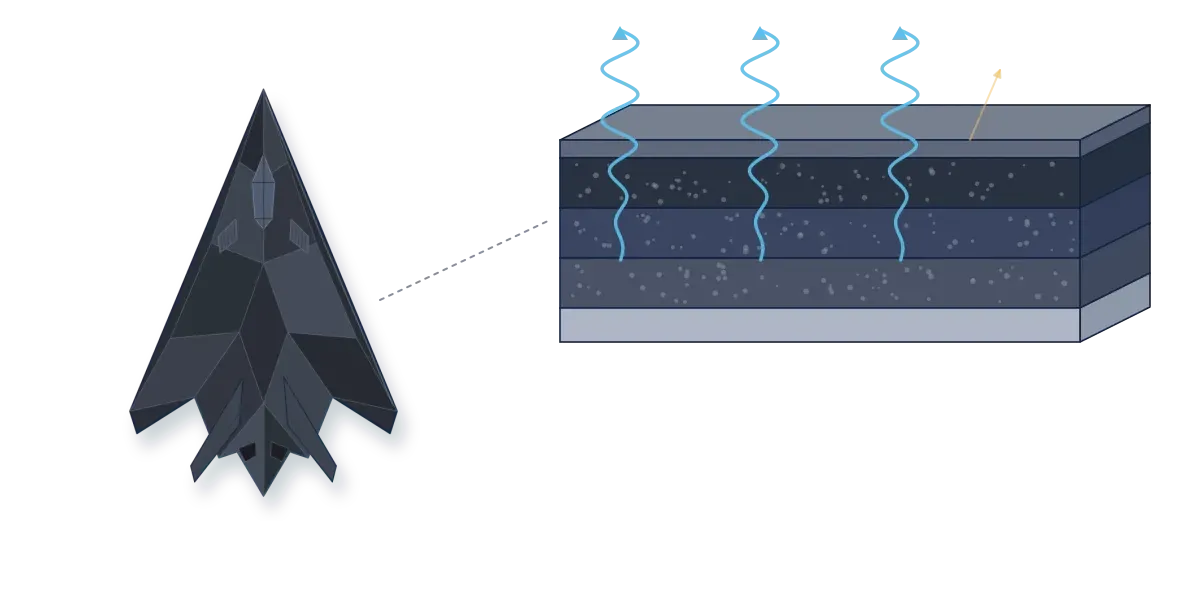
Those skins come at a price. Lockheed Martin says that much of the F-22’s maintenance is about preserving its low-observable qualities, including repairing the coatings around the engine inlets. A stealth airplane is not stealthy once and for all; it is kept stealthy, inspection by inspection.
Why does the F-117 look like that?
Because of when it was built. The F-117 came out of a competition in 1975 that Lockheed’s Skunk Works won, and its designers could predict how radar would scatter from flat plates. So they built an airplane out of flat plates. The result looked like a black arrowhead folded from paper, and it flew for the first time in 1981, just 31 months after the contract was awarded. Deliveries began in 1982 and the aircraft was declared operational in 1983.
Then it vanished. The program stayed secret until 1988, and the airplane made its first formal public appearance in 1990, after seven years of operations. Lockheed built 59 of them. Although it carries a fighter’s F, the F-117 Nighthawk was an attack aircraft, built to slip past radar at night and drop precision bombs.
Its combat record made the case for stealth. Over Panama in 1989 it was used for precision rather than stealth, because Panama had no radar network to hide from. Over Iraq in 1991, during Operation Desert Storm, F-117s flew just under 1,300 sorties and dropped more than 1,700 bombs without a single loss. The Air Force retired the type in 2008, though the Smithsonian notes that a small number kept flying afterward.
Can stealth planes be detected by radar?
Yes. Stealth shortens the distance at which a radar can see an airplane; it does not reduce that distance to zero. The clearest proof came in 1999, when an F-117 flying over Yugoslavia during Operation Allied Force was shot down by a surface-to-air missile. The pilot was rescued soon afterward. It remains the only F-117 ever lost in combat.
Radar is not the only sense a defender has, either. Stealth designers also work to cut an aircraft’s heat, noise and visibility, because a hot exhaust can be tracked by infrared sensors and a dark shape can simply be seen. Even the contrail an engine leaves at altitude is a signature, which is why the physics in what are contrails? matters to military planners as well as to passengers.
What is the most stealthy aircraft?
Nobody outside a classified briefing can rank them, and the makers do not publish radar cross-sections. What they do publish are the airplanes themselves, and each generation has built on the last. The Smithsonian traces a direct line from the F-117’s programs to the B-2 Spirit, the F-22 Raptor, the F-35 Lightning II and the B-21 Raider.
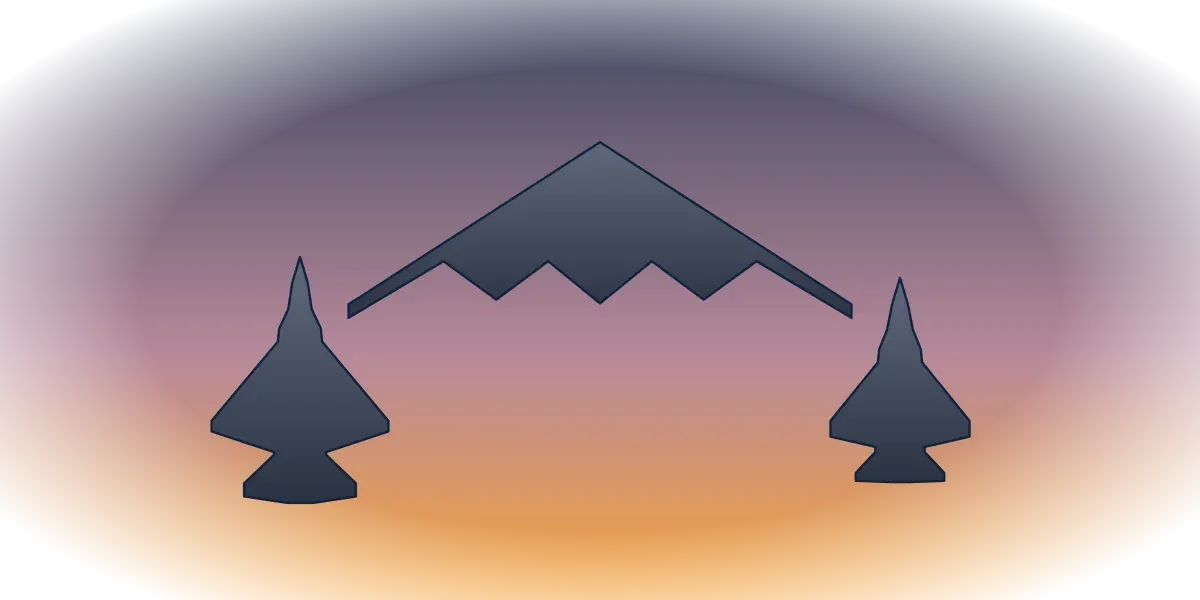
The B-2 Spirit first flew on July 17, 1989. Northrop Grumman’s figures describe a flying wing 172 feet across and only 69 feet long, flown by a crew of two, powered by four buried General Electric F118 turbofans, with a top speed described simply as high subsonic and a range of 6,000 nautical miles without refueling. Northrop Grumman calls it the nation’s first operational nuclear stealth bomber.
The F-22 Raptor was declared operational in 2005, and the last of 195 was delivered on May 2, 2012. It pairs stealth with speed: it can supercruise above Mach 1.5 without afterburners. The F-35 adds sensor fusion, in which computers merge radar and other sensor data into one picture for the pilot, and carries its weapons internally. Where fighters fit in the five generations is covered in the fastest planes ever flown.
The newest is the B-21 Raider, unveiled on December 2, 2022, which Northrop Grumman calls the world’s first sixth-generation aircraft to reach the skies. As of October 2026 it is in flight testing at Edwards Air Force Base in California, and the company says the first B-21 is on track to arrive at Ellsworth Air Force Base in South Dakota in 2027. The design is a flying wing again, which tells you how well the B-2’s idea has held up.
What to watch for on your next flight
Your airliner is the opposite of a stealth aircraft, and deliberately so. It carries a transponder that answers radar with its identity and altitude, because in civil airspace the whole point is to be seen. From your window, you can read the design choices in reverse: the tall vertical tail, the big round engine intakes with their fan blades on show, the fuel tanks and pods hung underneath. Each one is a mirror a stealth designer would remove.
Fast or hidden: for forty years those were the two ways to survive hostile skies, and stealth won. Where the fast approach peaked, with aircraft that outran missiles at three times the speed of sound, is the story of the fastest planes ever flown.
Quiz
Check yourself
-
Question 1 of 3
How does the F-117's faceted shape help it hide from radar?
- Its flat panels bounce radar waves away
- Its panels send out jamming signals
- Its curved skin absorbs radar
- Its shape makes radar waves speed up
Show the answer
Answer: A. Flat panels set at angles deflect radar waves away from the radar that sent them, instead of straight back.
-
Question 2 of 3
Besides radar, what else do stealth designers try to reduce?
- Weight, fuel and range
- Speed, altitude and climb
- Heat, noise and visibility
- Cost, crew and maintenance
Show the answer
Answer: C. Stealth also means cutting the heat, sound and visible signs that could give an aircraft away.
-
Question 3 of 3
Why does the F-35 carry its weapons inside its body?
- To shield them from the weather
- To let it land on carriers
- To stay hard to detect
- To leave room for fuel tanks
Show the answer
Answer: C. Unlike fourth-generation jets with weapons hung outside, the F-35 can carry its payload internally to keep its stealth edge.
Guides
Keep reading
Speed & Altitude Legends
The Fastest Planes Ever Flown: From the X-1 to the X-15
Airports & Air Traffic Control
How Does Air Traffic Control Work? From the Tower to the Ocean
Navigation & Weather
What Are Contrails? Why Planes Leave White Trails
Engines & Propulsion
How Do Jet Engines Work? Turbojets, Turbofans and Turboprops
Aircraft
From the Hangar
Sources
- Federal Aviation Administration, Pilot's Handbook of Aeronautical Knowledge (FAA-H-8083-25C)
- Smithsonian National Air and Space Museum, "No One Knew I Was in the Sky": The Story of the F-117 Nighthawk
- Smithsonian National Air and Space Museum, F-117 Nighthawk Joins the National Air and Space Museum Collection
- Lockheed Martin, F-117 Nighthawk
- Lockheed Martin, F-117 Nighthawk Fast Facts
- Lockheed Martin, F-22 Raptor History
- Lockheed Martin, F-22 Raptor
- Lockheed Martin, F-35: 5th Gen Capabilities
- Northrop Grumman, B-2 Technical Details
- Northrop Grumman, B-2 Spirit: Evolving with Agility
- Northrop Grumman, B-21 Raider