LEG 14 · Safety & Lessons Learned
Why Are Black Boxes Orange? What Flight Recorders Do
They are bright orange, there are two of them, and they are built to outlast almost anything. Here is what they record and why.
Updated · 6 min read
The short answer
Black boxes are bright orange so searchers can spot them in wreckage or on a seabed. There are two: a flight data recorder that logs measurements like altitude, speed and heading, and a cockpit voice recorder that keeps the crew's voices and cockpit sounds. Their memory sits in a case built to survive crashes, fire and deep water.
The name is wrong twice over. The “black box” is not black, and it is not one box. An airliner carries two recorders, both painted a bright orange that has nothing to do with the nickname, and together they are the reason investigators can say what happened on a flight that nobody came back from. Here is what they keep, how they survive, and why the rules about them are changing right now.
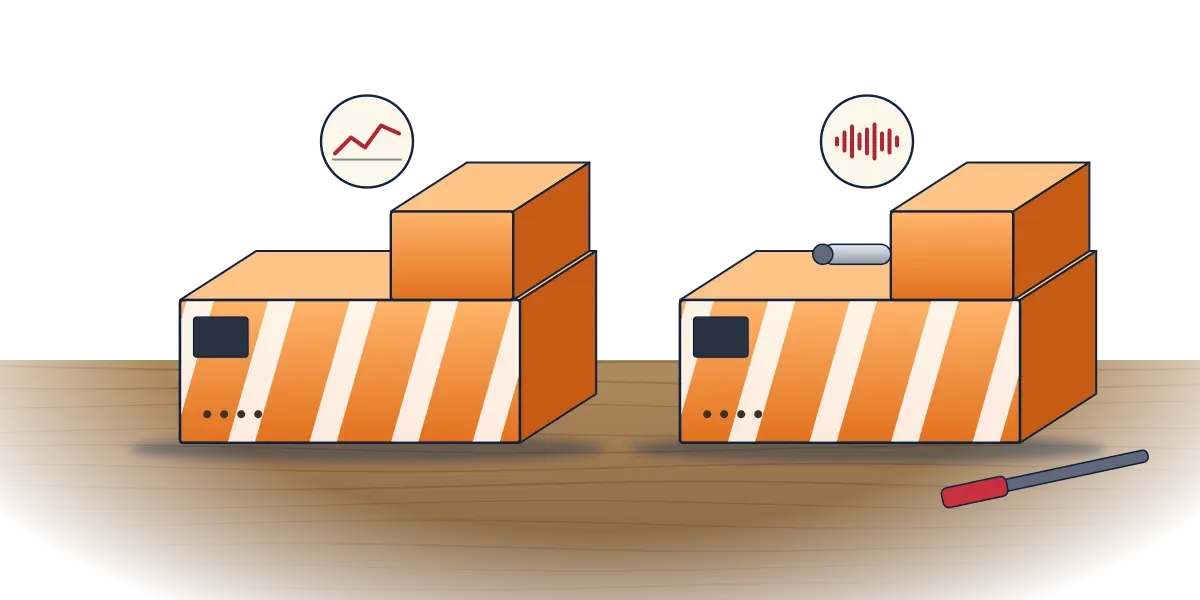
Why is it called a black box if it’s orange?
The color is the easy part. Flight recorders exist to be found, often in a field of wreckage or on a seabed, so their cases are high-visibility. European design standards call for a crash-protected recorder to be either bright orange or bright yellow, with reflective tape on the outside to help divers pick it out under water. When the European safety agency reviewed the rule in 2018, it noted that nearly every model already came in orange and proposed to keep only that color.
The nickname is the harder part. “Black box” is the public’s term, not the industry’s; the NTSB puts it in quotation marks and then talks about recorders. Where it came from is less certain than what the boxes do, and official sources do not settle it. What is certain is that no recorder has ever been built to be hard to see.
What does a black box record?
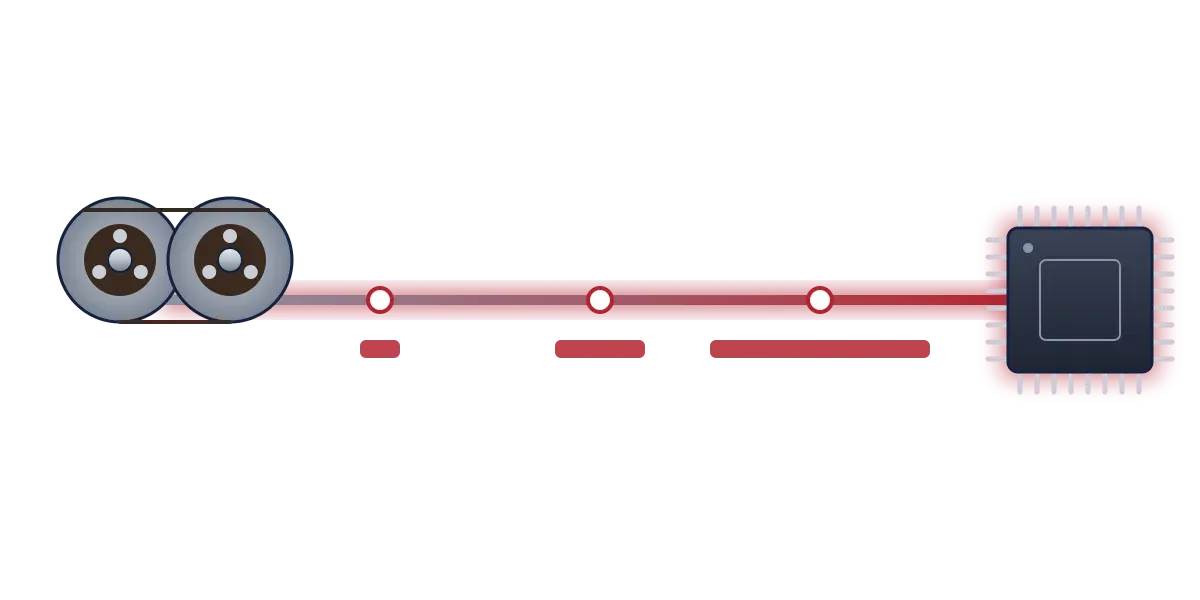
The two recorders have different jobs. The flight data recorder keeps track of how the airplane was flying: time, altitude, airspeed, heading and attitude, plus the state of systems such as flap position, autopilot mode and smoke alarms. The NTSB says a newly built aircraft must record at least 88 of these parameters, and some recorders capture more than 1,000. The oldest units scratched their data onto quarter-inch magnetic tape; modern ones write to solid-state memory and hold the last 25 hours. The way the autopilot modes it records actually fly the airplane is explained in How does autopilot work?
The cockpit voice recorder keeps what could be heard on the flight deck. A microphone in the overhead panel between the pilots picks up voices and background sounds, and the engine note, a stall warning or the thump of the landing gear can all be read from it. Other channels capture the radio exchanges with air traffic control, automated weather broadcasts and the crew’s intercom calls to the cabin. Four channels in all. For decades the recording lasted 30 minutes before it was taped over; current units keep 2 hours, and that is about to change.
Where is the black box on a plane?
Both recorders are usually mounted in the tail, which the NTSB describes as the most crash-survivable part of the aircraft. The logic is simple: in most impacts the front of the airplane arrives first and absorbs the worst of it, so the rear is the place most likely to be left intact. The two units sit separately, each with its own protection, so that losing one does not mean losing both.
Can a black box be destroyed?
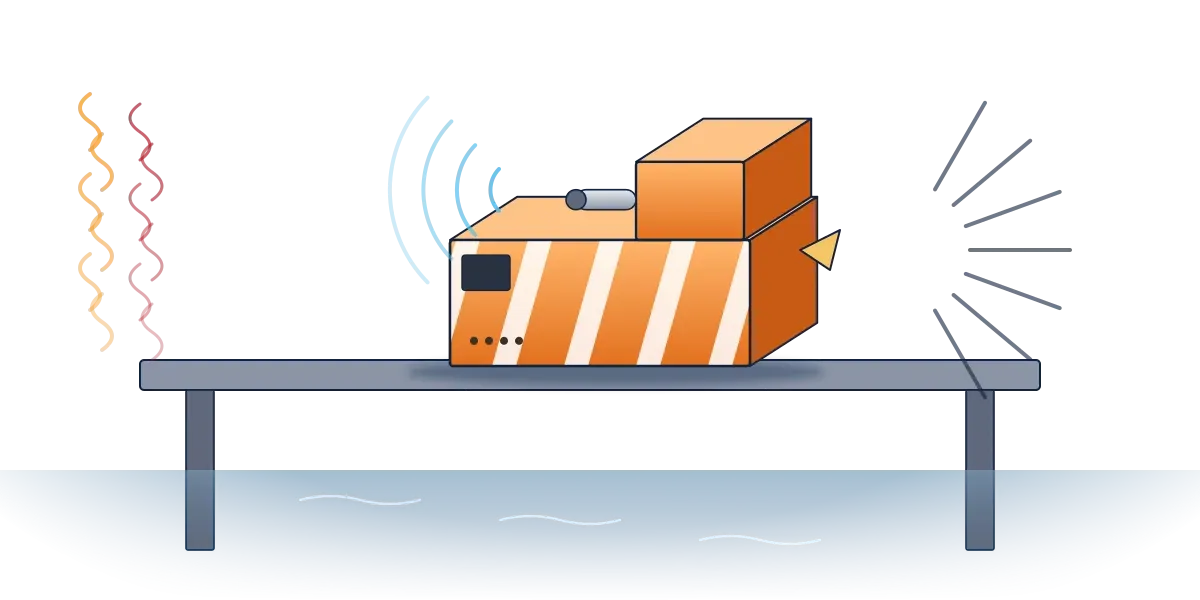
Almost anything can be destroyed, so the standards are written around what a crash actually does. The protected part is the memory module, housed in a crash-survivable case. According to the NTSB’s specification, it is tested against an impact of 3,400 g lasting 6.5 milliseconds and a fire of 1,100°C for 30 minutes, and it has to work after being submerged to a depth of 20,000 feet. The outer box and its electronics may be torn away; the memory inside is what matters.
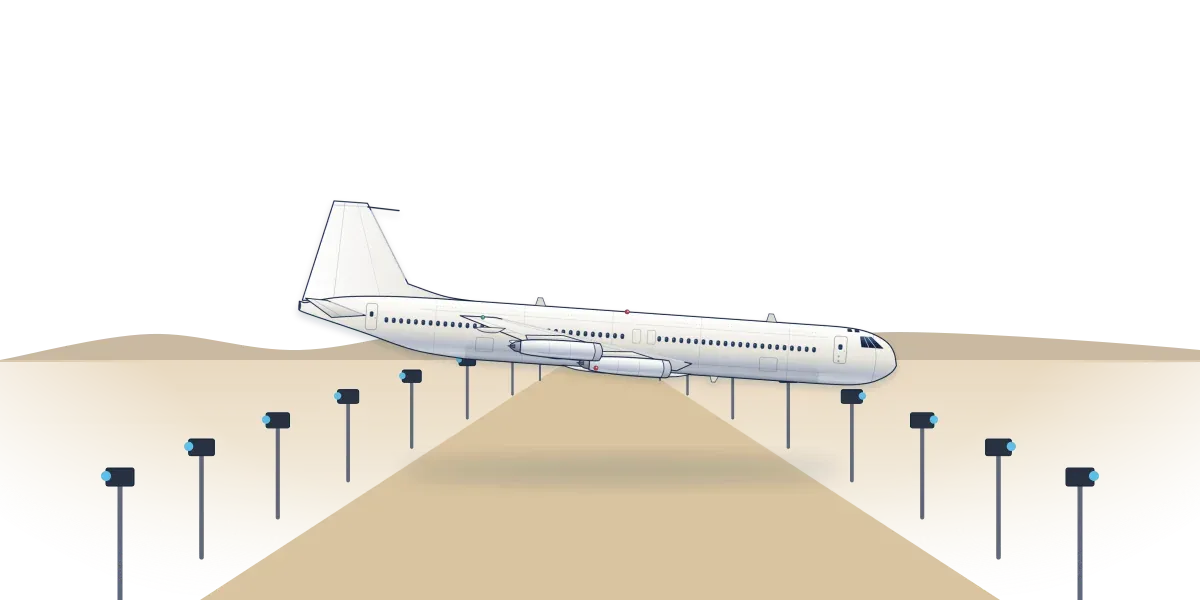
Those numbers were not chosen in a laboratory alone. On December 1, 1984, NASA and the FAA deliberately crashed a remotely flown Boeing 720, with no one aboard, onto a dry lakebed at Edwards Air Force Base in California. The airplane carried crash-test dummies and hundreds of sensors, and 97 percent of the sensors were still working at impact. The main aim, a fuel additive meant to stop a fire from spreading, suffered a setback when the impact came in harsher than planned. But the flight data recorder experiments largely succeeded, and the test remains one of the few times anyone has measured a real airliner crash from the inside.
How long does a black box ping?
Each recorder carries an underwater locator beacon, a small cylinder bolted to its front. It switches itself on when immersed and begins sending an acoustic pulse at 37.5 kHz, a frequency well above human hearing that needs a special receiver to detect. The NTSB says the signal can be picked up from depths down to 14,000 feet. The battery has a shelf life of six years or more and, once triggered, keeps the beacon pinging for 30 days.
That month is the window in which a sea search has an acoustic trail to follow. After it closes, finding a recorder means mapping the seabed and looking, which is why the beacon’s position on the front of the box, where it is easiest to recover, matters as much as its battery.
Who invented the black box?
A chemist. David Warren worked on aviation fuels at the Aeronautical Research Laboratories in Melbourne, Australia, and in the early 1950s he sat in on discussions of the losses of the de Havilland Comet, the world’s first jet airliner. The problem, he realized, was that nobody knew what the crews had seen in their last minutes. Around the same time he came across the first miniature tape recorder, a German device called the Minifon, at a trade fair. Put one in a cockpit, he reasoned, and there would be a record of everything said up to the moment of an accident.
Australia’s defense science agency, the laboratory’s successor, dates the idea to 1953. Warren and his team spent several years on it, and a demonstration model was ready in 1957. Australian aviation officials were not interested; British ones were, and the device went to Britain for further development. Then, after an unexplained crash of a Fokker Friendship at Mackay, Queensland, in 1960, the judge at the court of inquiry ordered recorders fitted to future Australian aircraft. Australia became the first country to make cockpit voice recording mandatory. The Comet story that started it all, and what the jet age learned from it, is told in Why are airplane windows round?
How long does a cockpit voice recorder record?
Two hours on most airliners flying today, and that has turned out to be too short. The NTSB explained why in a 2018 report. Events that matter often happen early in a flight, and if the crew keeps flying, the recorder keeps recording over them. In one case the board cited, an older 30-minute unit lost the key audio because the flight continued for another 2 hours and 11 minutes after the event. Many international flights last 12 hours or more.
The international standard moved first. ICAO adopted a 25-hour requirement for large airliners, those with a maximum takeoff mass above 27,000 kg, built after January 1, 2021, and Europe’s rules followed the same line. The NTSB recommended in 2018 that the United States match it for new aircraft and retrofit the existing fleet.
The United States has now caught up. The FAA proposed a 25-hour rule in December 2023, and Congress wrote the requirement into the FAA Reauthorization Act of 2024, signed on May 16, 2024. The final rule was issued on February 2, 2026. It applies to airline aircraft manufactured on or after May 16, 2025, and the same law requires the existing airline fleet to be fitted with 25-hour recorders by May 16, 2030. Smaller aircraft that already carry a voice recorder follow in 2027 and 2029, depending on their weight. As of October 2026, a new airliner delivered to a US carrier records a full day and night of audio rather than the last two hours.
Longer recordings do not change what the recorder is for. Each one is a slice of evidence that lets investigators trace an accident back through every defense that failed, which is the subject of How safe is flying, really? The orange boxes in the tail are why the findings of an inquiry are facts rather than guesses, and why the rules that follow an accident can be written with confidence that they address what actually happened.
Quiz
Check yourself
-
Question 1 of 3
What color are an airliner's “black boxes”?
- Bright orange or yellow
- Camouflage green
- Shiny silver metal
- Matte black, as the name says
Show the answer
Answer: A. Their cases are bright orange or bright yellow, with reflective tape, so searchers can find them after an accident.
-
Question 2 of 3
Where are the flight recorders usually mounted?
- Under the wings
- In the cockpit
- In the tail
- In the nose gear bay
Show the answer
Answer: C. The recorders usually sit in the tail, the part of the aircraft most likely to survive a crash.
-
Question 3 of 3
Under the international standard, how much audio must cockpit voice recorders on large new airliners keep?
- The last 30 minutes
- The last 12 hours
- The last 25 hours
- The last 2 hours
Show the answer
Answer: C. The international standard calls for 25-hour cockpit voice recorders on large airliners built since 2021.
Guides
Keep reading
Aircraft
From the Hangar
Sources
- National Transportation Safety Board, Cockpit Voice Recorders and Flight Data Recorders
- European Union Aviation Safety Agency, Notice of Proposed Amendment 2018-03: Flight recorders
- National Transportation Safety Board, Safety Recommendation Report: Extended Duration Cockpit Voice Recorders
- Federal Aviation Administration, Proposed rule: 25-hour cockpit voice recorders
- Federal Aviation Administration, InFO 26013: Requirements for Aircraft to be Equipped with 25-Hour Cockpit Voice Recorders
- Defence Science and Technology Group (Australia), Black box flight recorder
- NASA Technical Reports Server, Flight Test Experience and Controlled Impact of a Remotely Piloted Jet Transport Aircraft
- NASA Technical Reports Server, Full-Scale Transport Controlled Impact Demonstration
- Federal Aviation Administration, Lessons Learned: De Havilland DH-106 Comet 1