LEG 12 · Speed & Altitude Legends
Why Was Concorde Retired, and Is Supersonic Travel Coming Back?
A hundred seats, a ton of fuel per seat and a boom that kept it over the ocean. Concorde's story explains why the next supersonic airliner looks so different.
Updated · 7 min read
The short answer
Concorde was retired in 2003 because it never paid its way. It carried only 100 passengers, burned about a ton of fuel per seat, and its sonic boom kept it off overland routes. The 2000 accident, a fall in travel after 2001 and the manufacturer's decision to stop supporting the fleet ended it. New quiet-boom designs are now flying.
For 27 years, a handful of people could cross the Atlantic in the time it takes to watch two films. Then, in 2003, the only supersonic airliner ever to settle into decades of regular service was parked in museums. The reasons were piling up long before the end, and they explain why the next generation of supersonic airplanes is being designed around one problem above all others: the boom.
Why was Concorde retired in 2003?
No single event ended Concorde. The Science Museum, which keeps the British prototype, puts it bluntly. The airplane was never financially viable, because of development costs, environmental and economic concerns, and the noise of its sonic boom. Only 20 were built, and only 16 production aircraft ever carried passengers, all of them for Air France and British Airways.
The last years brought three more blows. The accident near Paris in July 2000 grounded the fleet for more than a year. Then international travel fell sharply after the attacks of September 2001, which the Smithsonian’s National Air and Space Museum calls the final straw. In April 2003, Air France told the museum that its Concorde service would end on May 31, after the manufacturer decided to stop supporting the fleet. British Airways flew its last Concorde passengers on October 24, 2003.
How fast did Concorde fly?
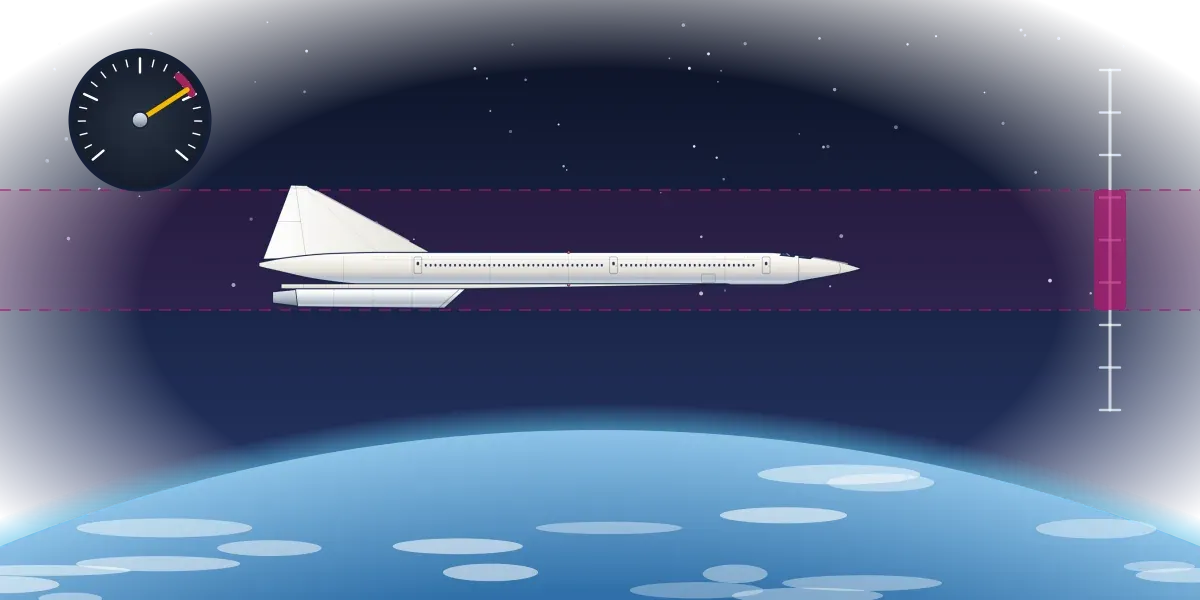
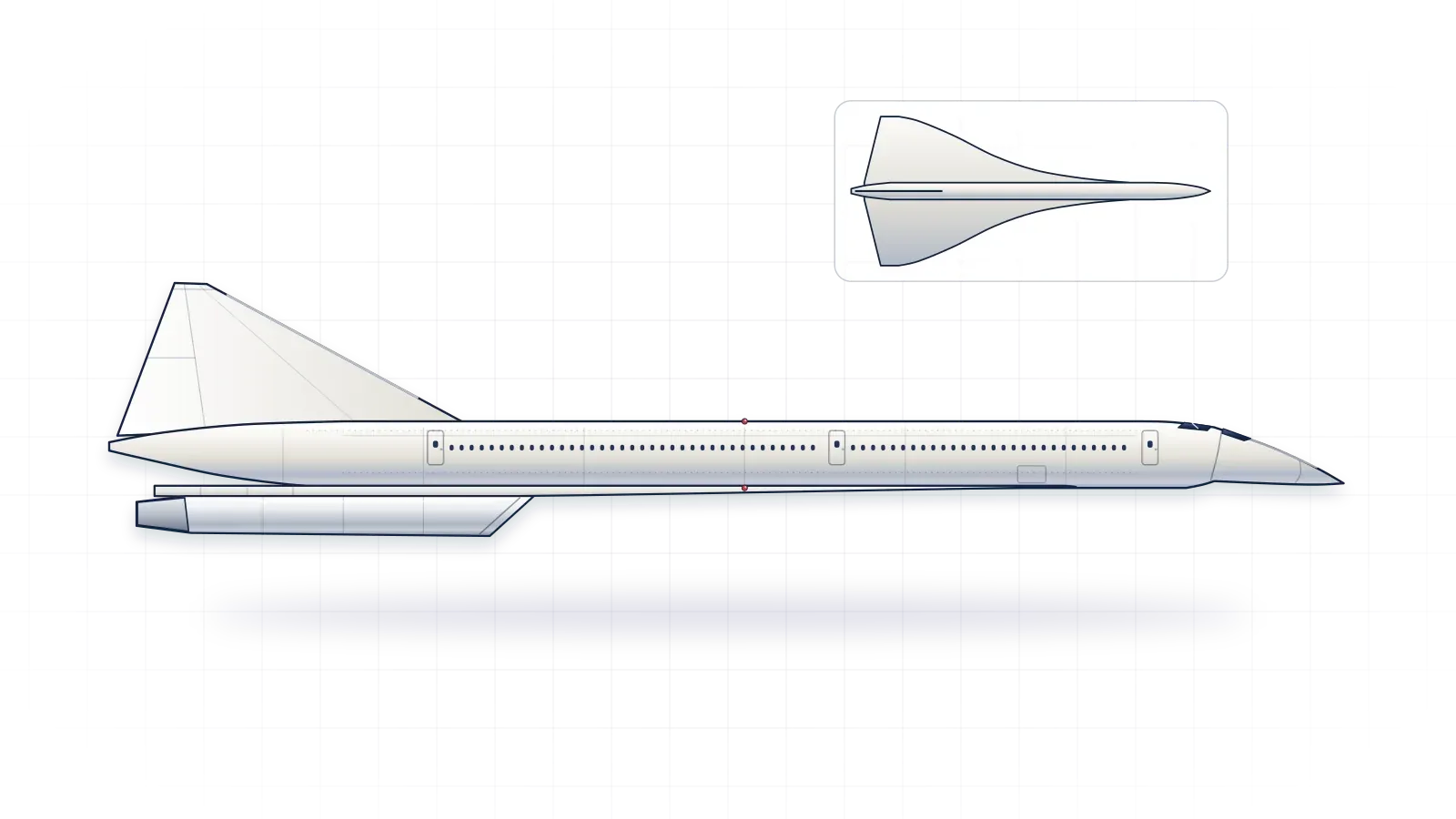
Concorde cruised at twice the speed of sound, between 55,000 and 60,000 feet, with up to 100 passengers aboard. The Smithsonian lists its top speed as 1,350 mph, about 2,179 km/h. That cut the Atlantic crossing roughly in half: an average flight took under four hours, and the Science Museum notes that London to New York could take just three. Ordinary jets then, as now, needed seven or eight hours.
Flying that fast does strange things to an airplane. Friction with the air heated Concorde’s skin to more than 120°C while the air outside was colder than −56°C. The whole airframe stretched about 8 inches in flight and shrank back on the ground. What Mach 2 actually means, and why the speed of sound changes with height, is explained in what is Mach 1?
Why was Concorde so expensive to operate?
Speed costs fuel, and Concorde had very few seats to spread that cost across. Its cabin held just 100 people in rows of four, and the Smithsonian puts its fuel burn at about one ton for every seat on board. A single scheduled flight used 6,771 gallons. The average round-trip ticket cost more than $12,000. Supersonic travel was for the few.
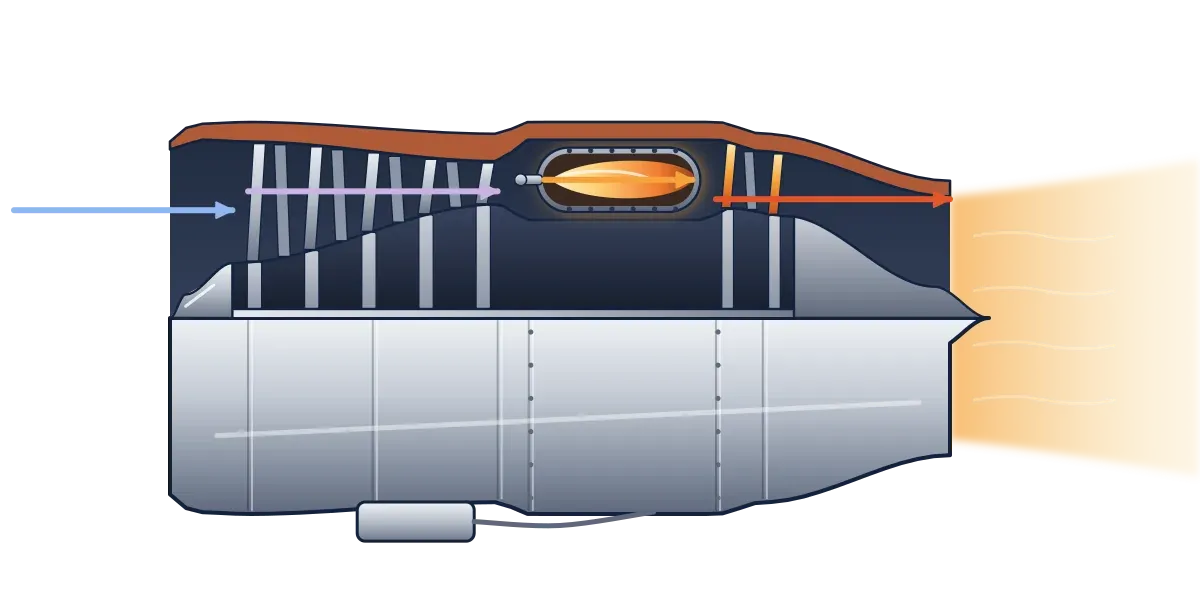
The fleet was tiny too. Britain and France split the work exactly in half, and the two airlines that ordered the airplane were both state-owned at the time. With no other customers, there was no production line to drive costs down and no large fleet to share spares and expertise. By the end, the economics of a 1960s design with four thirsty engines simply could not compete with the twin-engine widebodies that were taking over the Atlantic. The story of how jet engines grew so much more efficient is the other half of that comparison.
Why can’t planes fly supersonic over land?
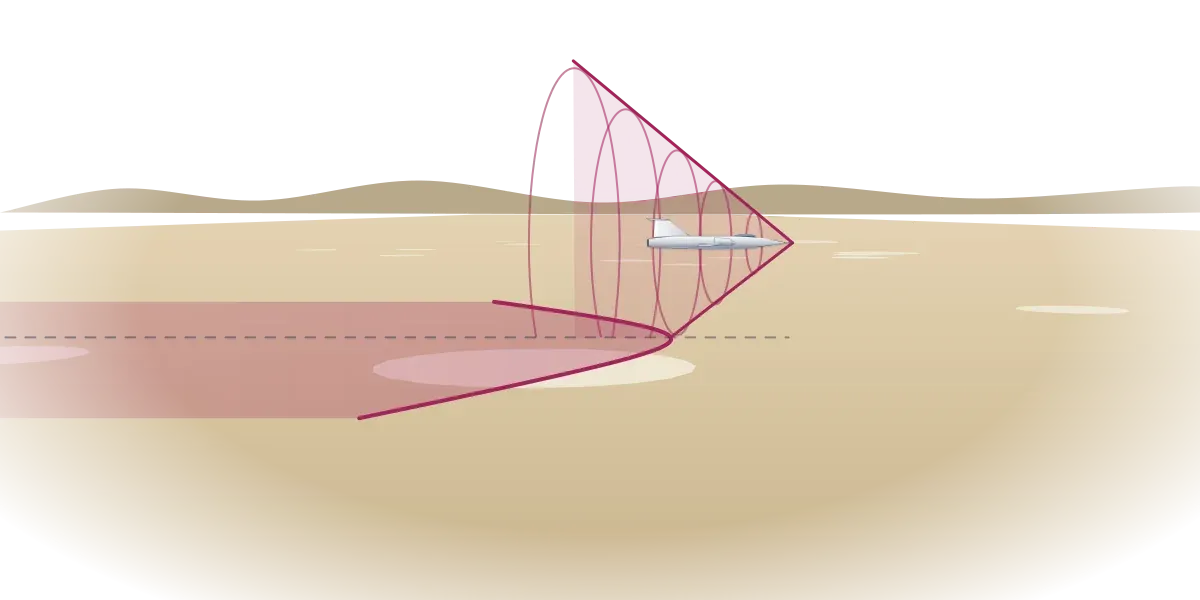
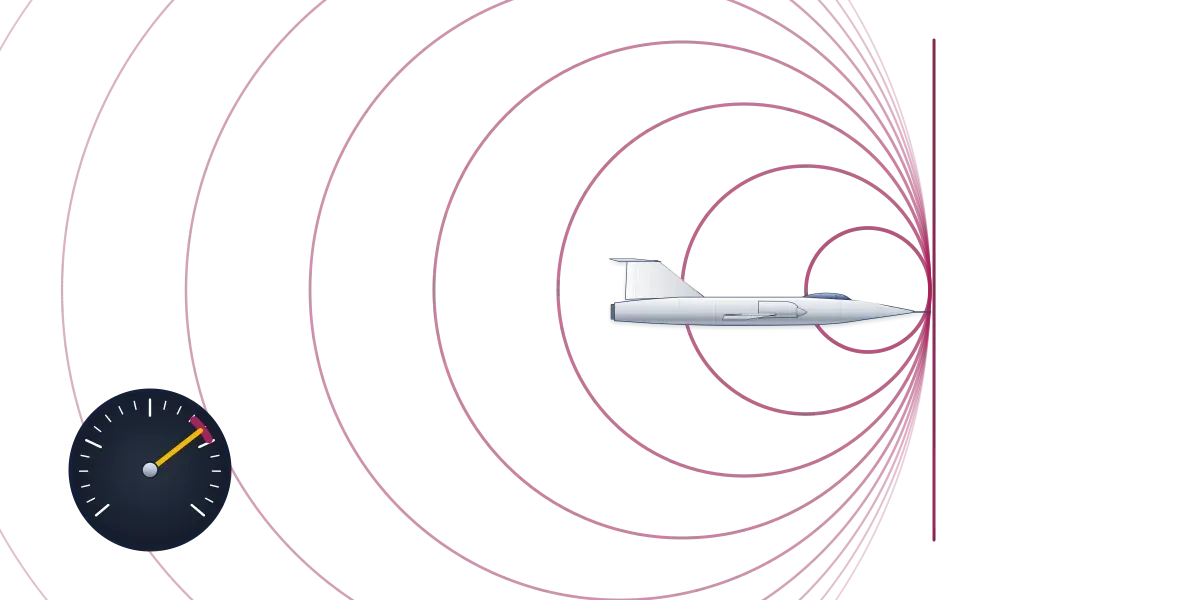
A supersonic airplane drags cones of shock waves behind it, and anyone underneath hears them as a thunder-like boom. It is not a single bang at the moment the airplane passes Mach 1. The boom sweeps along the ground for the whole time the airplane is supersonic, in a carpet about a mile wide for every 1,000 feet of altitude. At Concorde’s cruising height, that carpet was more than 50 miles wide.
Governments responded by shutting the door. In 1973 the US Federal Aviation Administration banned civil flight faster than Mach 1 over the United States, except by special permission. So Concorde only went supersonic over the ocean, which limited it to a small number of routes, mostly across the Atlantic. An airliner built for speed spent part of every flight held back to the speed of everything else.
What happened in the Concorde crash in 2000?
On July 25, 2000, Air France Flight 4590, a charter from Paris Charles de Gaulle to New York, crashed shortly after takeoff at Gonesse, near the airport. All 100 passengers and 9 crew members died, along with 4 people on the ground. France’s accident investigation bureau, the BEA, published its final report in January 2002, and it is the account that matters.
The report found that during the takeoff run, a tire on the left main landing gear ran over a strip of metal that had fallen from another aircraft five minutes earlier. The tire burst, and a large piece of it struck the underside of the wing. The impact ruptured a fuel tank, the leaking fuel ignited, and the resulting fire caused two of the four engines to lose thrust. The crew could not gain height or speed, and the airplane came down less than two minutes after the tire failed.
What changed afterward is the most important part. Within weeks, on the investigators’ recommendation, the French and British authorities suspended Concorde’s airworthiness certificates. Before it could fly passengers again, the fleet was modified. Most fuel tanks were given flexible linings. The wiring in the main landing gear bays was reinforced. The wheels got a new design of Michelin tire, a modified anti-skid computer and a reshaped water deflector. In July 2001 a modified Concorde flew to RAF Brize Norton to begin flight trials. Both airlines returned it to service that year and flew it until the 2003 retirement. How accidents feed into safer airplanes is the subject of how safe is flying?
Will supersonic travel come back?
Three projects suggest it might, and all three take aim at the boom rather than the speed.
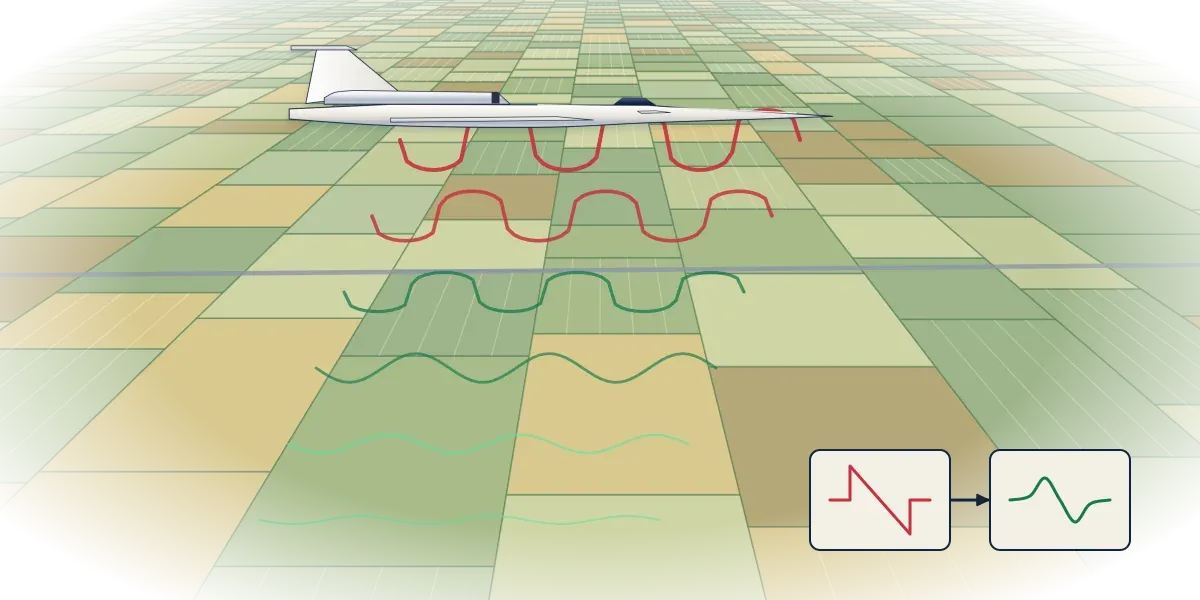
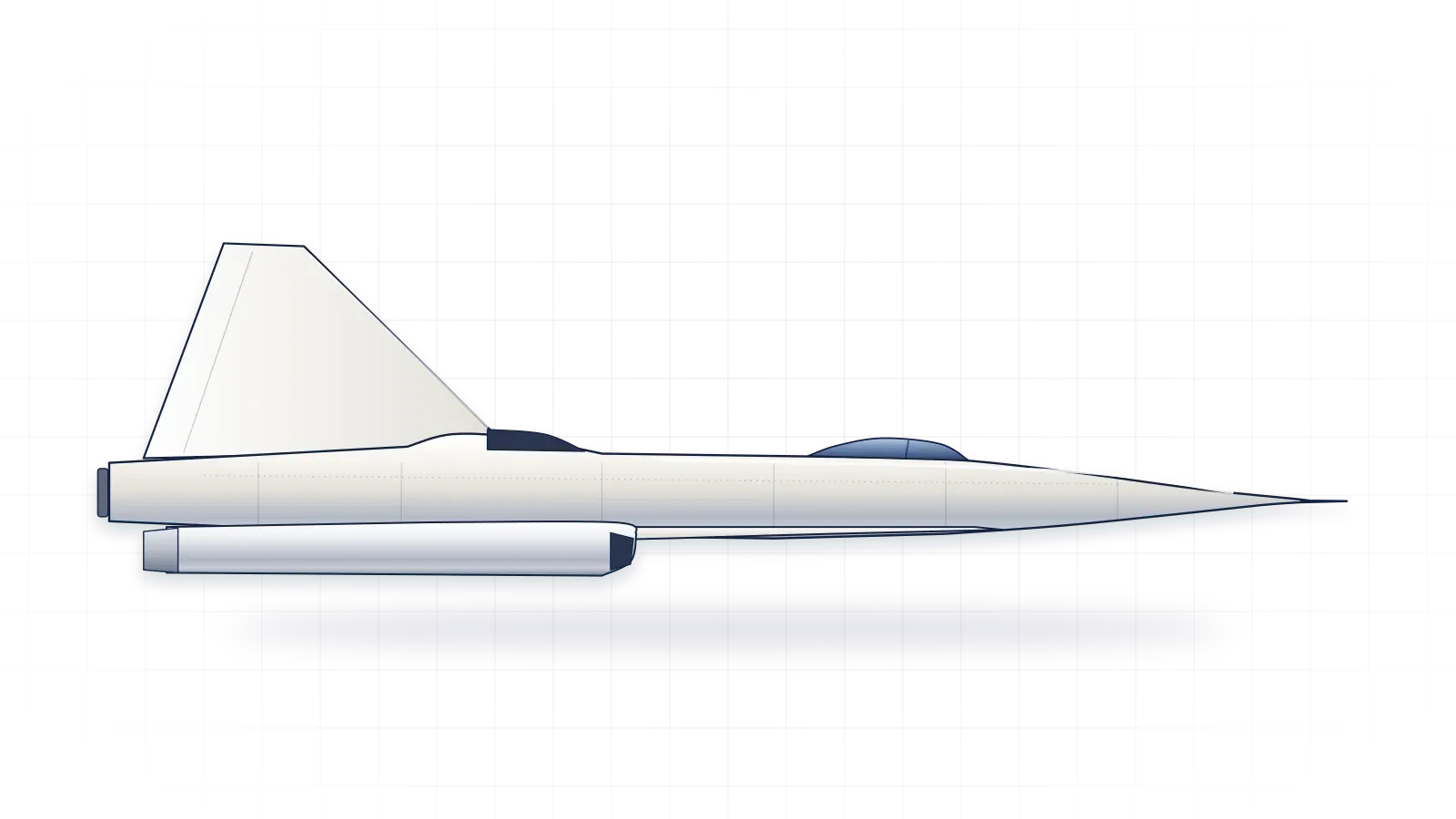
NASA’s X-59 is a single-seat research airplane shaped to turn the sharp boom into a soft thump by spreading out its shock waves. It first flew on October 28, 2025. On June 5, 2026, it passed the speed of sound for the first time, reaching about Mach 1.1 at 43,400 feet over Edwards Air Force Base in California. Its target cruise is Mach 1.4 at about 55,000 feet. NASA then plans to fly it over several American communities to record how people react, and to hand the data to US and international regulators. The X-59’s long nose leaves no room for a forward window, so the pilot watches the view ahead on high-definition screens fed by cameras.
Boom Supersonic’s XB-1, a small demonstrator, went supersonic on January 28, 2025, over the Mojave Desert, reaching Mach 1.122. Boom calls it the first independently developed jet to break the sound barrier. After a second supersonic flight in February 2025, the company retired the airplane to its headquarters in Denver. Boom also says its six crossings of Mach 1 produced no boom that reached the ground, a technique it calls Boomless Cruise. The airliner Boom wants to build, Overture, is designed for Mach 1.7, 60 to 80 passengers and a range of 4,250 nautical miles. Its engine, called Symphony, is Boom’s own design. As of October 2026, Boom lists 130 orders and pre-orders but gives no date for Overture’s first flight.
The rules are moving too. In June 2025 a US executive order told the FAA to lift the 1973 ban. In June 2026 the agency published a proposal to replace it with a noise limit: a boom no stronger than 0.11 pounds per square foot at the surface. As of October 2026 that is still a proposal, not a final rule. The decisive test will be whether the public under the flight path hears a thump or a boom. If it is a thump, the map that confined Concorde to the ocean will be redrawn.
Where to see a Concorde today
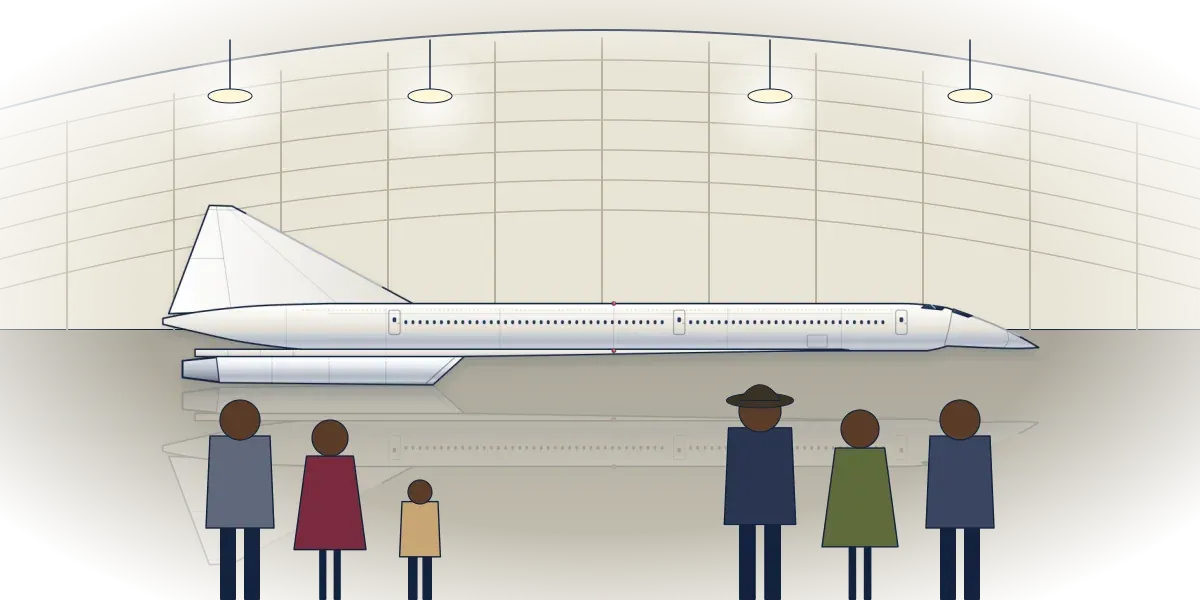
The Smithsonian’s Air France Concorde, F-BVFA, made its last flight to Washington Dulles on June 12, 2003, with 17,824 flight hours behind it. It now stands at the Steven F. Udvar-Hazy Center in Chantilly, Virginia. In England, the British prototype 002 is at the Fleet Air Arm Museum in Yeovilton, where it has been since 1976. Standing under either one, the first surprise is how small the cabin is for an airplane so long.
What to watch for on your next flight
Your next transatlantic crossing will take seven or eight hours, double what Concorde needed, and that difference is the whole story in one number. Notice how the cabin feels at cruise: the window stays cool, because an ordinary airliner never flies fast enough to heat its skin. Then think about the clock. New York runs behind London, so a crossing of under four hours meant Concorde landed earlier, by local time, than it had taken off.
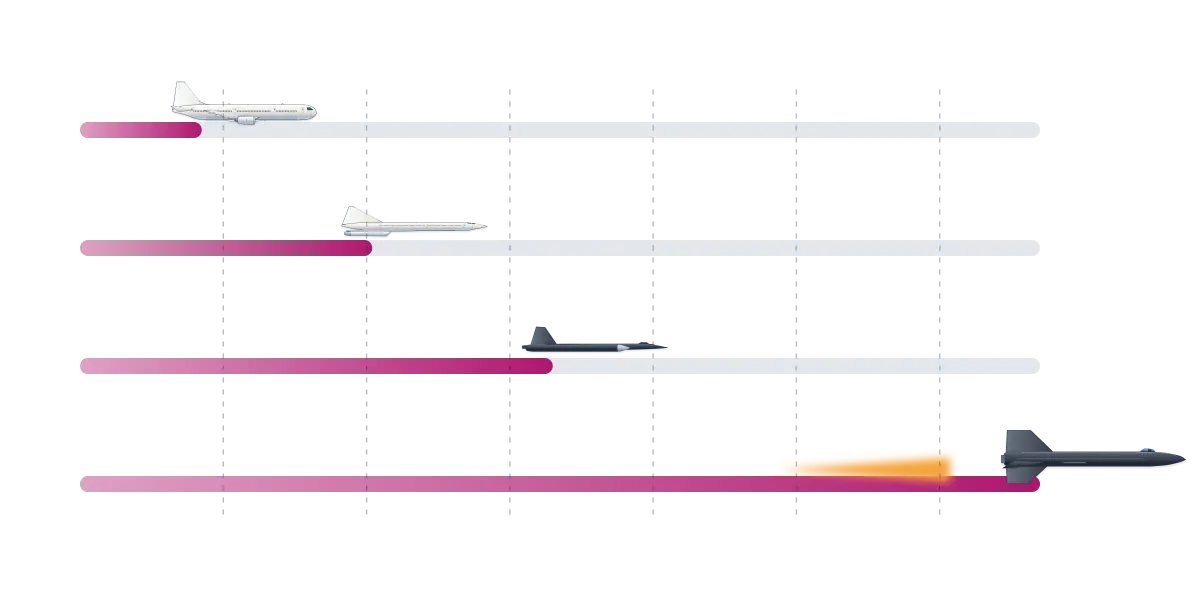
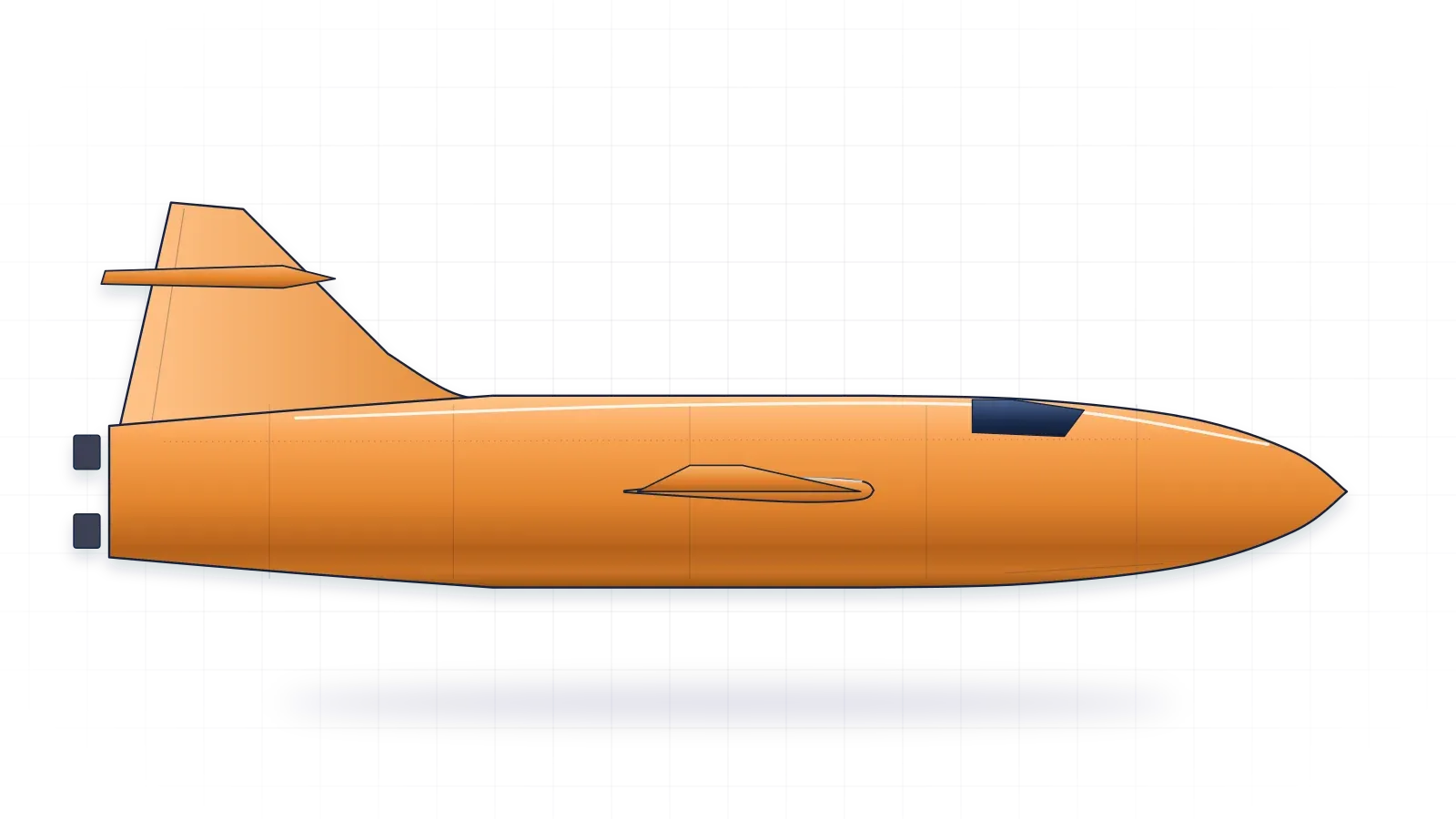
Since Concorde retired, no airliner has carried passengers faster than sound. Where it sits among the fastest aircraft of all, from the Bell X-1 to the rocket-powered X-15, is covered in the fastest planes ever flown.
Quiz
Check yourself
-
Question 1 of 3
In what year did Concorde stop flying passengers?
- 2003
- 1989
- 1979
- 2013
Show the answer
Answer: A. Air France and British Airways ended Concorde operations in May and October 2003.
-
Question 2 of 3
When does a supersonic airplane make a sonic boom?
- Only at the moment it passes Mach 1
- Only when it flies over the sea
- Only when it slows back down
- All the time it flies supersonic
Show the answer
Answer: D. Shock waves trail the airplane the whole time it is supersonic, sweeping a continuous boom along the ground below.
-
Question 3 of 3
What is NASA's X-59 designed to do?
- Carry 100 passengers at twice the speed of sound
- Fly supersonic with only a quiet thump
- Fly on hydrogen fuel
- Fly to the edge of space
Show the answer
Answer: B. The X-59 is designed to fly faster than sound while turning the usual loud sonic boom into a much quieter thump.
Guides
Keep reading
Aircraft
From the Hangar
Sources
- Smithsonian National Air and Space Museum, Concorde, Fox Alpha, Air France
- Science Museum Group, Concorde prototype aircraft
- Smithsonian National Air and Space Museum, What Happened to the Concordes?
- Bureau d'Enquêtes et d'Analyses (BEA), Accident on 25 July 2000 at La Patte d'Oie in Gonesse (95) to the Concorde registered F-BTSC operated by Air France (final report)
- Royal Air Force Museum, British Military Aviation in 2001
- NASA, NASA Facts: Sonic Booms
- Federal Aviation Administration, Enabling Supersonic Overland Flight (notice of proposed rulemaking)
- NASA, NASA's X-59 Completes First Flight, Prepares for More Flight Testing
- NASA, NASA's X-59 Aircraft Flies Supersonic for First Time
- Boom Supersonic, Boom Achieves Supersonic Flight
- Boom Supersonic, Boom Year in Review 2025
- Boom Supersonic, Overture