LEG 10 · The Jet Age
What Is Mach 1? The Speed of Sound and the Sound Barrier
Mach 1 isn't a fixed speed. It is the speed of sound in the air around an aircraft, and that depends on how cold the air is.
Updated · 8 min read
The short answer
Mach 1 is the speed of sound in the air around an aircraft. On a standard day at sea level that is about 761 mph, 1,225 km/h, 340 meters per second or 661 knots. Sound travels more slowly in colder air, so at airliner cruising heights Mach 1 is only about 660 mph.
Fighter pilots, rocket engineers and airline crews all measure speed against the same yardstick: the speed of sound. Say “Mach 2” and people know it means twice that speed. Yet Mach 1 is not one fixed number: it depends on the air an aircraft is flying through, and it drops as that air gets colder. Here is what it means, how fast it is, and what happens beyond it.
What is Mach 1?
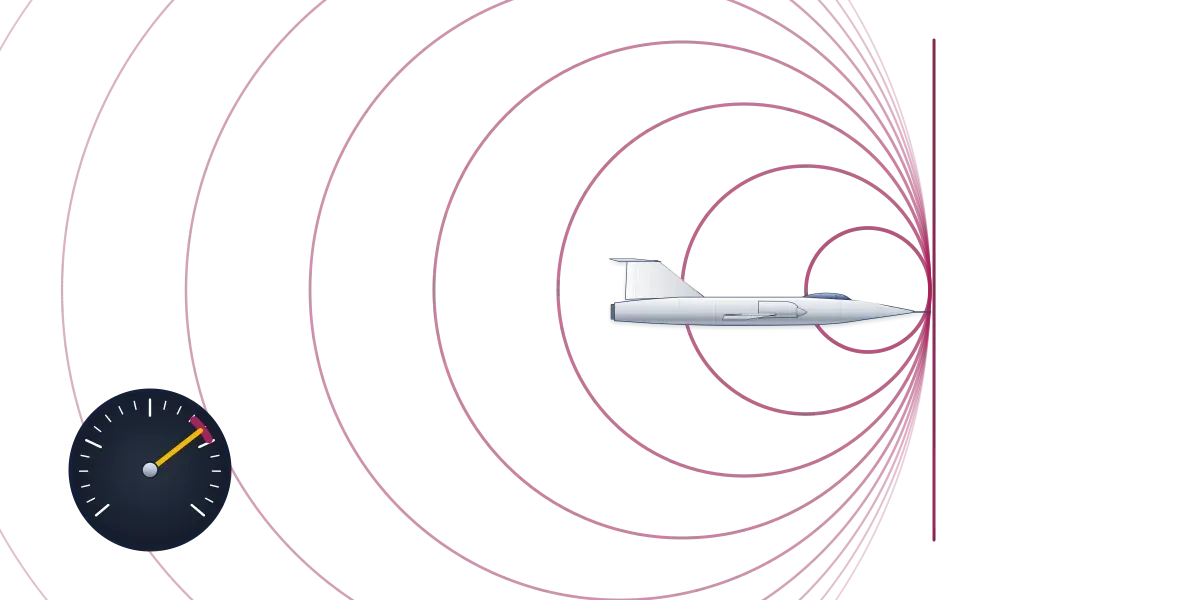
Mach 1 is the speed of sound. The Mach number compares an aircraft’s speed with the speed of sound in the air around it, so Mach 0.5 is half that speed and Mach 2 is double it. The FAA’s handbook defines it as true airspeed divided by the speed of sound in the same conditions. NASA notes that the name honors Ernst Mach, a late 19th-century physicist who studied how gases flow.
Sound is a ripple of pressure handed from molecule to molecule, so its speed is also how fast air can react to something pushing through it. At low speeds, under roughly 250 mph by NASA’s reckoning, air slips around an airplane without being squeezed. Above that, the air ahead starts to compress, and these compressibility effects grow until they dominate near Mach 1.
That is why engineers think in Mach numbers rather than miles per hour. NASA warns that a drag figure measured on a model at 200 mph cannot simply be reused at Mach 2, because the air behaves so differently at the two speeds.
How fast is Mach 1 in mph?
On a standard day at sea level, with the air at 15 °C (59 °F), sound travels at about 761 mph, according to NASA’s Glenn Research Center. The FAA’s handbook gives the same speed in aviation’s own unit: 661 knots. At 40,000 feet, where the temperature is about −55 °C, it gives just 574 knots.
| Unit | Mach 1 at sea level (15 °C) | Mach 1 at 40,000 feet (−55 °C) |
|---|---|---|
| Miles per hour | about 761 | about 660 |
| Kilometers per hour | about 1,225 | about 1,063 |
| Meters per second | about 340 | about 295 |
| Knots | about 661 | about 574 |
The sea-level miles per hour are NASA’s and both knot figures are the FAA’s; the rest are straight conversions. A knot is one nautical mile per hour, a little faster than a mile per hour, so speeds in knots always look smaller.
Online converters often give a slightly higher figure, such as 343 meters per second (about 767 mph). That is not a mistake but the speed of sound on a warmer day, around 20 °C (68 °F).
Why is the speed of sound slower at higher altitudes?
Because the air up there is colder, and temperature is what sets the speed of sound. NASA’s formula for it has just three ingredients: two constants that depend on the type of gas, and the gas’s absolute temperature. Pressure and density do not appear in it at all. Thin air isn’t the reason Mach 1 drops with height; cold air is.
The physics is easy to picture. Sound is passed along by molecules bumping into their neighbors, and in colder air the molecules move more slowly, so the sound does too.
In the standard atmosphere, the temperature falls about 2 °C for every 1,000 feet of climb, the FAA says, reaching about −55 °C at 36,000 feet. From there to 80,000 feet it is treated as constant. Across that whole band, Mach 1 sits at about 660 mph, roughly 100 mph slower than at sea level.
That has a curious side effect. An airliner cruising at Mach 0.85 at 40,000 feet is moving at about 560 mph through the air, while Mach 0.85 at sea level would be about 650 mph. The higher an airplane flies, the fewer miles per hour each Mach number is worth.
What was the sound barrier?
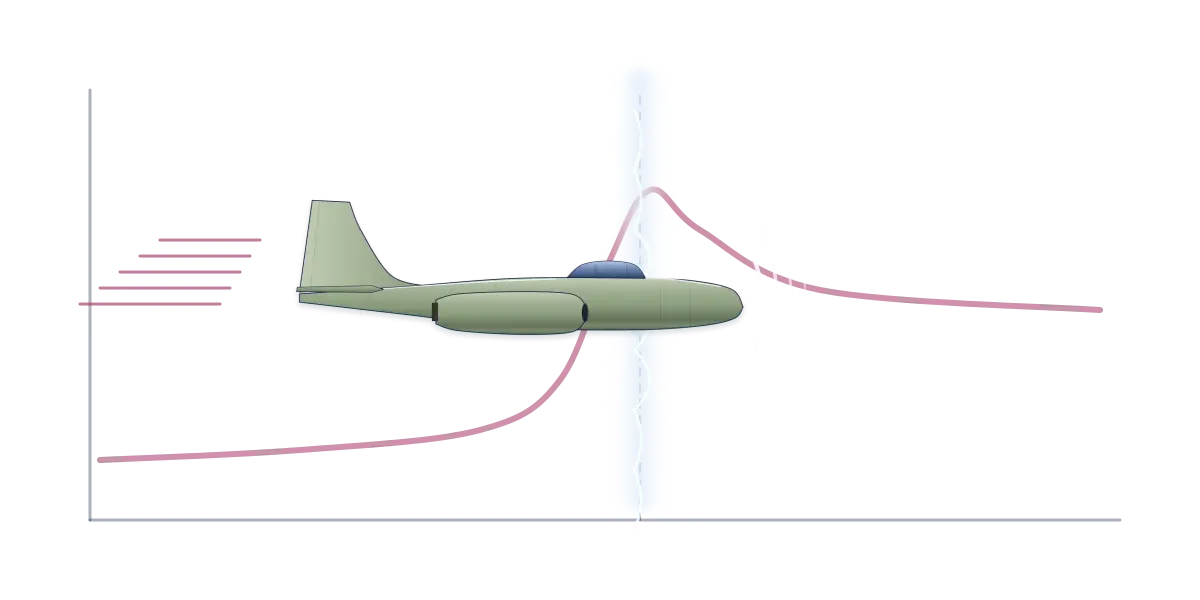
As an airplane nears the speed of sound, shock waves bring buffeting, control problems and a steep rise in drag, the FAA’s handbook explains. That combination once convinced many people that flying faster than sound was impossible, NASA notes, and the idea of a solid “sound barrier” took hold. In fact the barrier was only the rise in drag, and enough thrust carries an airplane through it.
A shock wave forms when the air ahead gets no advance notice. Below Mach 1, an airplane sends pressure ripples out ahead of itself at the speed of sound, and the air begins to move aside before the airplane arrives. At Mach 1 the airplane catches up with its own ripples. The air in front has no time to move, so it is squeezed abruptly into a thin layer where pressure, density and temperature all jump at once.
Shock waves can appear before the airplane itself reaches Mach 1. Air speeds up as it flows over the curved top of a wing, so a jet still below the speed of sound can have patches of supersonic flow on its wings. The FAA calls the speed at which this first happens the critical Mach number, and a little beyond it, drag starts to climb steeply.
Who broke the sound barrier first?
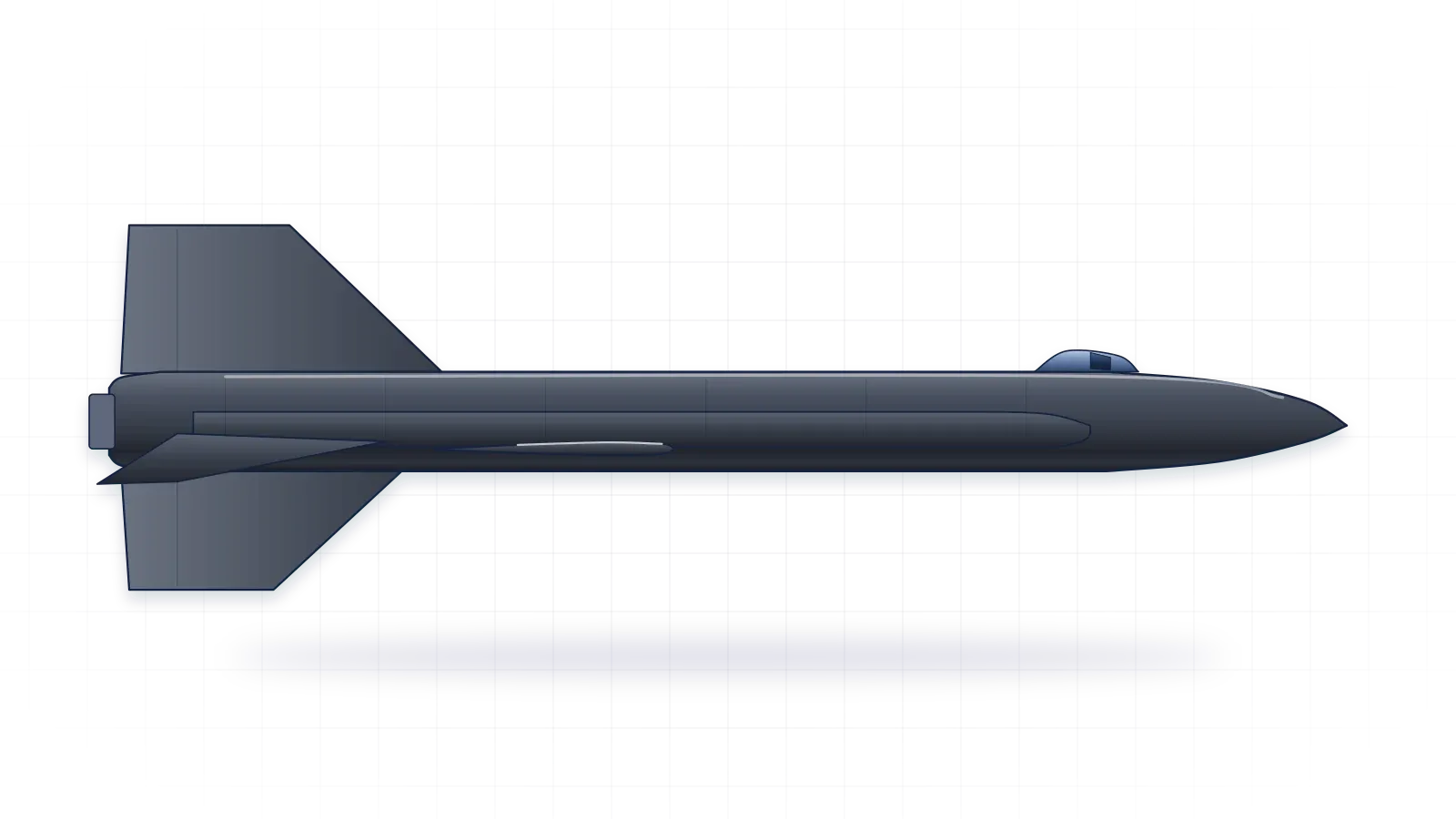
Chuck Yeager did, on October 14, 1947, in the rocket-powered Bell X-1. He had named it Glamorous Glennis after his wife, and its shape was modeled on a .50-caliber bullet. A B-29 bomber carried the X-1 aloft and dropped it, and Yeager reached Mach 1.06, about 700 mph. Accounts differ on the heights: Smithsonian and NASA sources put the drop at 20,000 or 23,000 feet and the record run at 42,000 or 43,000 feet.
Those numbers show the altitude effect at work: at that height, Mach 1 was only about 660 mph. At sea level, Mach 1.06 would have meant more than 800 mph.
The X-1 was also the first of the X-planes. NASA credits it with establishing the idea of an aircraft built purely for research.
What causes a sonic boom?
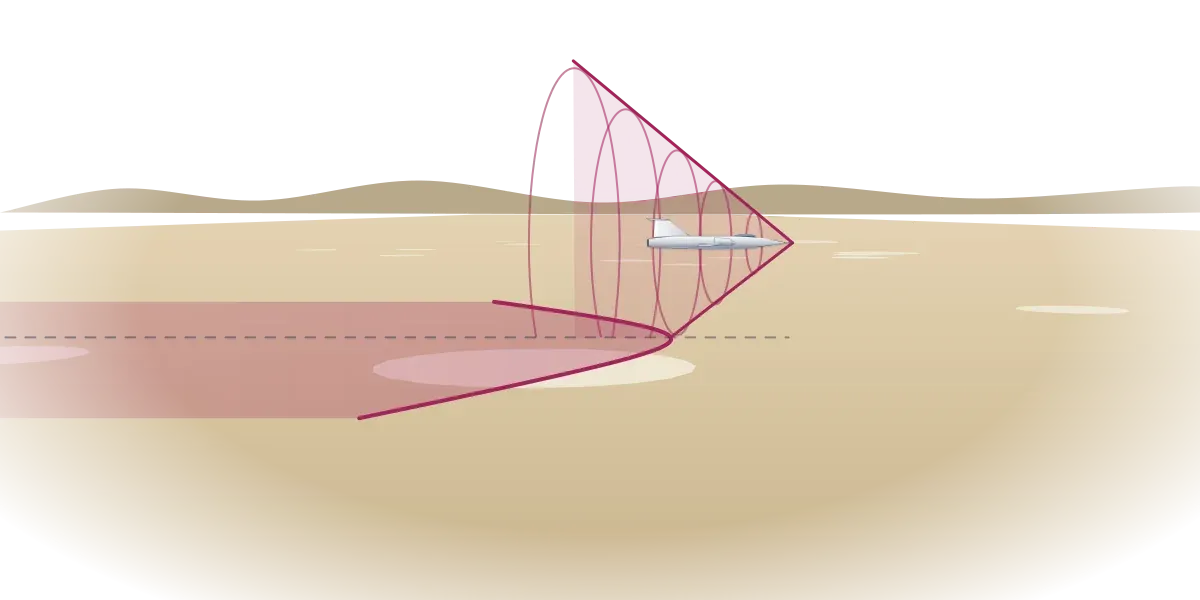
A supersonic airplane outruns its own pressure ripples, so they gather into cones of shock waves trailing back from its nose and tail. When those cones sweep across the ground, people hear a sharp, thunder-like boom. NASA’s fact sheet on sonic booms stresses that this is not a single bang at the moment the airplane passes Mach 1. The boom follows the airplane for as long as it stays supersonic.
The faster the airplane, the more sharply its cone is swept back. NASA’s formula for this Mach angle gives 30 degrees at Mach 2 and under 20 at Mach 3. The noise covers a wide strip, too: NASA puts the boom carpet at about a mile wide for every 1,000 feet of altitude. An airplane at 50,000 feet drags a band of noise roughly 50 miles across.
Booms are a big reason airliners don’t fly faster than sound over land. NASA’s X-59 is designed to turn its boom into a quiet thump, and it flew supersonic for the first time on June 5, 2026. What that could mean for future airliners, and why Concorde stopped flying, is covered in why was Concorde retired?
What is the difference between subsonic, supersonic and hypersonic?
Aviation sorts speeds into bands by Mach number. The edges are approximate, and NASA and the FAA draw them in slightly different places.
- Subsonic means below Mach 1 to NASA, or below Mach 0.75 to the FAA. Airliners live here. The FAA says civil jets normally cruise between Mach 0.7 and 0.9. The Gulfstream G650 business jet can reach Mach 0.925.
- Transonic means close to Mach 1, or 0.75 to 1.2 in the FAA’s version. Some of the airflow is supersonic and some is not, and the drag rise lives here.
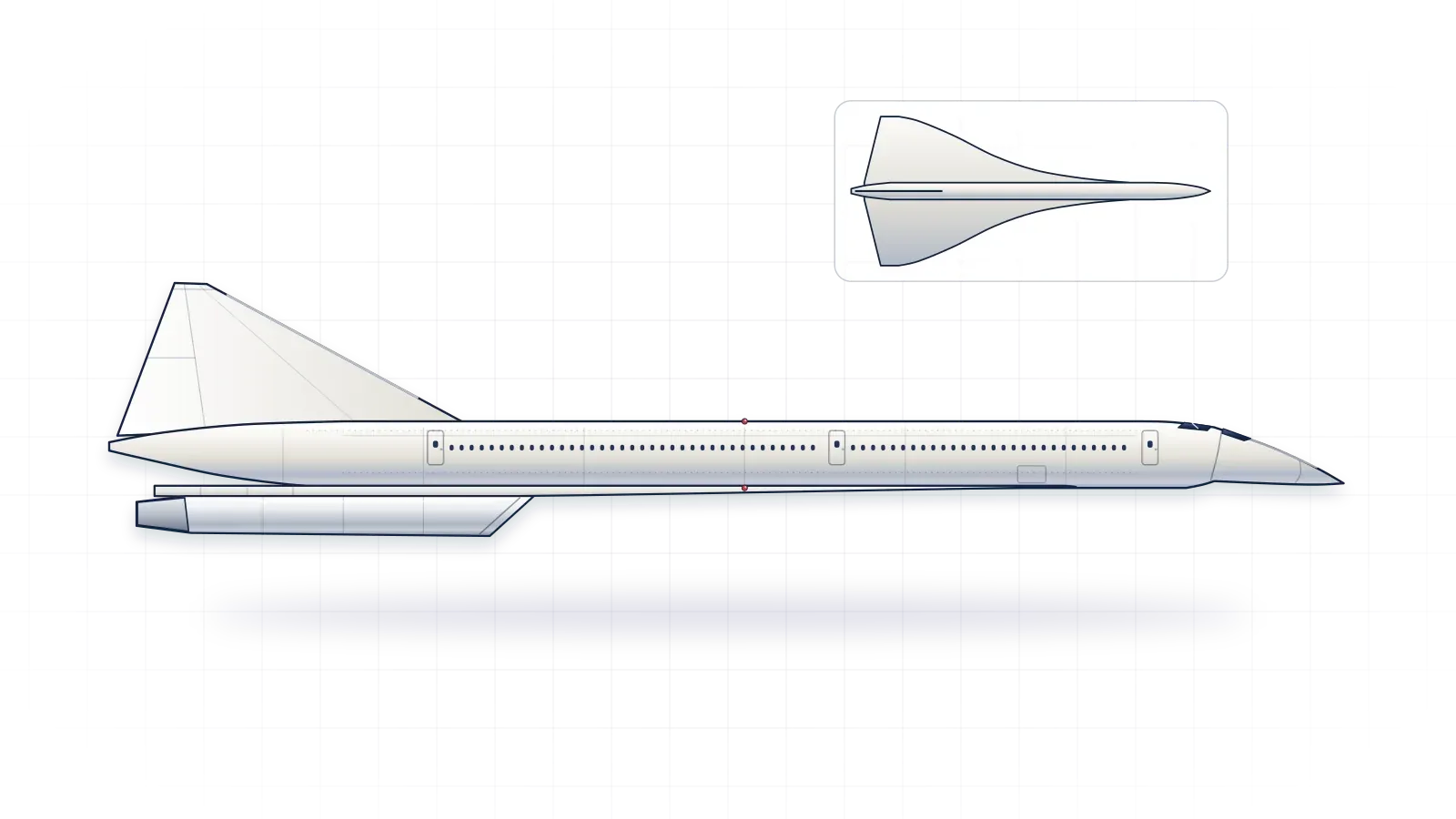
- Supersonic starts at Mach 1 for NASA and 1.2 for the FAA. Concorde cruised at Mach 2 between 55,000 and 60,000 feet, and the SR-71 Blackbird cruised above Mach 3. NASA calls Mach 3 to 5 high supersonic, where heating of the airframe becomes a major design problem.
- Hypersonic means faster than Mach 5. The rocket-powered X-15 reached Mach 6.7, or 4,520 mph, on October 3, 1967, and NASA notes that the Space Shuttle came back into the atmosphere at about Mach 25.
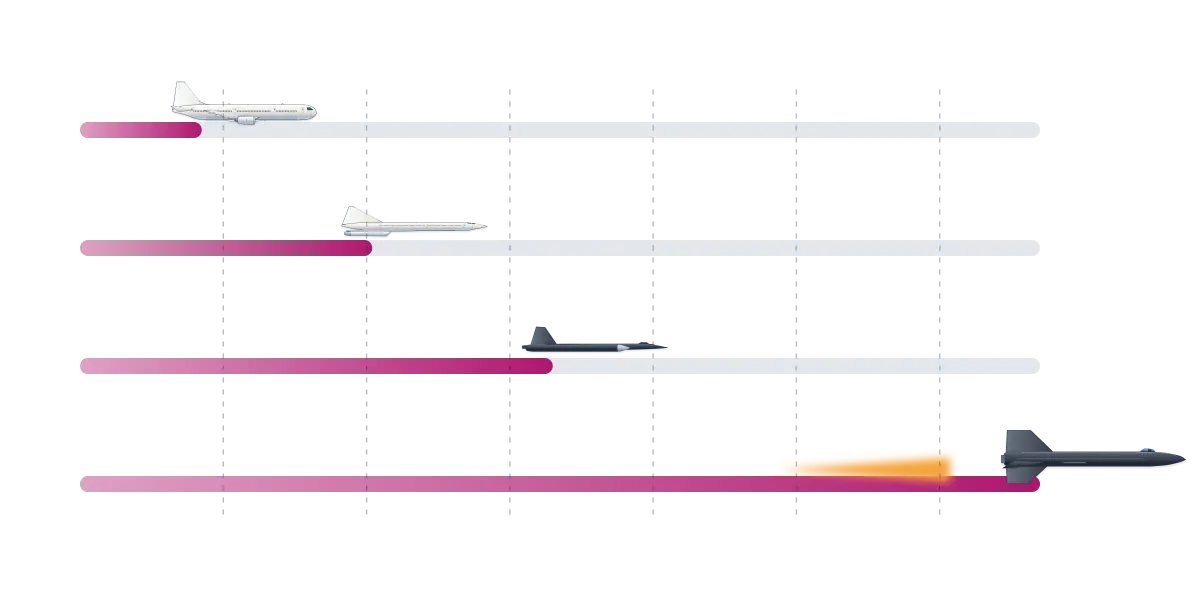
The record holders are compared in more detail in the fastest planes ever flown.
Why don’t passenger planes fly faster?
Mostly because of the drag rise. The FAA’s handbook notes that a jet is usually most efficient at or near its critical Mach number, just before shock waves start to form on the wing. Fly much faster and drag climbs steeply, so every extra mile per hour costs a lot of fuel. That is why airliners settle into the Mach 0.7 to 0.9 band.
Look out at the wing and you can see how designers stretch that limit. Only the part of the airflow that meets the leading edge squarely counts toward shock waves, the FAA explains, and sweeping the wing back shrinks that part. In the handbook’s example, a wing moving at Mach 0.85 meets the air as if it were doing Mach 0.70.
Going supersonic means pushing through the drag rise, and that takes far more thrust. Many fighters carry afterburners for exactly that moment, as how do jet engines work? explains. Add the sonic boom, and it is easy to see why today’s airliners stay just below the line.
What to watch for on your next flight
- The moving map’s speed. It usually shows ground speed in miles or kilometers per hour, not Mach. In cruise, the airliner is flying somewhere in the FAA’s band of Mach 0.7 to 0.9.
- The outside air temperature. If the map shows it, the number at cruise will be far below freezing. That cold is why Mach 1 up there is around 100 mph slower than on the runway.
- The sweep of the wing. From a window seat, notice how the wing angles back toward the tail. That angle lets the airplane cruise close to the speed of sound without running into the drag rise.
- A faster trip home. On an eastbound leg, the map may show a far higher ground speed at the same Mach number, thanks to the jet stream. Why is flying east faster? explains.
Mach 1, in the end, is a ratio rather than a speed limit, and it moves with the temperature. The same cold air that slows the speed of sound is where airliners spend most of every flight, for reasons told in why do planes fly so high?
Quiz
Check yourself
-
Question 1 of 3
What does Mach 1 mean?
- One mile per minute
- One kilometer per second
- The speed of sound
- The top speed of a jet
Show the answer
Answer: C. Mach number is speed divided by the speed of sound, so Mach 1 is exactly the speed of sound in the surrounding air.
-
Question 2 of 3
What was the “sound barrier” really?
- A sharp rise in drag near Mach 1
- A layer of hard air high up
- A wall of sound from the engines
- A legal speed limit for airplanes
Show the answer
Answer: A. Compressibility effects make drag rise steeply near Mach 1, which led to the early belief in a sound barrier.
-
Question 3 of 3
Who first flew faster than sound, in the Bell X-1 in 1947?
- Chuck Yeager
- Pete Knight
- Charles Lindbergh
- Frank Whittle
Show the answer
Answer: A. Chuck Yeager reached Mach 1.06, about 700 mph, in the Bell X-1 Glamorous Glennis on October 14, 1947.
Guides
Keep reading
Speed & Altitude Legends
The Fastest Planes Ever Flown: From the X-1 to the X-15
Speed & Altitude Legends
Why Was Concorde Retired, and Is Supersonic Travel Coming Back?
Engines & Propulsion
How Do Jet Engines Work? Turbojets, Turbofans and Turboprops
Navigation & Weather
Why Do Planes Fly at 35,000 Feet? Thin Air, Smooth Rides and Saved Fuel
Aircraft
From the Hangar
Sources
- NASA Glenn Research Center, Mach Number
- NASA Glenn Research Center, Speed of Sound Interactive
- Federal Aviation Administration, Pilot's Handbook of Aeronautical Knowledge (FAA-H-8083-25C)
- Smithsonian National Air and Space Museum, Bell X-1 Glamorous Glennis
- Smithsonian National Air and Space Museum, Chuck Yeager Broke the Sound Barrier in the Bell X-1
- NASA, Research in Supersonic Flight and the Breaking of the Sound Barrier
- NASA, X-Planes at Armstrong
- NASA, NASA Facts: Sonic Booms
- NASA, NASA's X-59 Aircraft Flies Supersonic for First Time
- General Dynamics, Gulfstream delivers 300th G650
- Smithsonian National Air and Space Museum, Concorde, Fox Alpha, Air France
- Smithsonian National Air and Space Museum, Lockheed SR-71 Blackbird
- NASA, X-15 Hypersonic Research Program