LEG 07 · Pioneers of Flight
The Wright Brothers' First Flight: 12 Seconds That Changed the World
Four flights on a cold morning at Kitty Hawk, the longest under a minute, and nothing was ever quite the same.
Updated · 7 min read
The short answer
On December 17, 1903, at Kitty Hawk, North Carolina, Orville Wright flew the Wright Flyer for 12 seconds and 120 feet, the first controlled, sustained flight of a powered airplane. The brothers made four flights that morning; Wilbur's last covered 852 feet in 59 seconds. Years of gliders, a homemade wind tunnel and three-axis control made it possible.
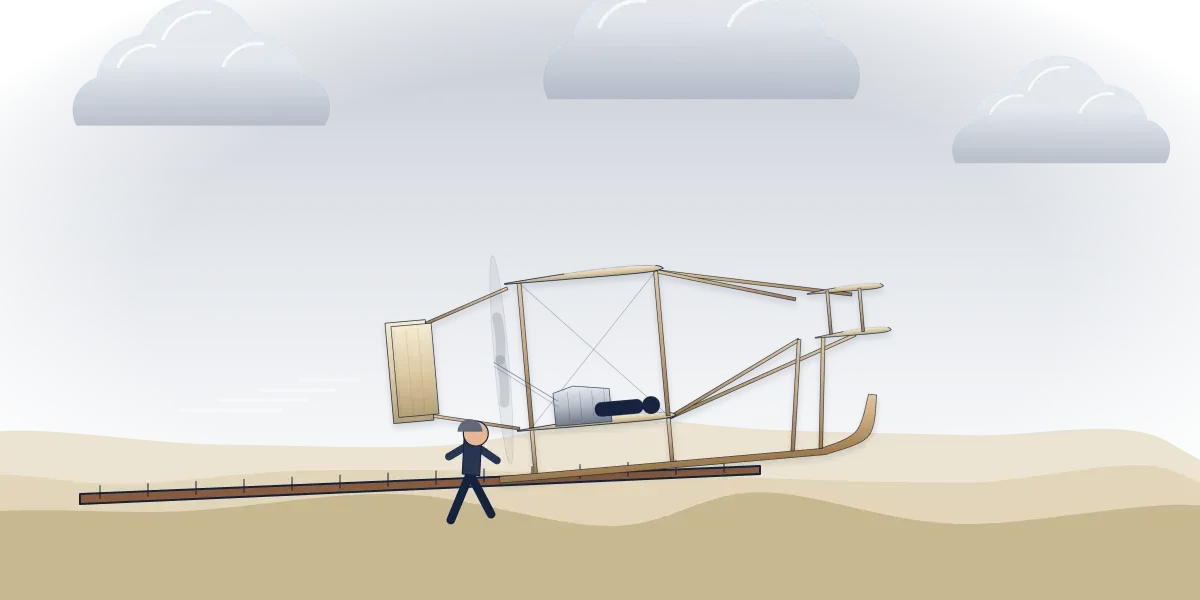
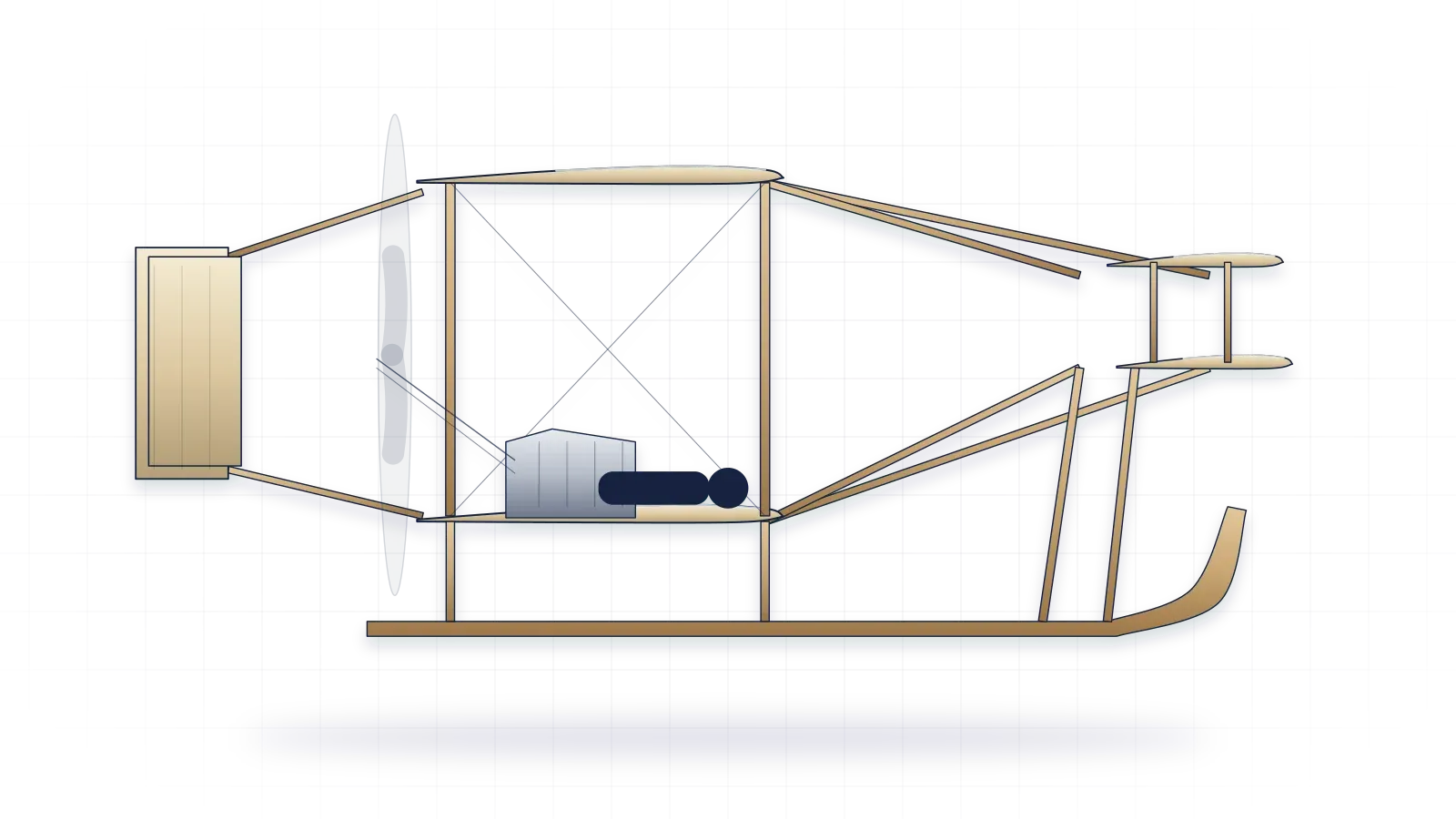
At 10:35 on the morning of December 17, 1903, a man lying flat on the lower wing of a wooden biplane released a restraining wire on a windswept beach in North Carolina. Twelve seconds later he was back on the sand, 120 feet from where he started. It is the shortest famous journey in history. It is worth slowing down to see why it counted, when so many earlier hops and glides did not.
Who flew before the Wright brothers?
People had been leaving the ground for 120 years. On November 21, 1783, a Montgolfier hot air balloon carried two men over Paris on the first free flight by humans. A balloon goes where the wind goes, though, and the dream was a machine that could be steered. In the 1890s the German engineer Otto Lilienthal made close to 2,000 short glides in 16 glider designs, steering by swinging his body, before a crash killed him in 1896.
His death was the spark. The Wrights had followed his flights with great interest, and in 1899 they wrote to the Smithsonian for everything it had on flying. Reading Lilienthal, Octave Chanute and Samuel Langley, they decided the unsolved problem was not power or wing shape but control. Nobody had worked out how to balance a machine once it was in the air.
Why did the Wright brothers choose Kitty Hawk?
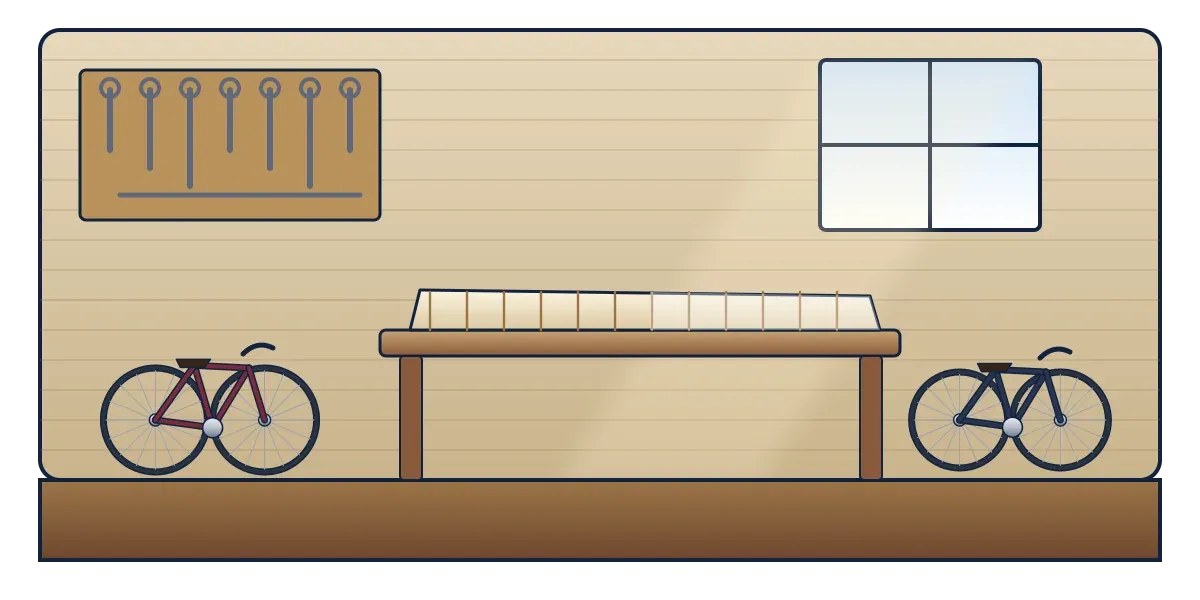
Wilbur and Orville ran a bicycle business in Dayton, Ohio, selling and repairing bikes from 1892 and building their own from 1896. Where most inventors wanted a flying machine stable enough to fly itself, Wilbur wanted one the pilot could balance in every axis, the way a cyclist balances a bicycle. In July 1899 he built a kite whose wings he could twist from the ground, and found he could make it climb, dive and roll.
To fly a full-size glider they needed steady wind and soft ground. In 1900 they wrote to the US Weather Bureau, and the answer pointed them to Kitty Hawk, a fishing village on North Carolina’s Outer Banks, with reliable winds and plenty of sand dunes to cushion landings. Wilbur arrived on September 12, 1900, and assembled their first glider, a biplane with a 17-foot wingspan that they flew first as a kite with nobody aboard.
How did the Wright brothers invent the airplane?
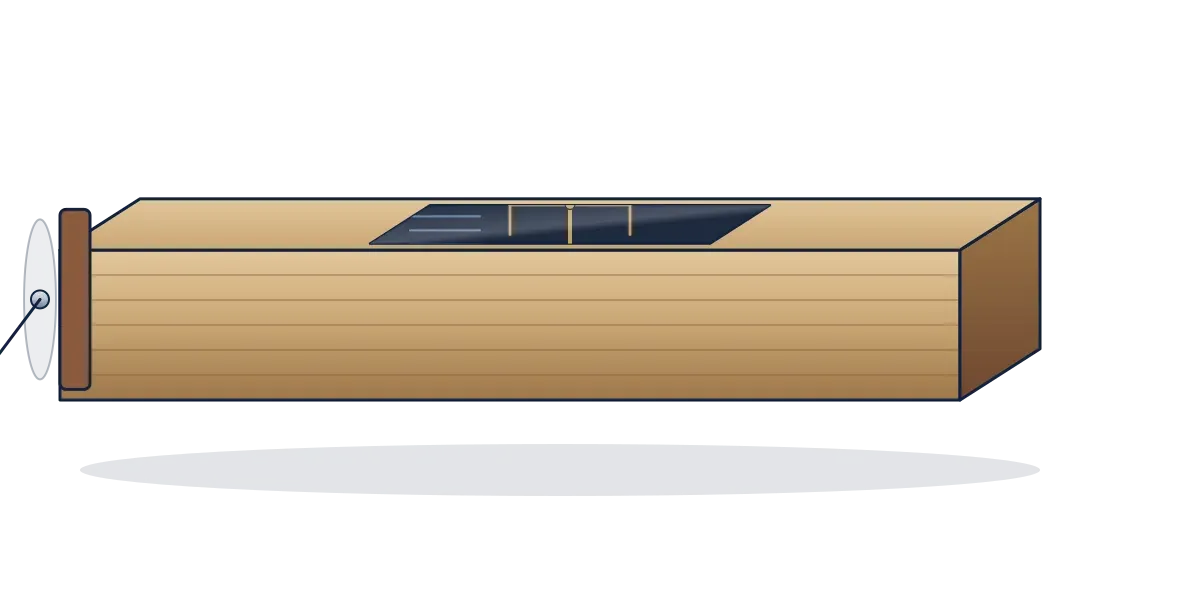
They did it as engineers, one problem at a time. The 1900 and 1901 gliders made far less lift than the published tables promised; the 1901 machine delivered only about a third of what Lilienthal’s data predicted. Instead of guessing, the brothers built a wind tunnel in the back room of the bicycle shop and tested more than fifty wing shapes, producing numbers of their own. Those numbers later let them design the first efficient airplane propellers, which they conceived as wings turned on their side and spun, making their lift point forward.
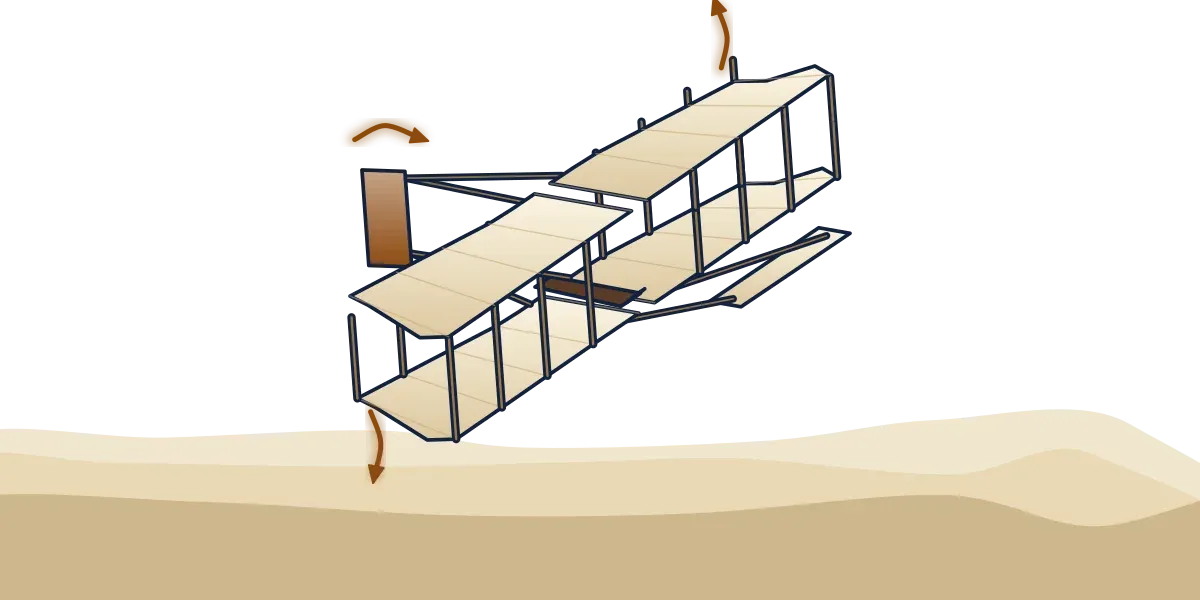
Control came next. By warping the wingtips, one up and one down, the pilot could roll the glider and bank into a turn, the job that ailerons do today, as How do planes fly? explains. The 1902 glider added a movable rudder that worked together with the warping, and with it the brothers had the first aircraft that could be controlled in all three axes: roll, pitch and yaw. They made more than 300 flights in it, and over a thousand glides from Big Kill Devil Hill in all. When they finally added an engine, they were already the most experienced pilots alive.
How long was the Wright brothers’ first flight?
The 1903 Wright Flyer was a bigger, sturdier 1902 glider with an engine. No manufacturer could supply a light enough motor, so the brothers built their own 12-horsepower, four-cylinder engine with their shop mechanic, Charlie Taylor. It drove two pusher propellers through bicycle-style chains, one of them crossed so that the propellers turned in opposite directions. The machine spanned 40 feet 4 inches and weighed 605 pounds empty. Because wheels would sink into the sand, it took off from a 60-foot wooden rail, its skids resting on a small wheeled truck.
Wilbur won a coin toss and tried first, on December 14. He pulled the nose up too steeply after leaving the rail, the wing stalled, and the Flyer dropped into the sand, needing three days of repairs. On the 17th it was Orville’s turn. The wind was blowing at 27 mph, harder than they wanted for a machine designed to cruise at 30 to 35 mph, but they chose not to wait. At 10:35 Orville released the wire, the Flyer slid down the rail with Wilbur steadying a wingtip, and it rose. John Daniels of the nearby lifesaving station squeezed the shutter of a camera the brothers had set up, and took the most famous photograph in aviation.
The flight lasted 12 seconds and covered 120 feet. Into that headwind the Flyer’s speed over the ground was only 6.8 mph, though it was moving through the air at about 34 mph, which is why Wilbur could keep up on foot. Three more flights followed as the brothers took turns: 175 feet in 12 seconds, then 200 feet in 15 seconds, and finally Wilbur’s flight of 852 feet in 59 seconds. Then a gust caught the parked Flyer, rolled it over and wrecked it. It never flew again, and the brothers sent their father a matter-of-fact telegram announcing the news.
Was the Wright brothers’ first flight really the first?
Machines had left the ground before 1903, Lilienthal’s gliders among them, so what made Kitty Hawk different? The Smithsonian’s label on the Flyer gives the answer: it was the first successful powered airplane with a pilot aboard. It rose from level ground under its own power, flew under the pilot’s control and came down undamaged by the flight itself. The 59-second fourth flight settled any argument, because it was sustained flight rather than a hop.
What the Wrights had really invented was not a machine but a method: measure instead of guess, learn to control a glider before adding power, and change one thing at a time. NASA, which still teaches their story, credits them with the wind tunnel and flight testing as design tools, the foundations of aeronautical engineering.
What happened after the Wright brothers’ first flight?
Back in Dayton, the brothers borrowed a cow pasture eight miles northeast of town from the banker Torrence Huffman, rent-free, and kept working. In 1904 they made 105 flights at Huffman Prairie, totaling 49 minutes in the air, and flew the first turn and the first full circle in an airplane. Without Kitty Hawk’s wind to help, they used a starting derrick for the first time to launch. The 1905 Flyer III could bank, circle and fly figure eights, and on October 5, 1905, Wilbur flew it for 39 minutes and more than 24 miles over the field. Two weeks later the brothers ended the season, satisfied that they had a practical airplane.
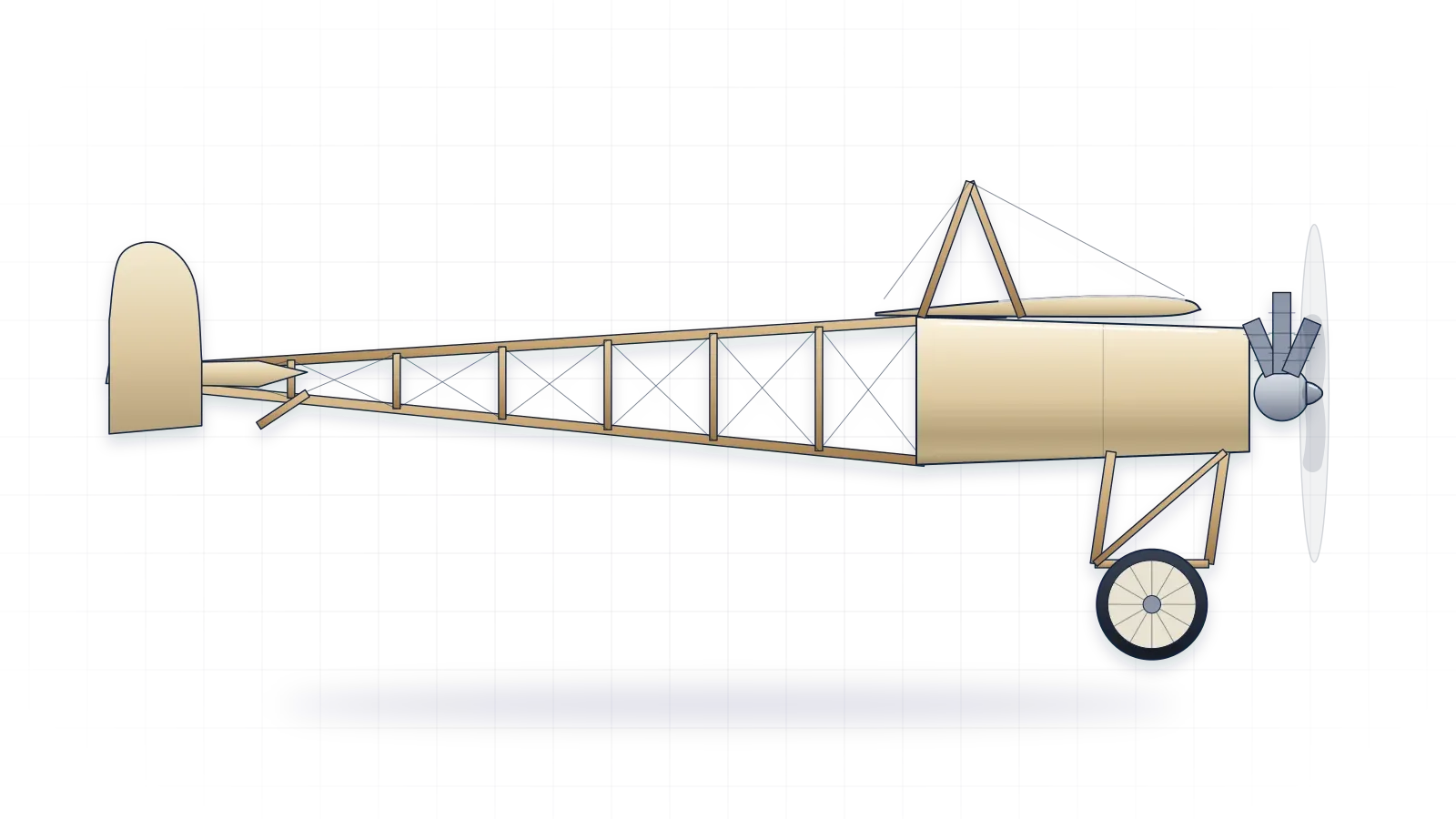
The world caught up fast. On July 25, 1909, Louis Blériot flew his Blériot XI across the English Channel in 36 and a half minutes. Within fourteen years of Kitty Hawk, the Sopwith Camel and its rivals were fighting over France. And the 34 mph that Orville managed through the air that morning has been raised a few times since, a line Fastest planes ever follows all the way to the X-15 at 4,520 mph.
Where is the Wright Flyer now?
In Washington, DC, at the Smithsonian’s National Air and Space Museum, where it has been since 1948. Its route there was roundabout. After the crash the Wrights crated the Flyer and shipped it home to Dayton, where it spent years in storage. In 1928 Orville lent it to the Science Museum in London, and it stayed in Britain for two decades. During World War II it was hidden in an underground store near Corsham, about 100 miles from London, alongside other national treasures.
It came home in 1948 and was formally given to the Smithsonian on December 17 that year, the 45th anniversary of the flights, and it has been on public display ever since. The fabric you see today was applied in a 1985 restoration, stitched using a surviving section of the original 1903 wing covering as a pattern, so the airplane in the gallery looks as it did on the beach.
What to watch for on your next flight
The Wrights’ ideas are still visible from a window seat.
- On the wing, watch the ailerons flick up and down during a turn. They do the job wing warping did in 1902: one wingtip makes more lift, the other less, and the airplane rolls.
- On the tail, the rudder swings to keep turns coordinated, the problem the 1902 glider solved.
- On a turboprop, each propeller blade is a spinning wing, exactly as the brothers conceived it.
- On takeoff, notice the airplane pointed into the wind. Kitty Hawk’s 27 mph headwind is the reason Orville needed only 120 feet.
- After liftoff, count to 59. That is how long Wilbur’s best flight lasted, and your airliner will have climbed several hundred feet in the same time.
The first flight was a beginning, not an end. For where the story went next, and how to explore the rest of it, start with How to learn about aviation.
Quiz
Check yourself
-
Question 1 of 3
Why did the Wright brothers build their own wind tunnel?
- To test motors for their bicycles
- Their rivals already had one
- To keep their workshop cool in summer
- Their glider made too little lift
Show the answer
Answer: D. Their 1901 glider made only about a third of the lift predicted from published data, so they gathered their own measurements.
-
Question 2 of 3
What made the Wrights' 1902 glider a breakthrough?
- It was made entirely of metal
- It could carry four passengers
- It was the first to use an engine
- It had control in all three axes
Show the answer
Answer: D. With wing warping for roll, an elevator for pitch and a movable rudder for yaw, it was the first aircraft controllable in all three axes.
-
Question 3 of 3
Who flew the longest of the four flights on December 17, 1903?
- Wilbur Wright
- Octave Chanute
- Charlie Taylor
- Orville Wright
Show the answer
Answer: A. Wilbur flew the fourth and longest flight of the day: 852 feet in 59 seconds.
Guides
Keep reading
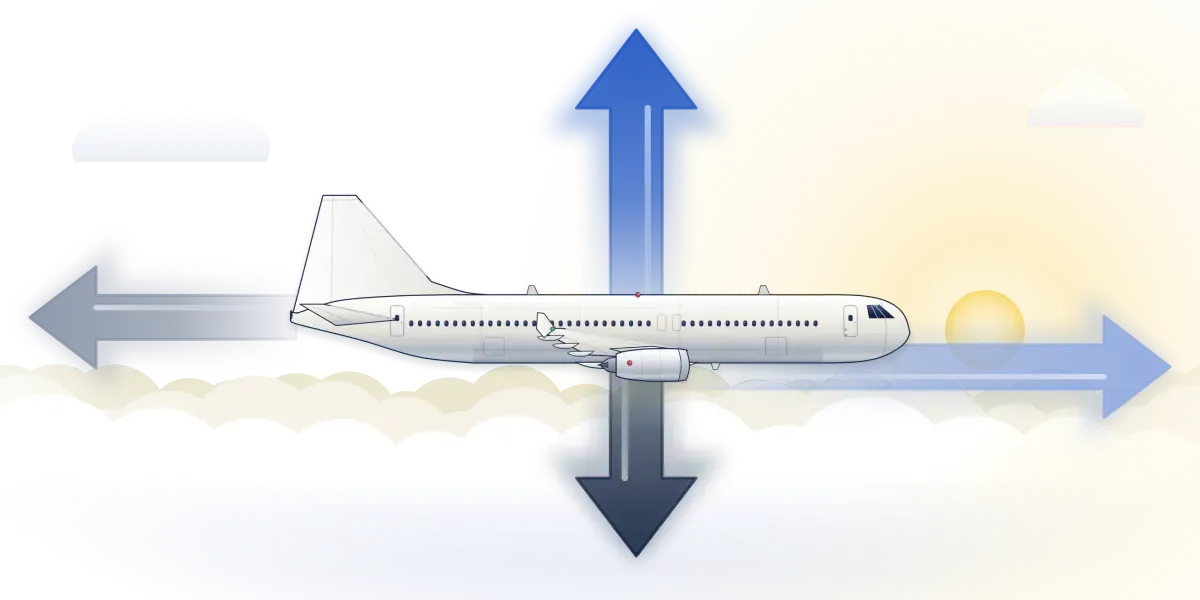
How Flight Works
How Do Planes Fly? Lift, Thrust, Drag and Weight, Explained
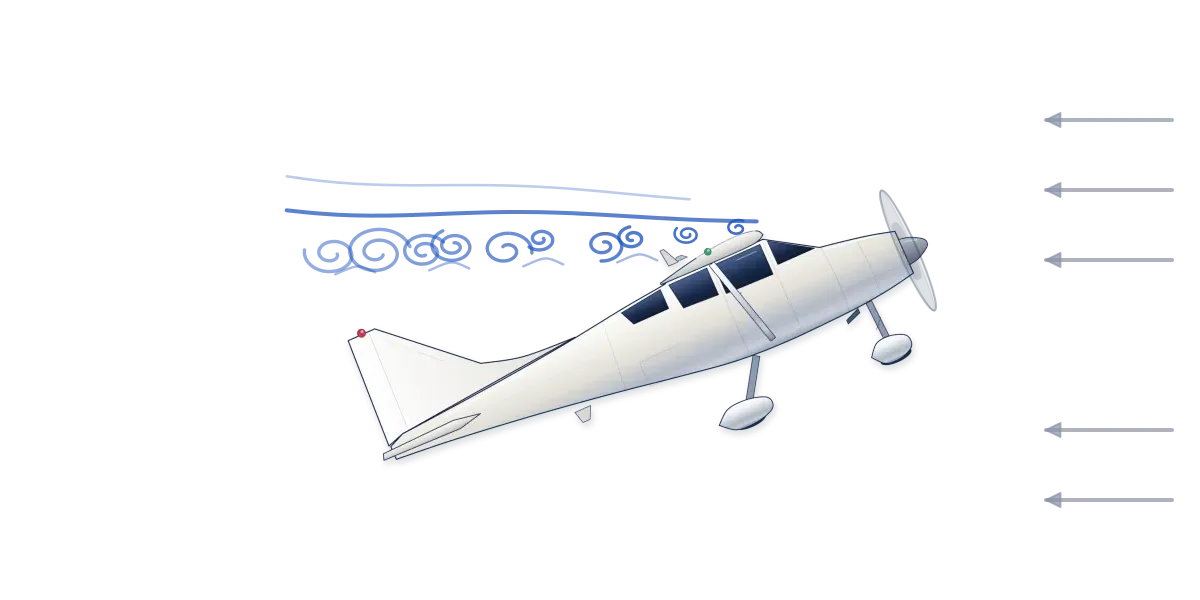
How Flight Works
What Is a Stall in an Aircraft? (It's Not the Engine)
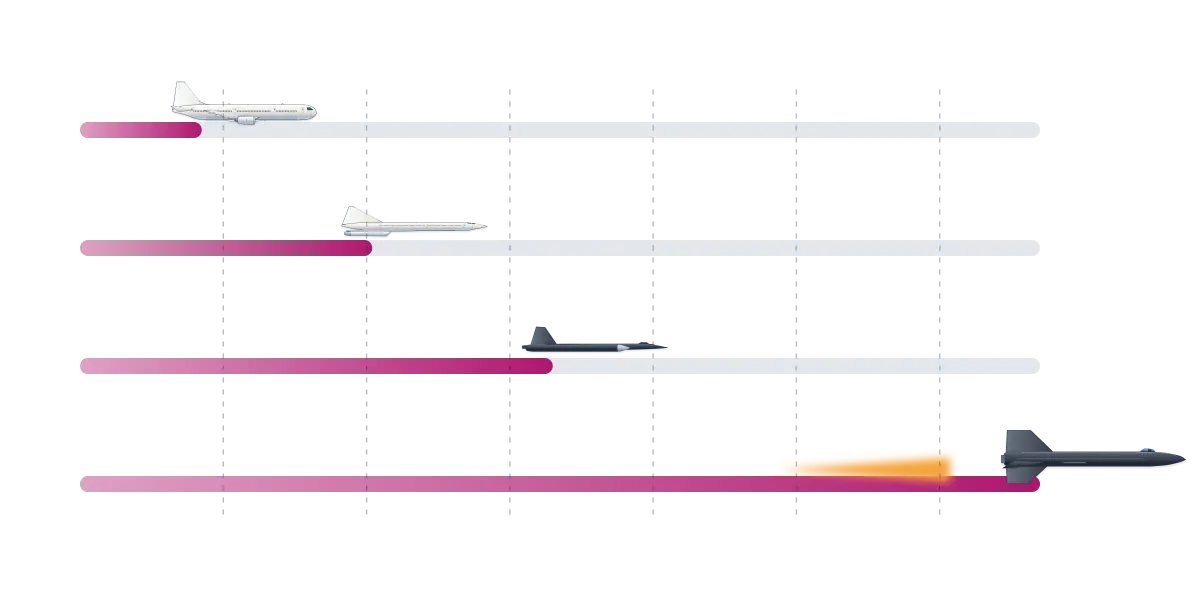
Speed & Altitude Legends
The Fastest Planes Ever Flown: From the X-1 to the X-15
How Flight Works
How to Learn About Aviation: A Beginner's Guide for Avgeeks
Aircraft
From the Hangar
Sources
- National Park Service, Wright Brothers
- National Park Service, 1903-The First Flight
- National Park Service, Four Powered Flights
- National Park Service, Huffman Prairie Flying Field
- NASA Glenn Research Center, Wright Brothers' Unpowered Aircraft
- Smithsonian National Air and Space Museum, 1903 Wright Flyer
- Smithsonian National Air and Space Museum, Lilienthal Glider
- Smithsonian National Air and Space Museum, Montgolfier Balloon
- Smithsonian National Air and Space Museum, Blériot's Cross-Channel Flight
- Lockheed Martin, How the Constellation Became the Star of the Skies