LEG 05 · Airports & Air Traffic Control
Airport Codes Explained: Why Chicago Is ORD and Los Angeles Is LAX
Some codes are the first three letters of the city. The rest are history lessons in disguise.
Updated · 7 min read
The short answer
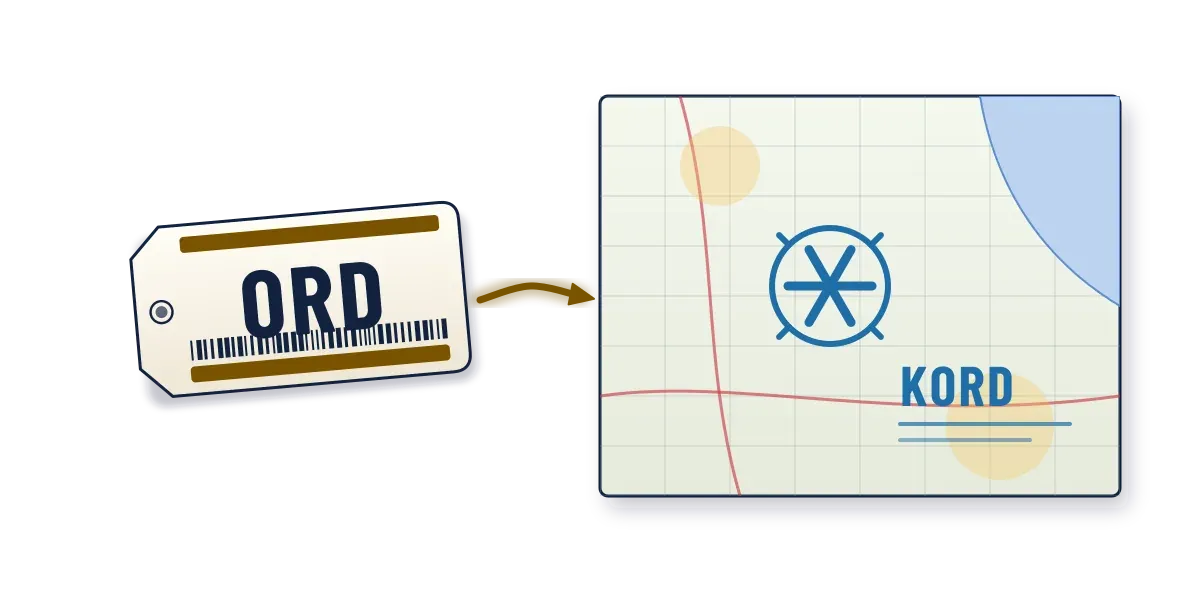
Airport codes come in two sets. The three-letter codes on tickets and bag tags belong to IATA, the airlines' trade body, which prefers the first three letters of a place name, like GVA for Geneva. Pilots and controllers use ICAO's four-letter codes, such as KORD for Chicago O'Hare, whose ORD comes from its old name, Orchard Field.
The three letters on your bag tag are among the most familiar codes in travel, and among the least explained. Some make sense at a glance: GVA is Geneva, and nobody needs help with JFK. Others, like ORD for Chicago’s O’Hare or YYZ for Toronto, look like typing errors. Every one of them has a reason, and most of the reasons go back to the 1930s, when airlines first needed a quick way to write down a destination.
How do airport codes work?
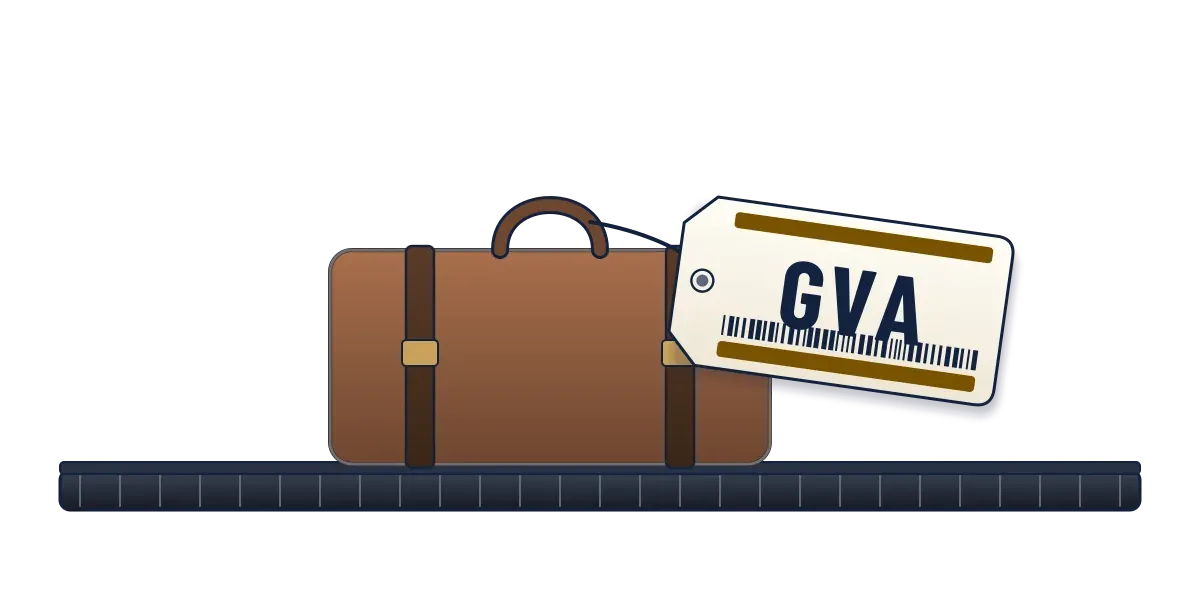
The codes on tickets and bag tags belong to IATA, the International Air Transport Association, which is the trade body of the world’s airlines. Its rule book for codes is called Resolution 763, and its first aim is that every code is unique. IATA’s first choice for a new airport is the first three letters of the place name, which is how Geneva became GVA. If those letters are already taken, it picks another combination, ideally one that still starts with the same letter.
The codes exist for airline business: reservations, ticketing and baggage. IATA issues one only when an airline asks, usually the first airline planning to fly to the place. If a city has one airport, the airport and the city share a code. A city with several airports can get a code of its own as well, so that a booking system can offer “any airport in this city” with three letters.
What is the difference between IATA and ICAO codes?
Pilots, controllers and dispatchers use a different set of letters. ICAO, the United Nations’ civil aviation body, assigns four-letter location indicators for flight plans, weather reports and the messages that move between air traffic facilities. Because they serve flight operations rather than ticketing, they cover airports with no airline service at all, including small fields that will never need an IATA code.
In the contiguous United States the two systems line up neatly. The ICAO indicator is the FAA’s three-letter identifier with a K in front, so O’Hare is ORD to an airline and KORD on a flight plan, and Los Angeles is LAX and KLAX. The FAA’s order on location identifiers lists the exceptions: Alaska’s airports take prefixes such as PA, Hawaii’s begin with PH, Puerto Rico’s with TJ and the US Virgin Islands’ with TI. The full worldwide list is published by ICAO in its Document 7910.
Outside the United States the opening letters of an ICAO code point to a region or country, so the four letters carry geography that the three IATA letters do not. Over the radio, either kind of code is spelled with the phonetic alphabet: Kilo Oscar Romeo Delta.
Why is LAX called LAX?
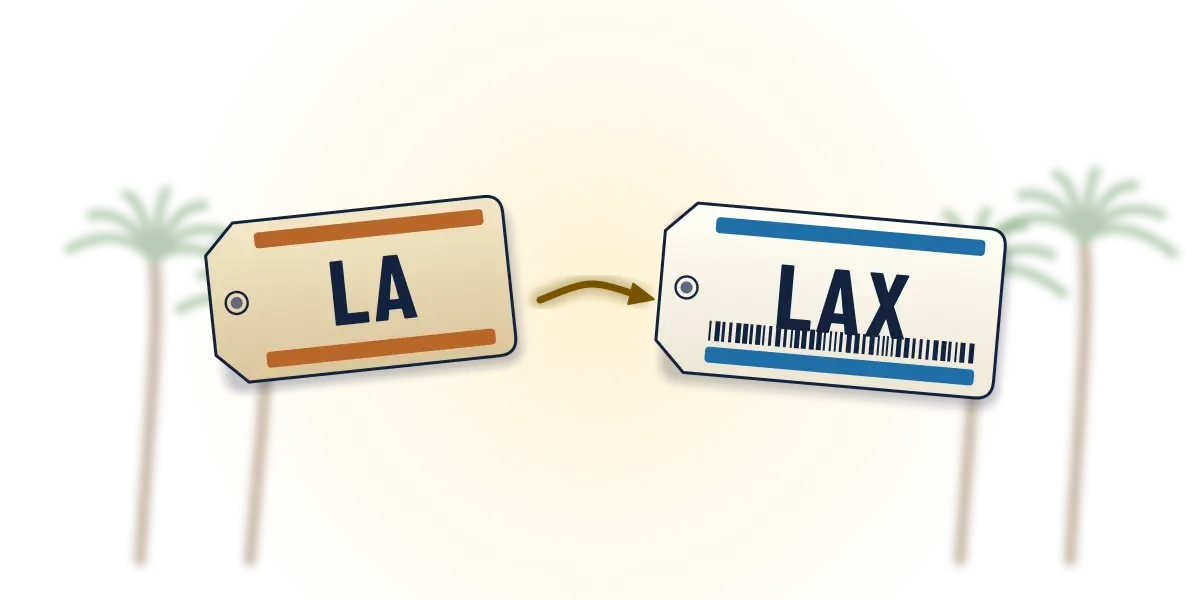
Airport codes began in the 1930s, when the Douglas DC-3 was the newest airliner in the sky and airlines chose two-letter codes for themselves. By the late 1940s there were more airports than two-letter combinations, so the industry moved to three letters. Los Angeles had been plain LA. In 1947 it became LAX, and the X means nothing at all: it simply filled the third slot.
IATA took the system over in the 1960s, as the Boeing 707 and its rivals were multiplying the destinations an airline could reach, and the airlines decided they needed one standard process to avoid confusion. The codes created before then were kept, which is why so many of them carry the marks of an earlier era.
Why is Chicago ORD?
O’Hare’s code is a fossil of the airfield’s first name. In 1945 the city of Chicago selected Orchard Field, the site of a wartime Douglas aircraft plant with four intersecting concrete runways, as its new airport. The letters ORD came from Orchard. In 1949 the City Council renamed the field Chicago O’Hare International Airport in honor of Lieutenant Commander Edward “Butch” O’Hare, a naval aviator from Chicago who had received the Medal of Honor.
The name changed, but the code did not, because codes almost never do. O’Hare opened to commercial traffic in 1955 and handled 176,902 passengers in its first year, according to the Chicago Department of Aviation. By 1962 the number had reached 10 million, and the city was calling O’Hare the busiest airport in the world. Every one of those passengers carried a bag tag that still said Orchard.
Why do Canadian airport codes start with Y?
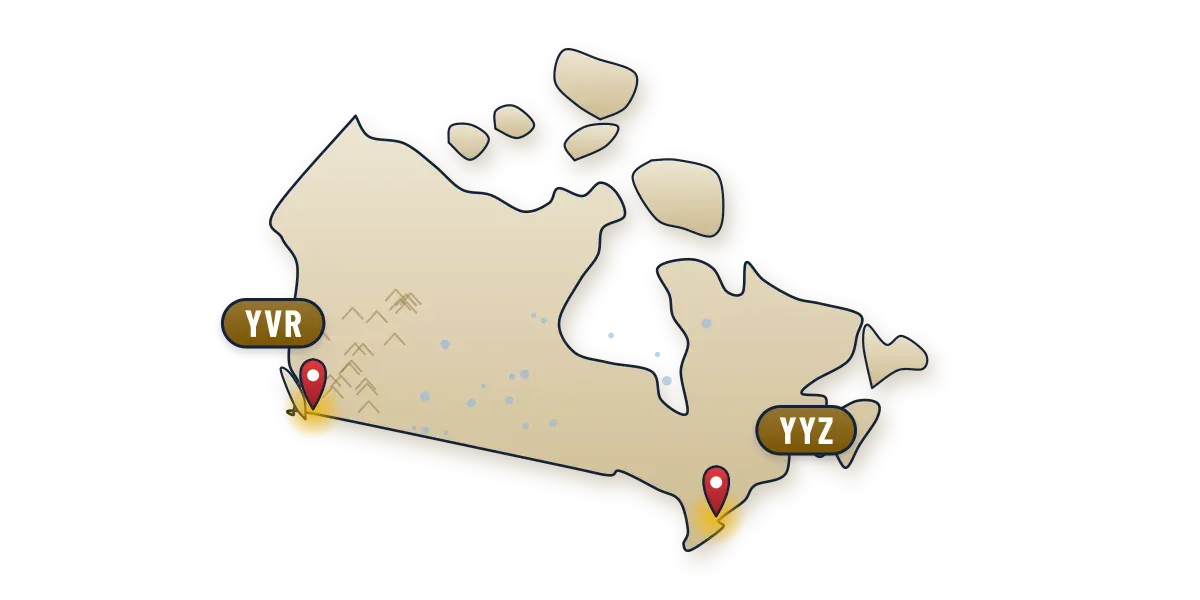
Vancouver is YVR and Toronto is YYZ, and the Y has nothing to do with either city’s name. IATA traces the habit to before World War II and believes it is related to the two-letter codes that identified weather stations or radio beacons in Canada at the time. The convention is no longer applied automatically to new Canadian airports, but codes are permanent, so the old ones keep their Y and it survives as a national signature.
How are new airport codes assigned?
IATA handles requests as they arrive, through an online process run from its Global Delivery Center, and it assigns roughly 40 to 50 new codes a year. There is still room. Three letters allow more than 17,000 combinations, and about 11,300 were in use when IATA published its fact sheet. The requesting airline may suggest the codes it would prefer from the list of what remains available. Whether a city gets a metropolitan code of its own, and which airports fall under it, is settled by a poll of the industry.
The ICAO side runs through governments. In the United States, requests for a four-letter indicator go to the FAA’s National Flight Data Center; elsewhere, the national aviation authority coordinates with ICAO. A new code outlives the airplanes that first use it: the letters assigned today will still be routing bags long after the Airbus A321XLR, which Airbus pitches for routes such as New York to Rome, has retired.
Can an airport code change?
Almost never. IATA treats a three-letter code as permanent and changes one only with strong justification, chiefly for safety. The best-known case is Washington Dulles, which started as DIA and became IAD because DIA looked and sounded too much like DCA, the code for Washington National a few miles away. On a hurried tag or a crackly radio, a one-letter difference is one too many.
That permanence is why so many codes seem out of date. Airports rename themselves for presidents, musicians and local heroes, and the code keeps the older name. Reading codes is a little like reading rock strata: the letters record what the place was called when aviation first arrived.
Permanence has a practical side too. Timetables, baggage systems, airline accounting and booking systems around the world all key on the same three letters. Change a code and every one of them has to change with it, which is a heavy price for a prettier tag.
Why do pilots use different codes from passengers?
Because the two sets of letters answer different questions. An airline needs a label that fits on a tag and a departure board and that its reservation system can sort. A pilot needs a label that is unambiguous across the entire planet, that works in a flight plan and a weather report, and that exists for every airfield, however small. Four letters with a country prefix do that; three letters chosen for marketing convenience do not.
The two systems also change at different speeds. IATA codes are frozen for commercial reasons, so travelers are not confused. ICAO indicators follow the structure of the world’s airspace, which is drawn up by the same people who run air traffic control. When you see KORD on a flight-tracking screen and ORD on your boarding pass, you are looking at the same airport through two different professions.
What to watch for on your next flight
The codes are everywhere once you start looking.
- On your bag tag, the three big letters are the IATA code of your final destination, and the barcode beside them is what the sorting machines actually read.
- On the departure board, every destination is an IATA code. Try guessing the city from the letters before the name scrolls past.
- On a flight-tracking screen, the airport usually appears with its four-letter ICAO code, so look for the K in front of American airports.
- On the airport’s own signs, the name may be a person’s, while the code remembers a field, a town or a stockyard.
- On the runway, the painted numbers are a code of their own, which What do runway numbers mean? decodes.
Codes are the small print of travel, and they reward curiosity. The next time a flight heads west and takes longer than the return, Why is flying east faster? has the answer, and How to learn about aviation maps out where to go from here.
Quiz
Check yourself
-
Question 1 of 3
What is IATA's first choice when giving an airport a new code?
- The first letters of its country
- Three random unused letters
- The initials of its city's mayor
- The first three letters of its name
Show the answer
Answer: D. Under IATA's rules, the first choice is the first three letters of the place's name, if that combination is still free.
-
Question 2 of 3
What was Los Angeles International's code before it became LAX in 1947?
- LOS
- LAI
- LA
- XLA
Show the answer
Answer: C. Early airport codes had two letters, so Los Angeles was simply LA until codes grew to three letters in the late 1940s.
-
Question 3 of 3
How many letters are in an ICAO airport code?
- Two
- Three
- Four
- Five
Show the answer
Answer: C. ICAO uses four-letter codes for flight operations; Chicago O'Hare, ORD to airlines, is KORD in the ICAO system.
Guides
Keep reading
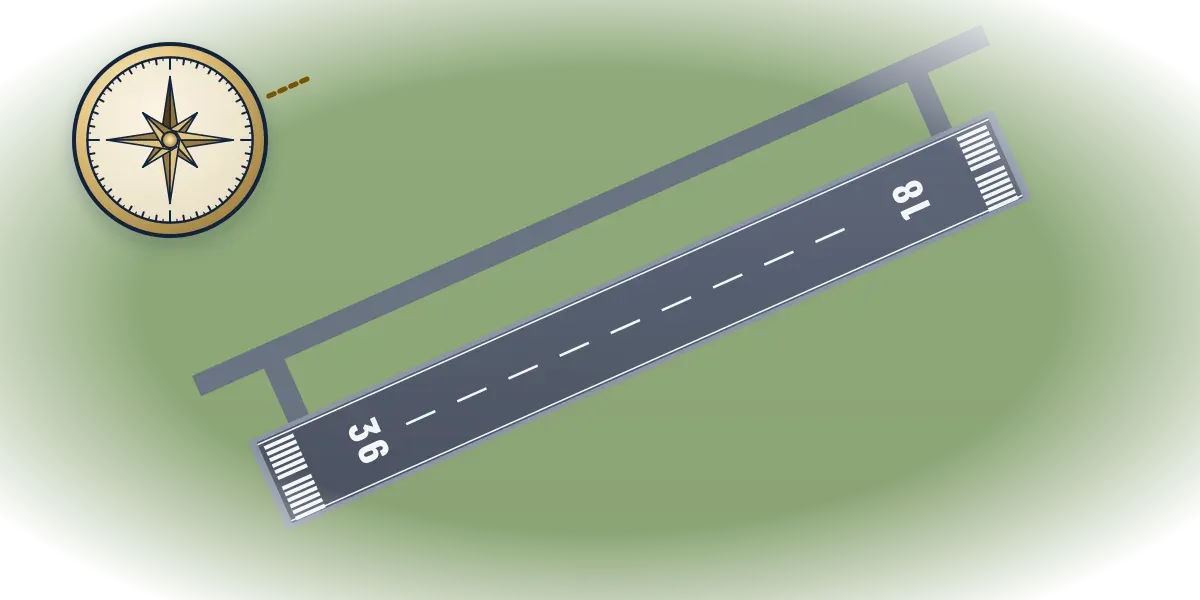
Airports & Air Traffic Control
What Do Runway Numbers Mean? Headings, Letters and Stripes Explained
Airports & Air Traffic Control
How Does Air Traffic Control Work? From the Tower to the Ocean
Navigation & Weather
Why Is Flying East Faster Than Flying West?
How Flight Works
How to Learn About Aviation: A Beginner's Guide for Avgeeks
Aircraft
From the Hangar
Sources
- IATA, IATA Location Codes
- Federal Aviation Administration, Location Identifiers (FAAO 7350.7): International Location Identifiers
- Federal Aviation Administration, Aeronautical Information Publication: Illinois aerodromes
- Chicago Department of Aviation, O'Hare History
- Airbus, A321XLR